
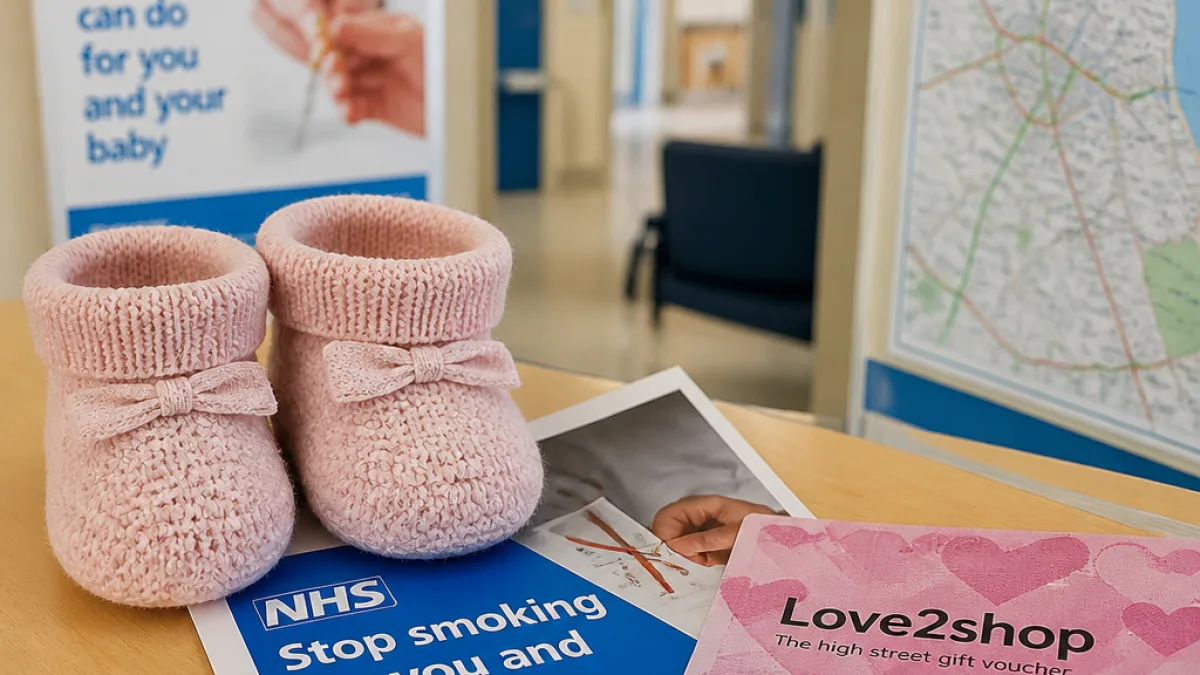
New NHS England figures published for 2025/26 show a substantial fall in the number of women recorded as smoking at the time of delivery in North East Lincolnshire. The rate has fallen to 7.1%, down from 11% in 2024/25 and 20.3% in 2021/22.
What the data show
The figures represent continued progress in reducing smoking in pregnancy across the borough. While the local rate remains above the England average of 4.2% for 2025/26, the downward trend over five years is marked and shows the impact of targeted stop-smoking support.
| Year | Smoking at time of delivery (SATOD) |
|---|---|
| 2021/22 | 20.3% |
| 2024/25 | 11% |
| 2025/26 | 7.1% |
| England average (2025/26) | 4.2% |
Why it matters locally
Smoking during pregnancy increases the risk of serious harms to both mother and baby, including stillbirth, miscarriage and sudden infant death. It also contributes to long-term health problems for children and extra financial pressure for families: the average smoker spends around £3,000 a year on tobacco, a cost highlighted in the published material.
Support and next steps for families
Local NHS and council services are emphasising the importance of making use of available help. Expectant mothers are advised to ask their midwife for a referral to the local Tobacco Dependency Team, which offers tailored quit support and access to a national incentive scheme that provides Love2shop vouchers to those who quit during pregnancy and the postpartum period.
- Ask your midwife about referral to the Tobacco Dependency Team.
- Hospital stop-smoking advisers provide specialist support for pregnant smokers.
- The council stop-smoking service offers free help to anyone wanting to stop.
Practical contact details supplied with the data include the council stop-smoking webpage and a local helpline: visit www.nelincs.gov.uk/stop-smoking or call 01472 325500. Services can also support partners and household members to help create a smokefree home for the new baby.
The fall in North East Lincolnshire’s smoking-at-delivery rate will be closely watched by health teams and councillors alike. Continued progress will depend on sustaining targeted support, addressing the social and economic factors that make smoking more common in deprived communities, and ensuring that families know how to access help in pregnancy and beyond.