The chief executive of a Solihull-based engineering academy has voiced support for proposals to introduce technical education pathways from the age of 14, saying the approach better aligns school learning with local labour-market needs.
Local employers and universities invited to shape curriculum
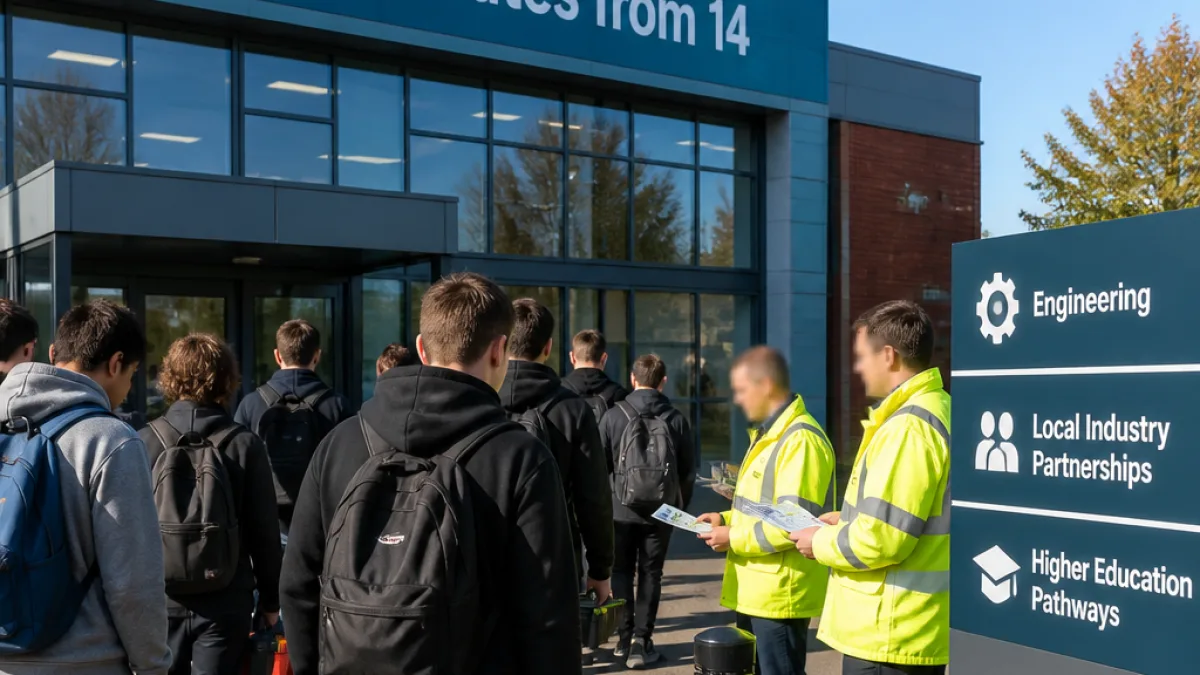
Stewart Tait, chief executive of the WMG Academy Trust for Coventry and Solihull, said the plan to allow pupils in Year 10 to combine core academic subjects with specialist technical learning would build clearer routes into employment in sectors that are expanding locally.
“We are thrilled that the Government is adopting a model of delivering high-quality technical education starting at 14. For over a decade, our WMG Academies for Young Engineers have delivered exceptional outcomes for young people by providing access to specialist, industry-standard facilities, real employer projects, and career pathways.”
Announced by the Prime Minister, the reforms would enable secondary pupils to mix subjects such as English, maths and science with vocational courses tailored to regional priorities — for example advanced manufacturing, AI, digital technology, clean energy, life sciences, construction, health and care, or the creative industries. The proposals place particular emphasis on sustained links with employers, work experience and locally informed pathways rather than a single national design imposed from Whitehall.
What the proposals could mean locally
Tait highlighted the trust’s existing model of partnering with the University of Warwick and local employers to deliver technical and employment skills. He pointed to the academies’ record in moving pupils into education, employment or training on leaving school and argued that employer engagement and industry-standard facilities make a tangible difference to outcomes.
- Students could begin technical study alongside GCSE-type courses from Year 10.
- Local employers would have a role shaping pathways and offering real-world projects and placements.
- Regional mayors and local leaders would be able to tailor routes to match local growth sectors.
For Solihull and the wider West Midlands, where advanced manufacturing and automotive supply chains remain important employers, the proposals offer a route to link classroom learning with the skills demanded by local industry.
Practical considerations for families and schools
If implemented, schools and colleges will need to develop timetabling, staffing and employer partnerships to deliver combined academic and technical programmes. Parents may also wish to consider how early subject choices could affect later options for sixth form, apprenticeships or further study.
| Proposed elements | Local relevance |
|---|---|
| Technical pathways from age 14 | Could link pupils to Solihull/Coventry employers and university sponsors |
| Employer-led projects and placements | Offers practical experience in manufacturing, tech and care sectors |
The WMG academies’ model — which combines academic study with technical training and employer engagement — is advanced by Tait as an example of how local partnerships can reduce the number of young people who are not in education, employment or training when they leave school.
As debate continues over the detail and delivery of the reforms, local schools, colleges, employers and civic leaders in Solihull will be watching how powers devolved to regions are used to design pathways that reflect local economic strengths. For parents and pupils, the proposals raise choices about the balance between academic and vocational routes earlier in secondary education than is currently typical.
Further consultation and legislative steps will be required before any changes are introduced; meanwhile schools and trusts such as WMG are likely to continue developing employer partnerships and technical provision in preparation for potential reform.