West Midlands Police has increased its neighbourhood capacity with the addition of 309 personnel over the past year, the Office of the Police and Crime Commissioner (PCC) has confirmed. The intake comprises 150 newly recruited police officers, 139 officers redeployed from elsewhere within the force and 20 newly funded Police Community Support Officers (PCSOs).
Commissioner frames boost as central to policing plan
Simon Foster, the West Midlands PCC, described the recruitment as a direct delivery of his stated aim to rebuild local community policing under the Police and Crime Plan 2025–2029. To support the extra staff, his office has funded operational equipment aimed at increasing frontline visibility and effectiveness.
“Rebuilding community policing is, and always will be, my top priority. I am pleased to announce that we have allocated 309 extra officers and PCSOs straight into our local neighbourhoods, backed by brand-new vehicles, cutting-edge kit, and body-worn cameras.”
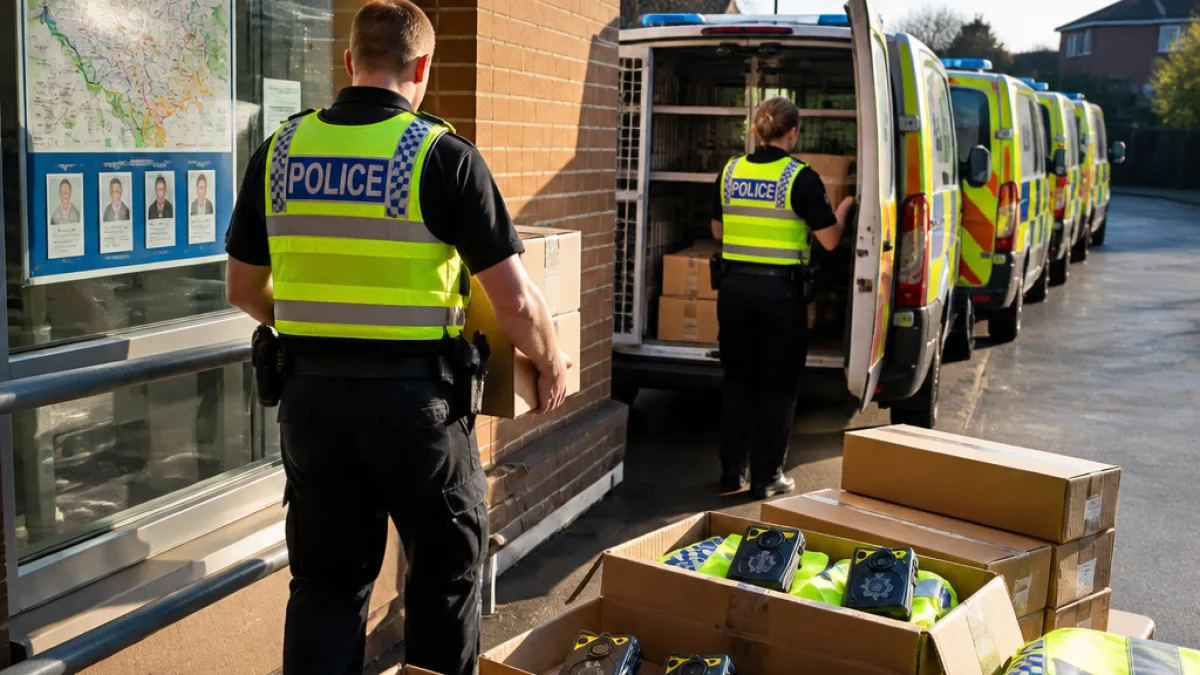
The PCC also highlighted that the force has invested in new vehicles, upgraded kit and the latest body‑worn video cameras for neighbourhood teams, using a tranche of funding known as the Neighbourhood Policing Grant. According to the PCC’s office, this financial package was used to ensure the additional staff could be deployed with suitable resources.
Numbers in context
Recent figures indicate that total officer strength across West Midlands Police has risen to 8,266, up from 8,102 two years earlier. The PCC has compared these gains favourably with other large forces, stating the West Midlands’ increase is the largest outside the Metropolitan Police.
| Statistic | Figure |
|---|---|
| New officers and PCSOs this year | 309 |
| New recruits (police officers) | 150 |
| Redeployed officers | 139 |
| New PCSOs | 20 |
| Total officer strength | 8,266 |
The PCC asserted that neighbourhood crime rates have fallen during the period in which those officer numbers rose, and argued the force has been effective at turning extra resources into action. He also pointed out a longer‑term shortfall when compared with 2010, saying the force remains around 520 officers below that earlier level.
Local implications and unanswered questions
For residents of Solihull and surrounding communities, the deployment of additional neighbourhood officers and PCSOs could mean greater uniformed presence, faster local response to community concerns, and more visible problem‑solving initiatives. However, points that will remain of interest to councillors and the public include:
- How the new officers and PCSOs will be distributed across wards and neighbourhood policing teams within boroughs such as Solihull;
- Whether the equipment funded through the grant will be sustained beyond one‑off allocations; and
- How performance and neighbourhood crime trends will be measured and reported back to local residents.
The PCC has been explicit that some of the funding used to upgrade vehicles and kit was a one‑off allocation. That raises the question of how permanent enhancements to frontline capacity and equipment will be funded in future years.
As local accountability mechanisms continue to operate, councillors, community safety partnerships and residents will be watching how these additional officers are tasked and whether the claimed reductions in neighbourhood crime are maintained or extended. Further detail on deployment plans and ongoing funding would clarify the long‑term impact of this recruitment drive.
This office will follow developments and report any council or force statements that shed light on how these resources are being used in Solihull and across the West Midlands.