The recent change of party leadership at Westminster and an early cabinet reshuffle have prompted concern from a local Member of Parliament that communities outside major metropolitan areas could be sidelined. The MP argued the new Prime Minister’s promise to govern for "every postcode" will be tested by ministerial appointments and policy priorities affecting defence investment, public services and regional projects.
Concerns after a dramatic reshuffle
In response to the removal of several senior figures from the cabinet, the MP described the reshuffle as a clear commentary on the party’s recent performance. The sacking of prominent ministers, including the former Chancellor, was highlighted as evidence of the new Prime Minister’s assessment of how the government has fared since taking office.
- Cabinet change: Senior figures were removed in a dramatic reshuffle.
- Defence funding: The MP singled out the appointment of the new Defence Secretary as an early test of whether defence will be sufficiently prioritised.
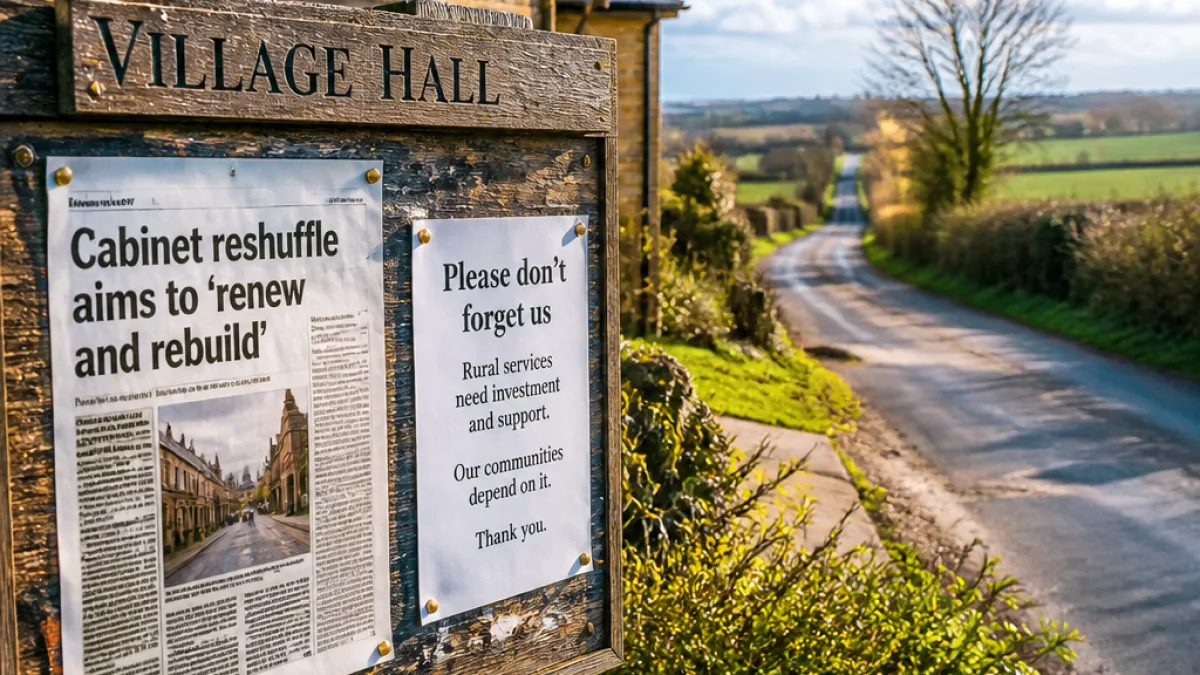
- Rural representation: There is worry that rural and semi‑rural areas will not get adequate attention from a government perceived as urban in outlook.
Defence, taxes and local needs
The MP said one early challenge for the newly appointed Defence Secretary will be whether he will invest in defence "at the level required", a point raised because of that minister’s previous criticism of government spending on defence. The MP also warned that with many MPs focused on tax measures to fund expanding welfare commitments, the new cabinet will require determination to set a different fiscal course.
"[Labour] hadn't done enough to prepare" for government.
The quote was used to underline a wider criticism of the party’s readiness for government when it entered office. That assessment, the MP argued, helps explain why a significant reshuffle has taken place.
Local impact: why rural and semi‑rural voices matter
At the heart of the MP’s argument is a concern for places that do not share the same characteristics as major urban centres. He observed that metropolitan areas — where large infrastructure projects can be delivered more readily — are fundamentally different from rural districts and small towns. As a consequence, policies shaped by an urban perspective may not translate well to communities with lower density, different transport needs and distinct local services.
He also noted that a change of leader from one metropolitan viewpoint to another does not necessarily guarantee improved attention to such areas, citing similar criticisms previously levelled during internal party contests.
What residents should watch for
For residents in Staffordshire and similar counties, the MP’s comments suggest practical questions to follow in coming months:
- Whether the government’s spending plans include increased defence investment as signalled by concerns about the Defence Secretary’s priorities.
- How tax and welfare policy choices might affect local services and regional funding.
- Whether ministers and Whitehall departments engage directly with rural authorities to adapt national programmes to local conditions.
| Issue raised | Local relevance |
|---|---|
| Defence spending | Jobs and procurement; local bases and suppliers |
| Tax and welfare policy | Funding for local services and councils |
| Urban policy bias | Transport, housing and infrastructure delivery differences |
The MP concluded that the Conservative party still has a role to play in representing rural Britain, but warned that such representation will require sustained attention rather than assumptions that a new leadership will automatically redress perceived imbalances. Staffordshire residents will therefore want to monitor both Whitehall decisions and local ministers’ responses as the new administration settles in.