
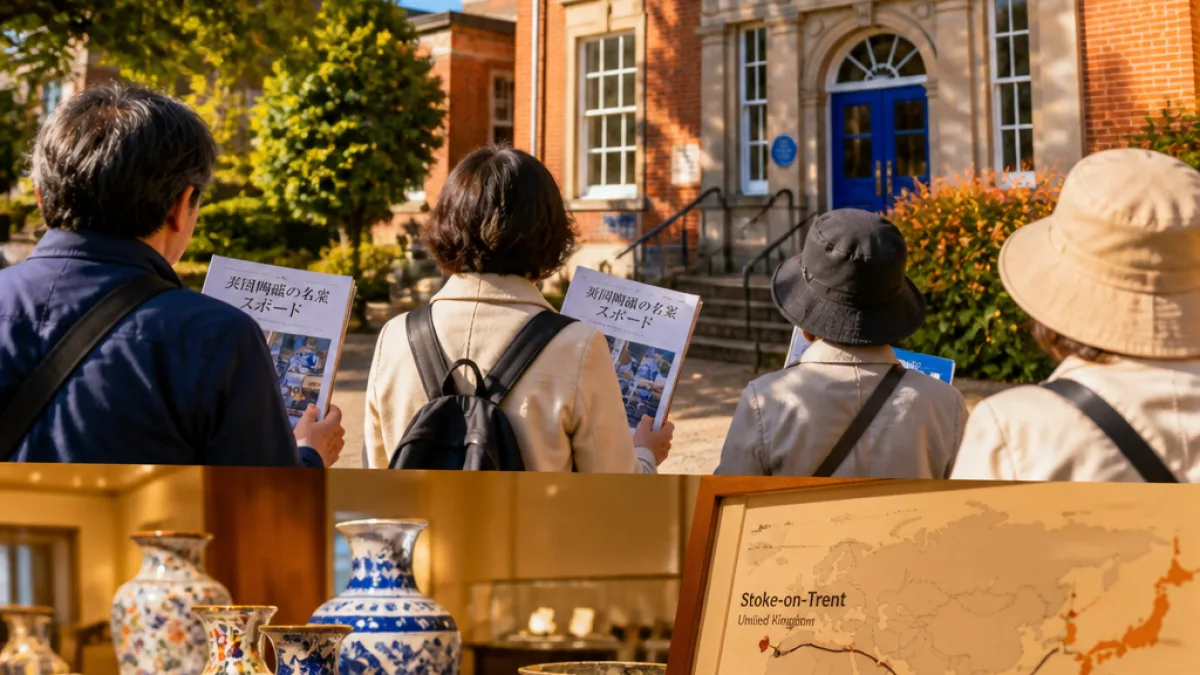
A Stoke-on-Trent resident has developed a specialist tourism offering designed to introduce visitors from Japan to the city's ceramic heritage, with the aim of reviving interest in locally made dinnerware and the wider Potteries story.
Tourism tailored to an overseas audience
Yuri Kawakami-Shotton, who runs Peak and Pottery Tours, operates from the Spode Museum in Stoke-on-Trent and leads visitors from Japan around the region. The initiative has attracted attention because it targets an international market that has shown an enduring interest in English ceramics.
The project grew out of a reaction to reports about the decline of some pottery firms. Kawakami-Shotton told BBC News she felt Japanese visitors would appreciate Stoke-on-Trent's output and could be encouraged to visit the museums and factories that tell the city's industrial story. Her motivation was personal as well as practical.
"Oh, because no one's buying a dinner set anymore"
Following that prompting, she decided to act. As Kawakami-Shotton put it:
"I can do that, I can maybe promote it for this city"
Reception and local impact
Feedback from tour participants has been positive. Kawakami-Shotton described a strong emotional reaction from some visitors when they encounter the Spode collection:
"my customers love it and then some of them, for example, they come in Spode, they can't move, in front of the entrance, like 'oh my god i'm in Stoke, i'm in Spode'"
The work of the tour operator highlights several civic considerations for Stoke-on-Trent:
- International cultural tourism can be a niche route to support local industries and museums.
- Heritage assets such as the Spode Museum remain central to the city's identity and visitor offer.
- Tailored offers for specific markets (in this case Japan) may provide revenue and awareness that general campaigns do not reach.
What the scheme does and who it serves
The following table summarises the known facts about the enterprise and its focus.
| Operator | Base | Target visitors | Focus |
|---|---|---|---|
| Yuri Kawakami-Shotton | Spode Museum, Stoke-on-Trent | Visitors from Japan | Pottery heritage and factory/museum visits |
While the project is small-scale, it contains wider implications for local cultural policy and economic development. Stoke-on-Trent's museums, collections and remaining manufacturers are assets that can attract specialist tourists; schemes that translate that draw into visits and purchases may support local employment and help sustain heritage sites.
City leaders and cultural bodies may wish to consider how support for targeted international outreach could complement broader visitor strategies. The success reported by Kawakami-Shotton underlines the potential value of enabling independent operators who can reach specific communities abroad.