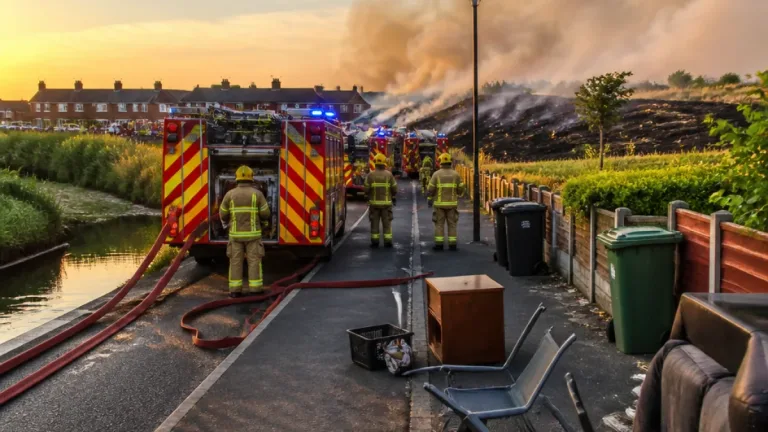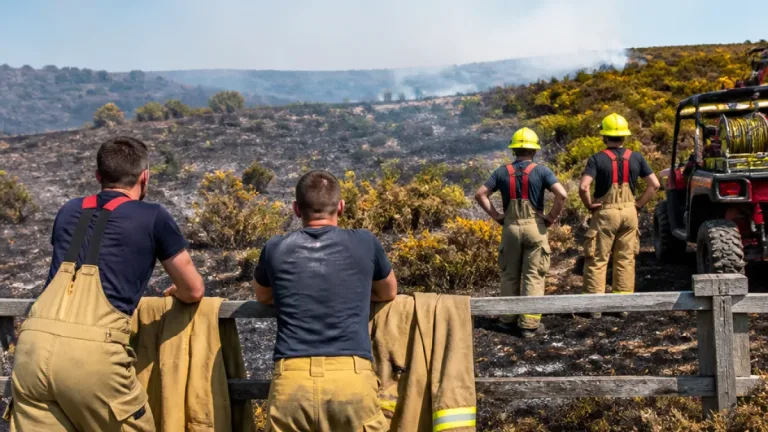
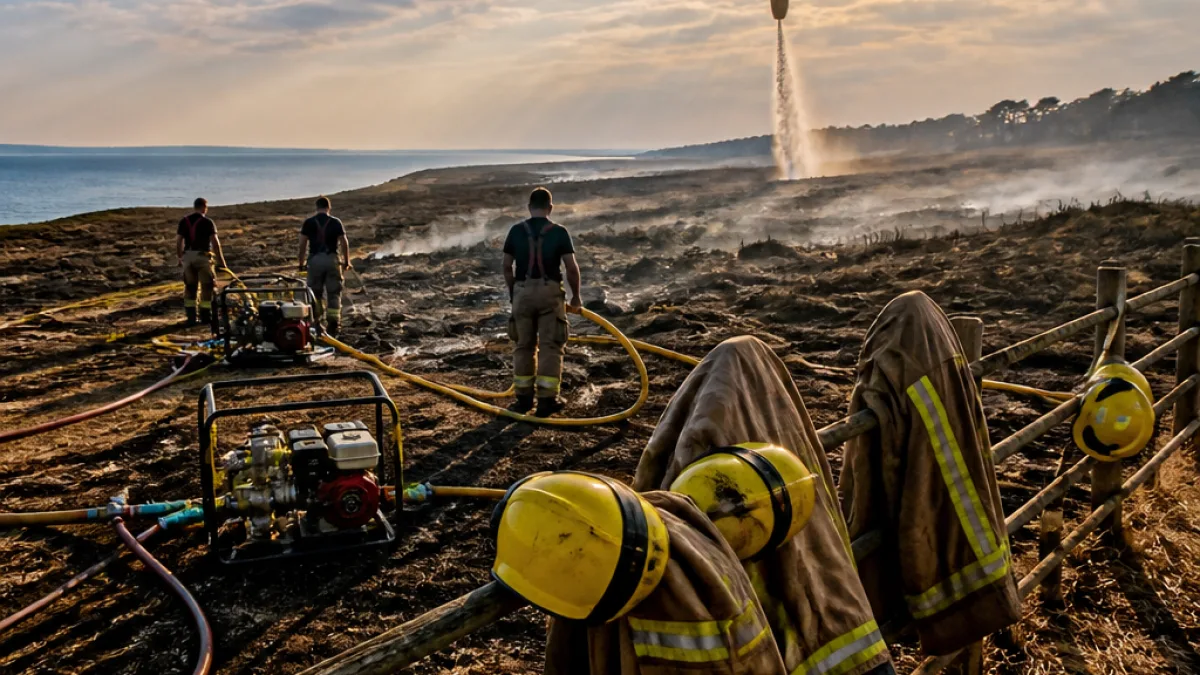
Firefighters across Suffolk have warned that the county’s emergency fire service is under severe strain after tackling a series of recent incidents, including a major wildfire at Dunwich that has devastated a significant area of heathland.
Union calls for extra staff, kit and aerial support
Richard Beeby, brigade secretary of the Suffolk Fire Brigade Union, described crews as “absolutely exhausted” following sustained operations to control multiple blazes. The Dunwich fire alone affected around 150 hectares — an area comparable to about 210 football pitches — and damaged rare habitats at both Dunwich Heath and the RSPB’s Minsmere reserves.
“My members are absolutely exhausted now,” Mr Beeby said, adding that crews have attended repeated deployments over successive days.
The response to the Dunwich incident at times involved up to 120 firefighters, and the county service has received support from colleagues in 13 other counties to cope with demand. Mr Beeby has written to the region’s political leader — described in reports as the local prime minister figure — to press for greater resources for Suffolk’s fire service.
Equipment and workload problems highlighted
Union officials argue the standard kit issued to firefighters is designed primarily for structural fires and is unsuitable for prolonged operations across sandy heaths and uneven terrain. Concerns include:
- protective clothing that is too heavy and restrictive for long-distance footwork;
- boots optimised for flat surfaces rather than soft sand and heather;
- insufficient specialist appliances to convey water from hydrants to remote crews;
- a shortage of full-time, professional firefighters, with the county relying heavily on retained personnel who combine firefighting with other employment.
During the same period crews also attended an explosion in Princes Street, Ipswich, and a field fire on Gulpher Road in Felixstowe, incidents that further stretched resources.
Calls for aerial firefighting and longer-term planning
Mr Beeby and other fire officials say provision of firefighting aircraft and helicopters would bolster the county’s response to large, fast-moving wildfires. The National Trust reportedly used a helicopter to assist in tackling the Dunwich blaze.
| Issue | Reported detail |
|---|---|
| Area affected at Dunwich | 150 hectares |
| Peak firefighter deployment | Up to 120 |
| Mutual aid | Firefighters brought in from 13 counties |
Union leaders are urging political decision-makers to review the county’s capability to respond to wildfires and provide targeted support — from improved kit and vehicles to increased staffing and access to aerial resources. The call comes as emergency services adapt to rising demand amid hotter, drier summers, where heathland and other open habitats are more vulnerable to ignition.
Local residents and organisations with responsibilities for vulnerable landscapes are likely to watch for any commitments from government and fire authorities that would strengthen Suffolk’s resilience to future incidents.