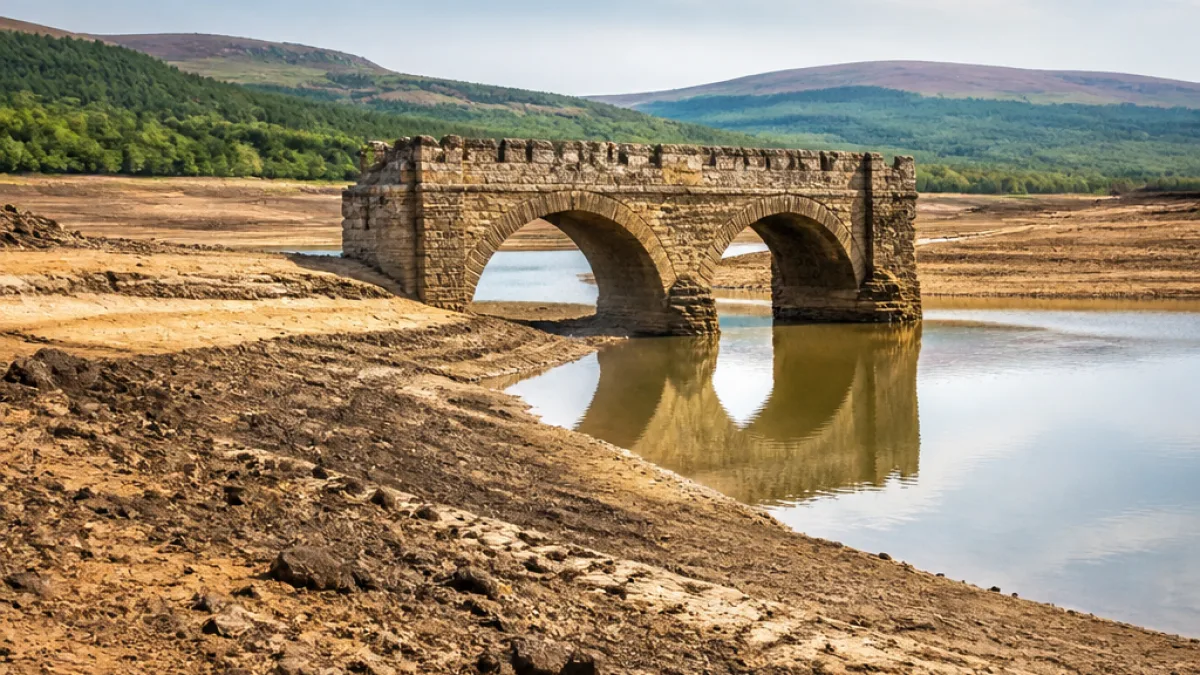
Merthyr Tydfil — A 226-year-old two-arched stone bridge that has lain beneath Llwyn-Onn reservoir since the early 20th century has become visible again this summer as water levels have fallen sharply.
Heritage revealed as reservoir drops
The bridge, believed to date from around 1800 and submerged when the reservoir was filled in 1911, has now re-emerged for a second time in two years. Photographs taken this month show the structure standing in exposed bed at the reservoir's edge, a stark reminder of how low levels have fallen during an unusually dry period.
Natural Resources Wales figures show Wales received only about 8% of its long-term average rainfall for July, leaving many rivers and groundwater bodies at unusually low depths. The agency has flagged environmental impacts across the country as teams respond to changes in streams, wetlands and other habitats.
What else the drought has uncovered
Archaeologists and those who monitor Wales’ historic landscape have also seen features normally invisible return to view. The Royal Commission on the Ancient and Historical Monuments of Wales has reported that heat and dry spells have revealed parchmarks — outlines of prehistoric and later sites — including long barrows, fortifications and even Roman remains. In some places World War Two-era Nissen huts and related traces have appeared in fields.
- Bridge age: c.1800
- Submerged since: 1911
- Recent rainfall for July: c.8% of long-term average
| Item | Detail |
|---|---|
| Structure | Two-arched stone bridge |
| Location | Llwyn-Onn reservoir, Merthyr Tydfil |
| Visibility | Re-emerged twice in two years |
RCAHMW observers say many sites can only be seen from the air as distinctive marks in crops and grass, with some not visible for decades.
The reappearance is visually striking, but local water companies say a drought declaration does not necessarily translate into immediate threats to household supplies. Reservoirs benefited from a wetter period earlier in the year, they point out, even as groundwater and smaller streams show worrying falls.
For residents and visitors to the Brecon Beacons fringe, the bridge serves as a tangible link to a different landscape — one where roads and buildings pre-dated the reservoir. For conservationists, it is an indicator of the pressures on rivers, wetlands and archaeology that come with extended dry spells.
Local authorities and environmental bodies continue to monitor conditions. Anyone with concerns about impacts on private wells, local streams or ecological sites should contact the appropriate authorities, and those interested in the historic features are being urged to avoid disturbing fragile remains visible on exposed ground.
This reappearance is a reminder that climate extremes can reveal lost chapters of the past while posing practical challenges for the present.