British maritime watchdog issues alert after blaze off Omani coast
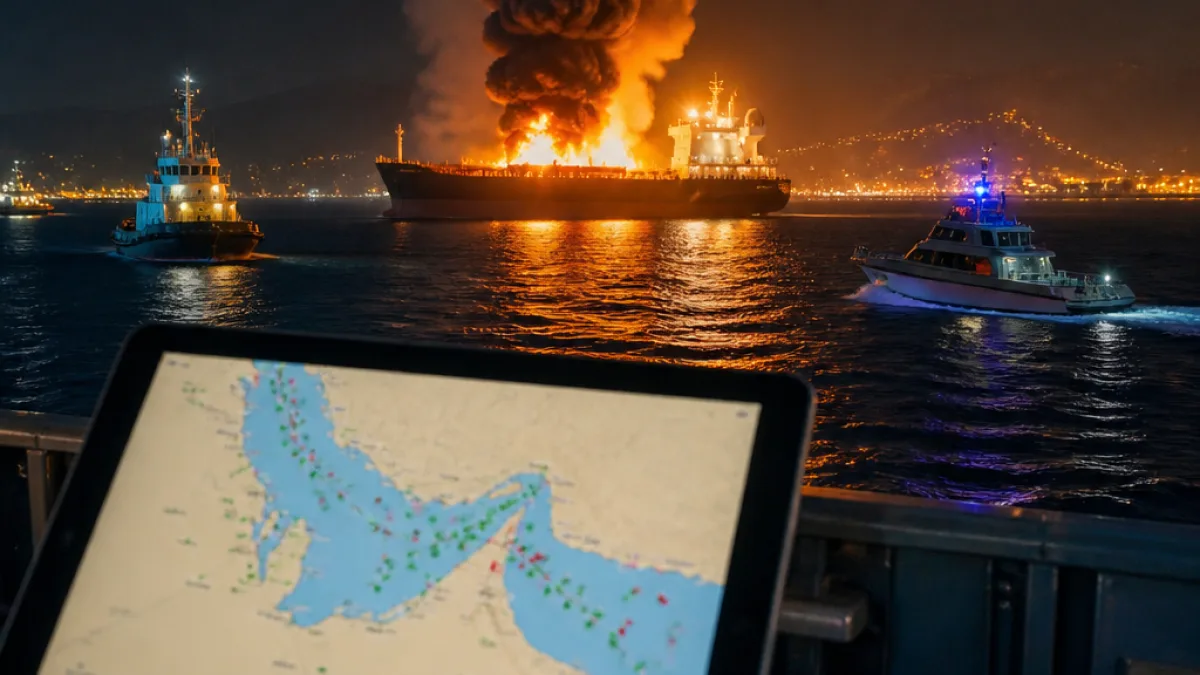
A merchant vessel caught fire in the early hours of Monday in the Strait of Hormuz, close to Oman’s shoreline, prompting a safety notice from the British military’s United Kingdom Maritime Trade Operations (UKMTO). Officials said the cause of the blaze had not yet been determined. The incident unfolds against a backdrop of mounting tension in the Gulf, with the narrow waterway once handling about a fifth of global traded oil and gas in peacetime.
UKMTO’s alert follows months of heightened risk to commercial shipping. The US military has advised merchant traffic to use a corridor nearer to Oman when transiting the strait, a move that has drawn hostile responses from Iran, including attacks on vessels. The escalatory cycle has fed into a wider confrontation across the region, complicating navigation for civilian mariners and insurers alike.
US–Iran exchanges intensify as shipping disruption deepens
Hostilities continued into a second week, with US Central Command announcing fresh strikes in the early hours of Monday – the ninth consecutive night of action – targeting Iranian military capabilities linked to attacks on shipping. In its statement, Central Command said:
“The strikes will continue degrading Iranian military capabilities used to attack commercial vessels and civilian mariners transiting the Strait of Hormuz.”
Tehran has answered with attacks across the Middle East, while key US-aligned states including Bahrain, Jordan and Kuwait have again activated air defences against incoming threats. The exchanges have widened despite an interim arrangement last month that was intended to halt fighting; that deal has since unravelled, and shipping traffic in the strait has been described as having largely stalled.
Casualties reported as infrastructure struck
The US military said one of its personnel died on Saturday in Iraq during the
“controlled detonation”of a downed Iranian drone. A further service member remained unaccounted for after an earlier attack, with the military reporting on Sunday that unidentified remains had been recovered and were being examined. Since the fighting began, the US has recorded 17 service members killed. In recent days, American strikes have also hit bridges and electrical infrastructure in Iran, while Iran has launched missiles towards Jordan, raising fears of spillover into neighbouring Israel.
Why the Strait of Hormuz matters
The Strait of Hormuz is among the world’s most strategically sensitive sea lanes. The narrow channel connects energy producers around the Gulf with international markets, and past disruptions have rippled through shipping schedules and commodity flows. Monday’s fire – with its cause still unknown – adds to a volatile operating picture for commercial crews navigating the corridor under tight security advisories.
For UK-linked shipping, UKMTO’s role is to relay timely alerts and routing information. While the latest notice did not attribute responsibility for the blaze, it came amid a pattern of attacks and retaliatory strikes that have made merchant transits more hazardous. Authorities on both sides have struck assets and civilian infrastructure relied on by millions, underscoring the broader humanitarian and economic stakes alongside the security dimension.
What we know so far
- Location: A vessel reported on fire in the Strait of Hormuz near Oman’s coast.
- Alerting authority: UK Maritime Trade Operations issued a safety notice.
- Cause: Undetermined at the time of reporting.
- Context: Ongoing US–Iran hostilities; repeated strikes and counter-strikes affecting regional security and shipping.
Key facts at a glance
| Detail | Latest reported |
|---|---|
| Incident | Ship fire near Oman in the Strait of Hormuz |
| Advisory body | United Kingdom Maritime Trade Operations (UKMTO) |
| US strike tempo | Ninth straight night |
| US fatalities since war began | 17 service members |
| Strategic significance | Once carried about a fifth of world oil and gas trade in peacetime |
As the situation evolves, shipowners and crews transiting the area are expected to continue monitoring military advisories closely. With both Washington and Tehran signalling readiness to continue operations, the scope for further disruption remains high until a credible de-escalation takes hold.