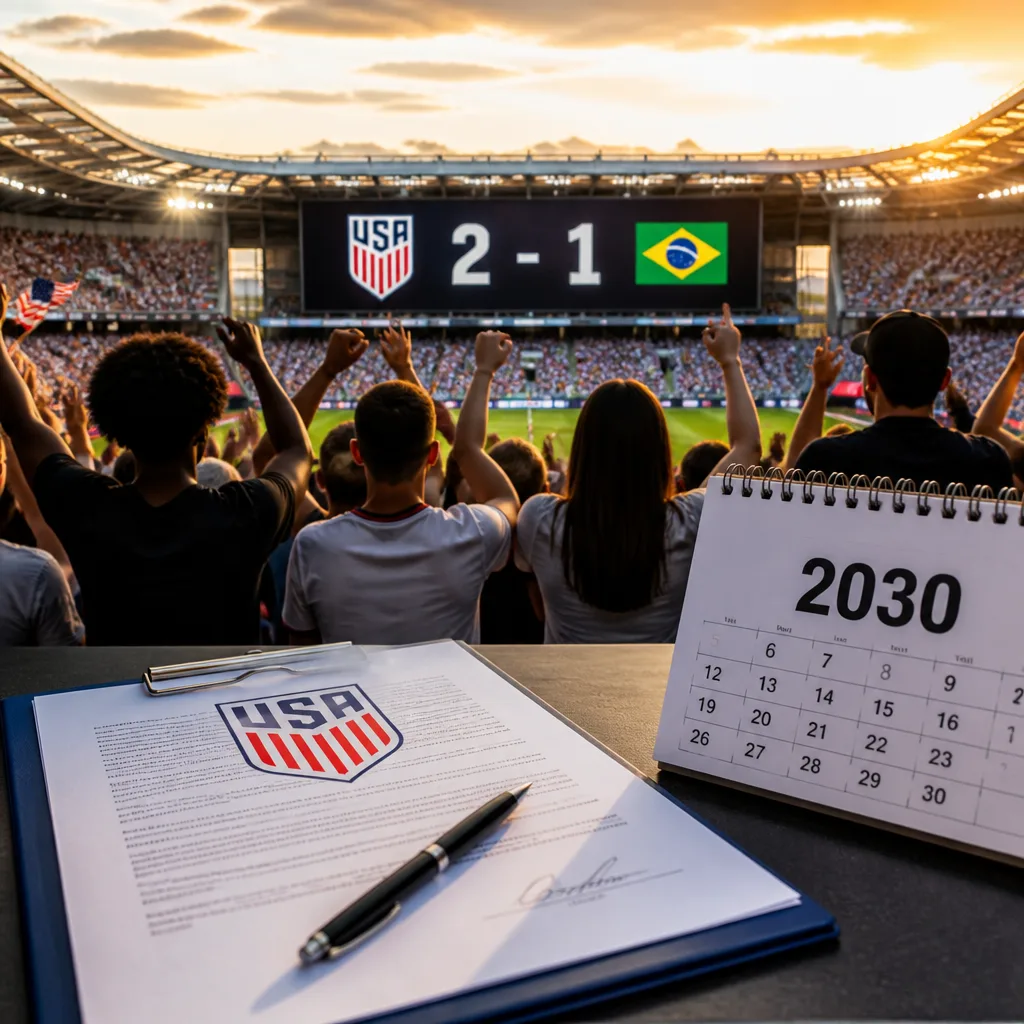
U.S. Soccer has confirmed that Mauricio Pochettino will continue as head coach of the men's national team through the 2030 FIFA World Cup after agreeing a new contract announced on Monday.
Why the deal matters
Pochettino, who was appointed in 2024 to steady the team ahead of this year's global finals, led the United States to an unprecedented tally of three group-stage victories — against Paraguay, Australia and Bosnia-Herzegovina — before a Round of 16 elimination by Belgium, a 4-1 defeat.
The campaign generated substantial public interest: broadcasts of the Round of 16 match on Fox and Telemundo attracted a combined average audience of 50.1 million, described in reporting as the most-watched soccer broadcast in American history. U.S. Soccer's leadership signalled that the governing body sees the result and the renewed supporter engagement as a foundation for longer-term work.
"Mauricio and his staff believe in the future of soccer in the United States and our new project allows us to build on progress of the USMNT and the momentum of U.S. Soccer," said JT Batson, chief executive of U.S. Soccer.
Pochettino himself framed the extension as an opportunity to deepen the work begun since his arrival. In a statement accompanying the announcement he said the passion witnessed at the World Cup reinforced belief in the team's potential and that he and his staff are "excited by the opportunity to bring all our experience and knowledge to even more areas of U.S. Soccer while helping strengthen the pathways for players, coaches and teams across the Federation."
Immediate implications
- Stability of leadership: The extension secures managerial continuity through two World Cup cycles, aiming to capitalise on recent momentum.
- Development focus: Pochettino signalled plans to broaden his role beyond match coaching to coaching pathways and academy structures within the federation.
- Commercial and fan impact: The World Cup viewing figures underline the sport's growth in the U.S., strengthening the federation's case to investors, broadcasters and sponsors.
For British readers, there are several strands to watch: Pochettino arrives with a pedigree from leading top European clubs, and his continued stewardship of the U.S. team affects player pathway choices, transatlantic transfers and international competitions where British clubs and national teams may encounter a more consistent and internationally competitive U.S. side.
| Item | Detail |
|---|---|
| Contract term | Through 2030 FIFA World Cup |
| World Cup group wins | 3 (Paraguay, Australia, Bosnia-Herzegovina) |
| Round of 16 result | Lost 4-1 to Belgium |
| Combined TV audience (Round of 16) | 50.1 million (Fox + Telemundo) |
Pochettino's appointment in 2024 already marked a significant moment for U.S. Soccer: he brought a high-profile résumé from the English and French top flights, having managed clubs including Tottenham Hotspur, Paris Saint-Germain and Chelsea. The new multi-year deal indicates the federation's intent to convert a single high-profile tournament into a sustained project, prioritising infrastructure and talent pipelines to sustain international competitiveness.
The effectiveness of that strategy will be measured not only by results at the 2026 and 2030 World Cups but also by whether the United States can translate tournament attention into deeper domestic development and consistent performances in the intervening years.