
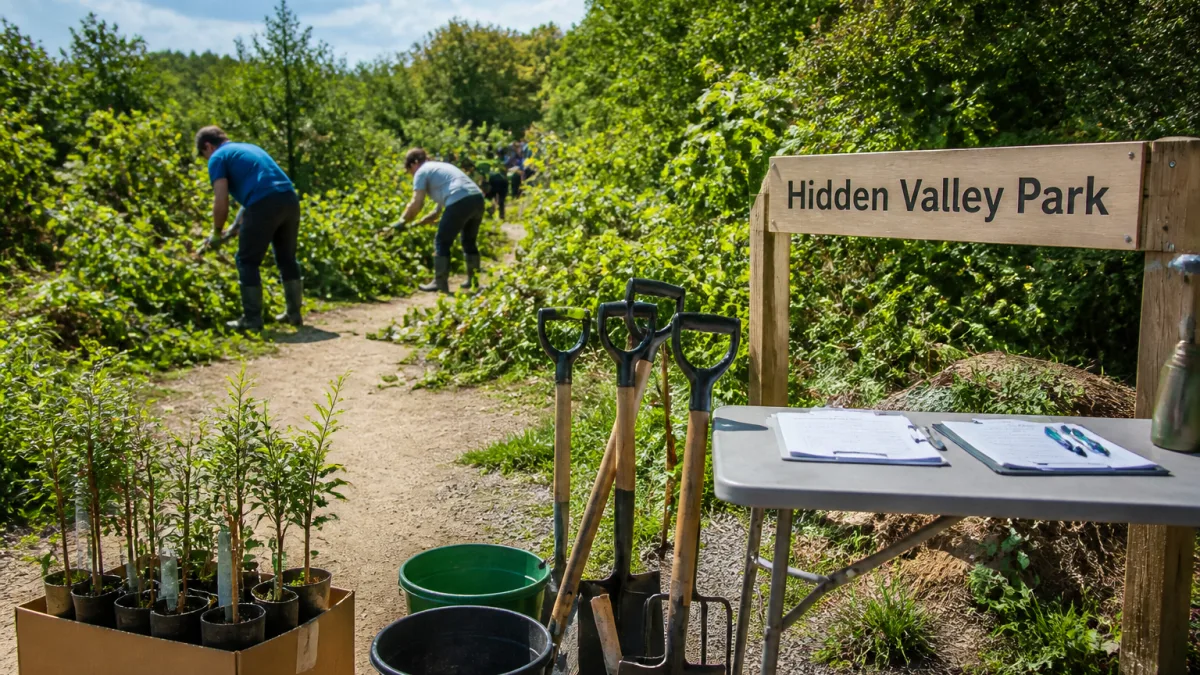
Volunteer stewardship in focus — and why it resonates in Halton
Conservation Halton in Ontario, Canada, is calling on residents to roll up their sleeves for a series of hands‑on habitat sessions at Hidden Valley Park over the summer. While the activity is taking place with our namesakes across the Atlantic, the principles behind it — community care for local green spaces and practical action on biodiversity — will be familiar to many here in Halton.
The programme, which begins next week and continues through August, invites volunteers to work alongside the authority’s landscape restoration team. Participants will focus on removing invasive plants to help native species thrive and to improve ecological connections between Cootes Paradise and the Niagara Escarpment. A dedicated native tree‑planting day follows in September. All tools and materials are provided, and would‑be helpers simply need to sign a waiver on arrival and register online in advance.
“A series of stewardship events are set at Hidden Valley Park this summer, with local residents invited to pitch in.”
Dates and activities
- Wednesday, 22 July — volunteer stewardship session (invasive plant removal, habitat work)
- Wednesday, 5 August — continuation of on‑the‑ground restoration tasks
- Wednesday, 19 August — further stewardship session with the restoration team
- Saturday, 19 September — native tree planting event
For clarity, organisers state that all supplies will be provided. On arrival, volunteers must complete a waiver, and questions can be directed to the restoration team by email. Registration is available online via the project announcement.
| Date | Focus | Notes |
|---|---|---|
| 22 July | Stewardship session | Invasive plant removal |
| 5 August | Stewardship session | Habitat improvement |
| 19 August | Stewardship session | With restoration team |
| 19 September | Tree planting | Native species |
Why this matters — shared lessons for communities
Although this initiative is organised by a Canadian conservation authority, its emphasis on biodiversity and invasive species management echoes priorities found in many local authorities. Removing non‑native plants can reduce pressure on habitats, support the return of pollinators and birds, and create more resilient green corridors. The approach — combining staff expertise with public volunteers — helps stretch limited resources while building local stewardship.
Importantly, the sessions are designed to be accessible: tools supplied, clear tasks, and short, named dates that allow residents to commit time in manageable chunks. A dedicated, later tree‑planting event gives the public a visible, long‑term contribution to the landscape.
Taking part and finding out more
Those considering travelling to participate should note the project is in Ontario, Canada. The organisers ask participants to register online and to complete a waiver upon arrival. Queries about the restoration team and the practicalities of the sessions can be directed to the email address provided in the announcement.
Whether near or far, the underlying message is consistent: practical, volunteer‑led stewardship can make a measurable difference to local parks and nature reserves. As communities reflect on how to protect and enhance their own green spaces, programmes like this offer a straightforward model — clear dates, defined tasks, expert guidance and an open invitation to help.