
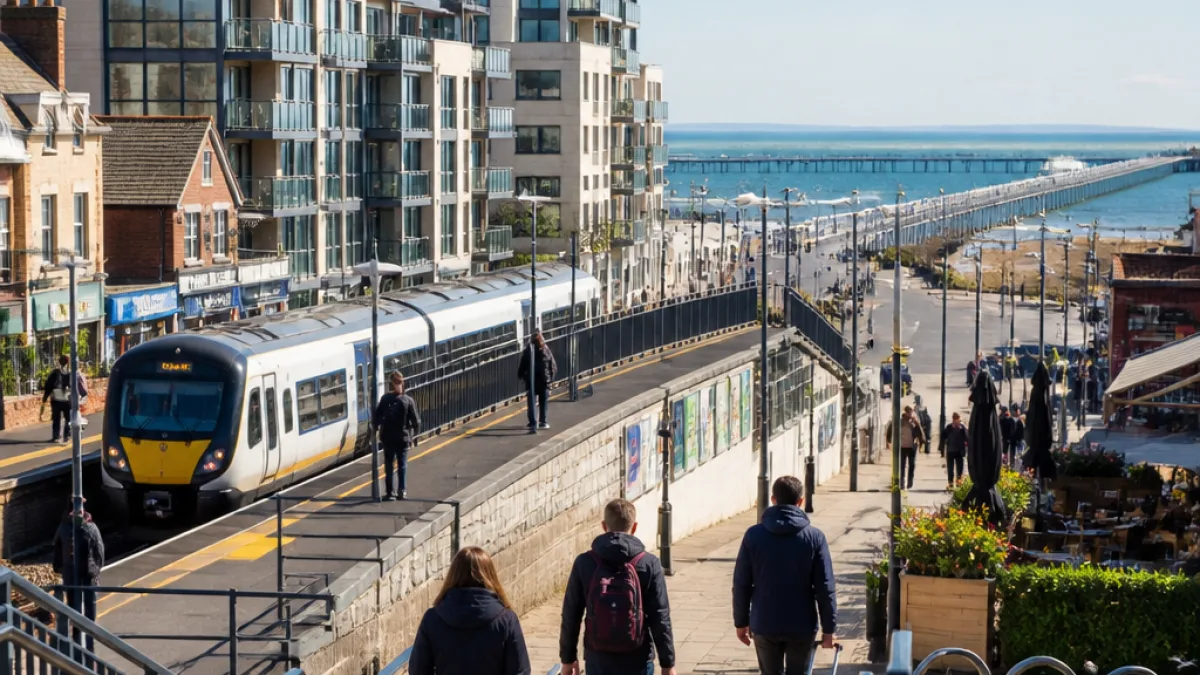
Southend-on-Sea is emerging as a favoured choice for people relocating from London who still require reliable access to the capital. The city’s mixture of coastal appeal, established rail connections and comparatively lower property costs is prompting a renewed interest from buyers seeking more space and a different quality of life.
Commuting patterns reshaped by hybrid working
Changes in working arrangements are altering the calculus for those choosing where to live. With many employees now combining remote work and office days, regular rail services into London make Southend a feasible option for those who only need to commute some of the time. The city’s position on the Thames Estuary and its transport links are central to this appeal, enabling the balance between seaside living and access to urban employment.
Housing: more choice outside the capital
A key attraction for incoming buyers is the ability to obtain larger or different types of homes than are readily available in many London districts. Southend offers a range of properties — from Victorian terraces to family houses with gardens — that can be harder to find within the capital’s pricier neighbourhoods. The greater variety available locally is cited as a major factor drawing families and first-time buyers.
"leave London behind without losing easy access to the capital"
Alongside conventional home purchases, there is also a growing market for short-term lets and holiday accommodation. Travel links to London and the seaside make the city attractive both to long-term residents and to visitors, with some homeowners choosing to manage Airbnb-style properties as an additional income stream.
Economic renewal and civic ambitions
Southend’s identity has evolved beyond traditional seaside imagery. Since being granted city status in 2022, the locality has sought to cultivate a more modern, mixed economy. New independent cafés, restaurants and creative businesses have emerged, contributing to regeneration efforts and broadening the city’s year-round appeal.
- Transport: Reliable rail services provide practical commuting links to London.
- Housing: A wider range of property types, including family homes with gardens.
- Economy: Growing creative and hospitality sectors alongside tourism opportunities.
Local implications and policy questions
While increased demand from London buyers brings potential economic benefits, it also raises questions for local planners and councillors. Greater interest in the city could intensify pressure on the housing stock, affect affordability for existing residents and change neighbourhood character. The expansion of short-term lets could bolster visitor numbers and local spending but may also reduce the supply of long-term rental housing.
City leaders and stakeholders face the task of managing growth so that regeneration and new investment benefit existing communities as well as newcomers. Strategic planning, clear policies on short-term lets and targeted infrastructure investment will be central to ensuring the city’s development is sustainable and inclusive.
For residents, the trend underlines the need to engage with consultations on planning and housing policy. The choices made now will shape Southend-on-Sea’s housing market, public services and economic profile as it attracts an expanding commuter population while seeking to retain its coastal character.