
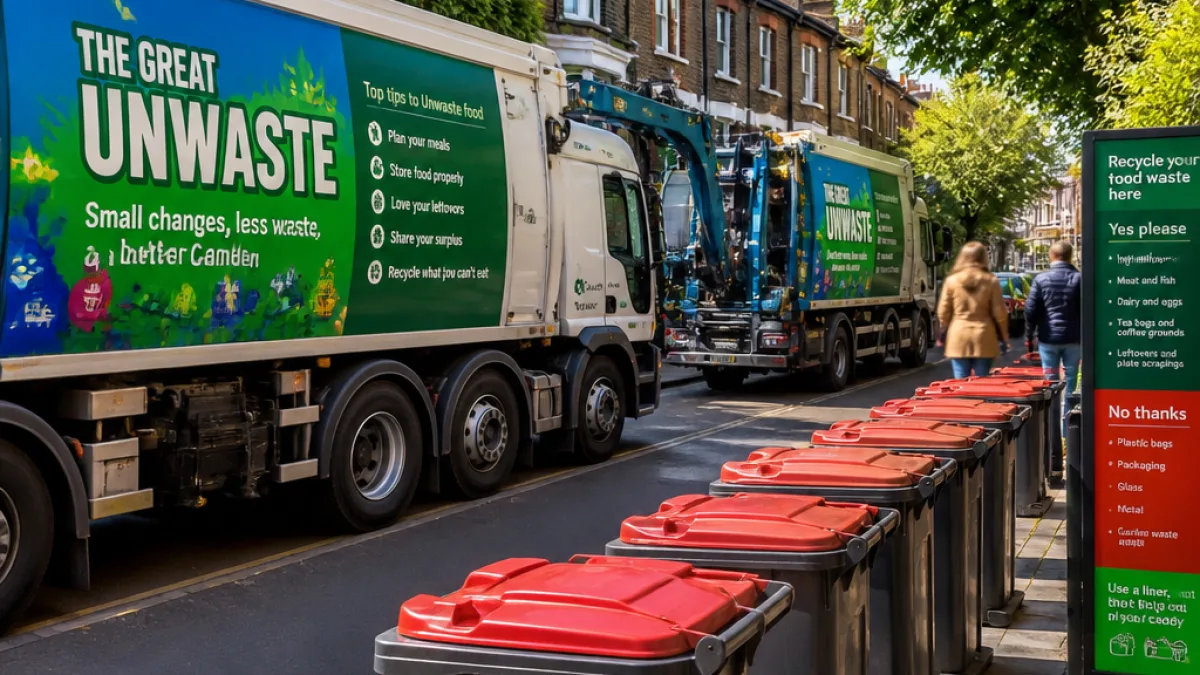
Camden Council has begun using two of its waste-collection trucks as moving billboards for The Great Unwaste campaign, placing practical food-waste reduction advice directly into neighbourhoods. The initiative follows recent bin audits that found a large portion of the material in household red-lidded bins is food waste.
What the audits showed
Council audit results reveal that up to 46% of the contents of red-lidded garbage bins is food waste, and of that material about 78% was classified as avoidable — food that could have been eaten if it had been planned, stored or used differently. Those figures are driving the Council's decision to use its most visible service, the refuse trucks, as a vehicle for public education.
| Measure | Result |
|---|---|
| Proportion of food waste in red-lidded bins | 46% |
| Share of that food waste considered avoidable | 78% |
Advice being promoted
The truck wraps display a set of simple, everyday actions from The Great Unwaste campaign intended to reduce the amount of edible food thrown away. The core advice includes:
- Plan meals before shopping
- Check fridge, freezer and pantry before you go to the supermarket
- Shop with a list and buy only what you need
- Store food correctly to keep it fresher for longer
- Freeze food you won't use in time
- Use leftovers for lunches or create new meals
- Compost unavoidable food scraps rather than sending them to landfill
"It's fantastic to be able to showcase this message and help bring the important information directly to our residents,"
The Mayor of Camden said the Council viewed its bin trucks as a natural platform for community education because they are highly visible in neighbourhoods. The Council stated the campaign is part of its ongoing commitment to waste reduction and sustainability.
Local consequences
For residents the initiative is a reminder that modest changes in shopping, storage and meal planning can reduce household waste and save money. The figures supplied by the Council underline that much of what ends up in general rubbish collections could be avoided through better planning or redirected to composting. The campaign's visibility aims to nudge everyday behaviour by combining clear tips with the familiarity of routine bin collections.
The use of council vehicles for behavioural messaging also illustrates how local authorities are looking to combine operational assets with public education to meet broader sustainability objectives. Households seeking tailored advice should contact the Council's waste services for information about composting, food storage or local programs that support waste reduction.