Senedd members hear first-hand concerns at Llandeilo visit
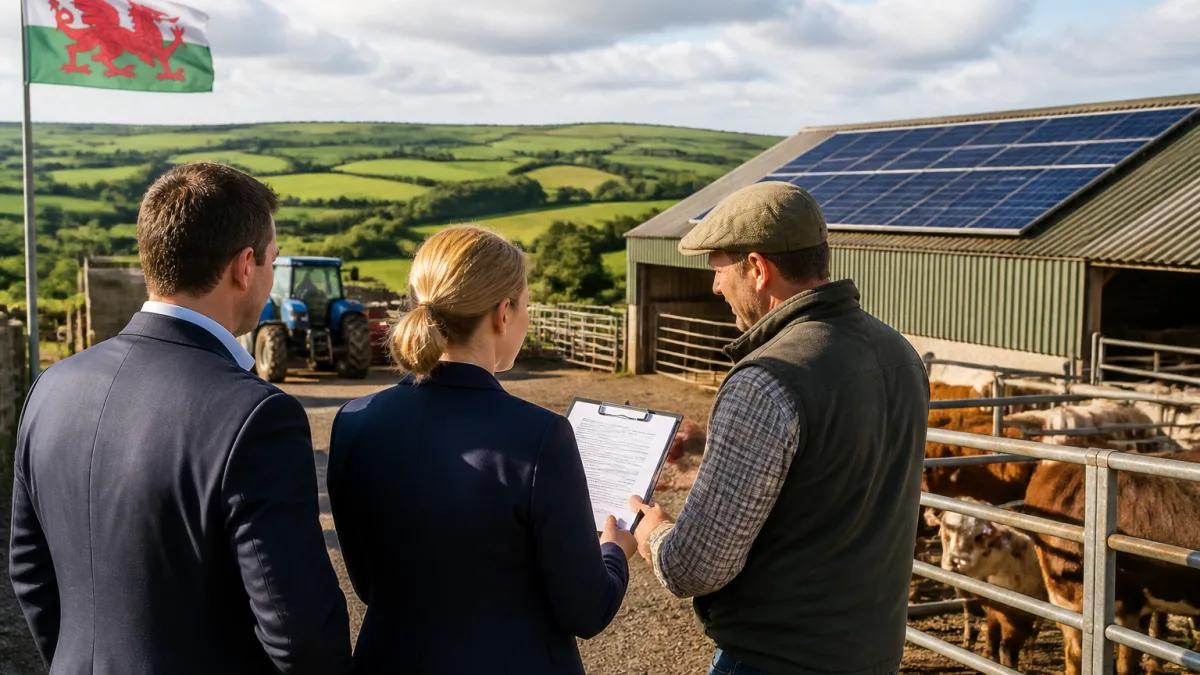
Two Carmarthenshire Members of the Senedd met the Farmers’ Union of Wales to discuss the pressures facing local agriculture and the Welsh Government’s initial policy steps since May’s election. The visit took place last week at Gurnos, the family farm of FUW President Ian Rickman, near Llandeilo, where discussions focused on regulation, resilience and investment on farms across the county.
Plaid Cymru’s Nerys Evans and Cefin Campbell joined FUW representatives days after the new administration began setting out measures aimed at easing administrative burdens and unlocking capital for on-farm improvements. The government, now led by Plaid Cymru as the largest party at the Senedd, has announced a dedicated review of agricultural paperwork and the rollout of low-interest loans of up to £1,000,000 for investment in buildings, energy efficiency and new equipment.
Paperwork review and investment finance outlined
At the start of June, Cabinet Minister for Rural Resilience and Sustainability Llŷr Gruffydd MS named John Davies—a beef and sheep farmer from the Brecon area and former NFU Wales President—to chair a review examining the paperwork faced by farmers and agents. A fortnight later, Mr Gruffydd confirmed a financing package offering low-interest loans (up to £1,000,000) to help farm businesses invest in infrastructure, improve energy efficiency and production, and upgrade or purchase equipment.
| Measure | Lead | Focus |
|---|---|---|
| Paperwork review | John Davies (Chair) | Cutting administrative burdens on farmers and agents |
| Low-interest loans | Welsh Government | Up to £1,000,000 for buildings, energy efficiency, equipment |
During the Llandeilo visit, the local MSs discussed how these steps might intersect with ongoing regulatory requirements and the day-to-day realities of working farms in Carmarthenshire. While details of delivery timelines and eligibility will be key for farmers considering applications, the early announcements were framed by ministers as practical tools to improve efficiency and resilience on farm.
Sector pressures: regulation, schemes and animal health
FUW representatives underlined the complexity of the current operating environment, including adaptation to the Sustainable Farming Scheme, the scope of agricultural pollution regulations, and the continuing strain caused by bovine TB. These issues, they argued, touch both the financial performance of farm businesses and the wellbeing of those running them.
“Welsh farmers are facing an extremely challenging period at the moment, with a number of complex issues putting pressure on the sector - from adapting to the Sustainable Farming Scheme and the far-reaching expectations of the agricultural pollution regulations, to the ongoing impact of bovine TB on the emotional and financial well-being of our farmers.”
Farmers in Carmarthenshire will recognise the combined effect of administrative demands, compliance costs and uncertainty around longer-term reform. Against that backdrop, access to affordable finance for targeted improvements could help some businesses modernise buildings, reduce energy consumption and invest in more efficient kit—provided lending terms and criteria align with on-the-ground needs.
Government’s first-hundred-days commitments
Nerys Evans, who previously served on the FUW board for seven years, said the measures were part of the administration’s early plan to respond to sector challenges.
“During the Senedd election earlier this year - and at the heart of our plan for our first hundred days in government - we committed to start work immediately to deal with the challenges facing the agricultural sector. From providing low interest loans to enable farms to improve their efficiency to starting the work of finding ways to cut paperwork in the sector, we are already making that happen. I'm looking forward to seeing the impact this government will have over the next few years.”
For Carmarthenshire farmers weighing up investment decisions, clarity on repayment periods, application processes and how loans interact with existing support will be central. The paperwork review, chaired by John Davies, is expected to look at pain points identified by farmers and their agents, potentially informing adjustments that could reduce duplication and free up time at peak periods.
What the visit means for local farm businesses
The Llandeilo meeting brought together policymakers and union leadership at a working farm, anchoring headline announcements in the reality of the yard and fields. With the Sustainable Farming Scheme and pollution regulations continuing to shape practice, any reduction in bureaucracy or access to competitively priced finance could influence operational choices—from upgrading livestock housing to installing more energy-efficient systems.
- Administrative burden: The paperwork review may recommend streamlining forms or processes affecting day-to-day operations.
- Capital investment: Loans up to £1,000,000 could enable upgrades to buildings, energy systems and equipment, subject to eligibility and terms.
- Ongoing challenges: Adaptation to schemes and regulations, alongside the impacts of bovine TB, remains a key concern for the sector.
As policy detail emerges, farmers and advisers in Carmarthenshire will be assessing whether the measures can deliver tangible benefits quickly enough to help manage cash flow and compliance. For now, the visit near Llandeilo signals that the conversation between government and the industry is active, with further decisions likely to follow the review of administrative requirements.