Senedd members meet FUW on Carmarthenshire farm
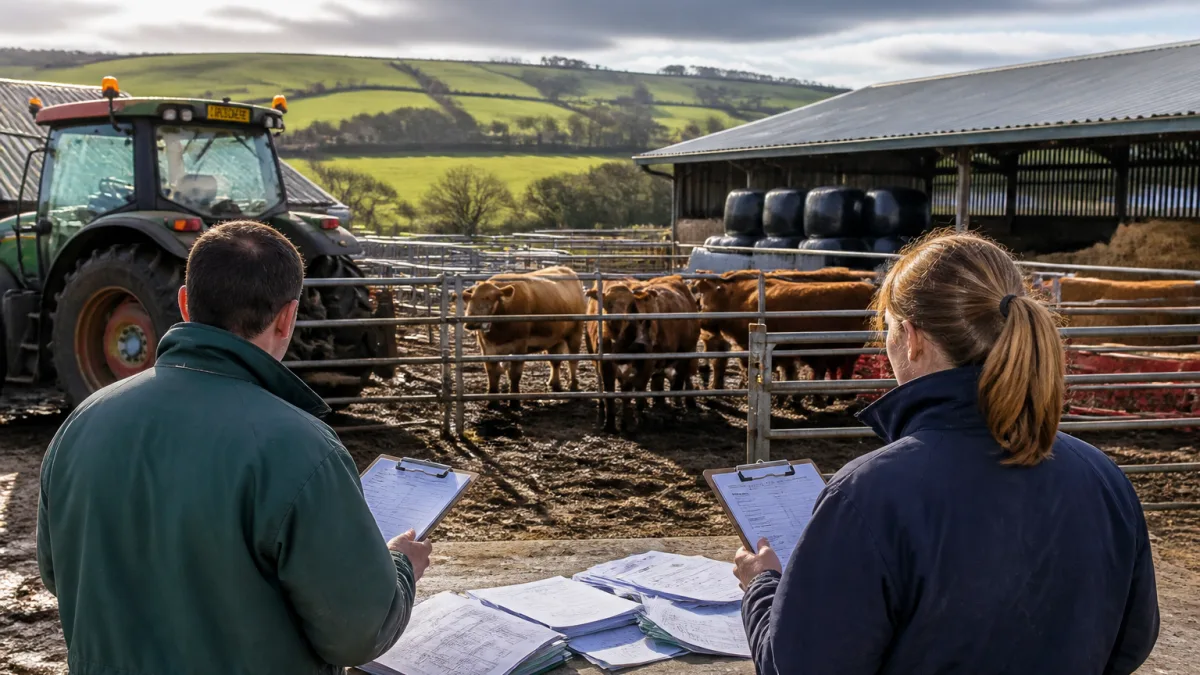
Two Carmarthenshire Members of the Senedd have met representatives of the Farmers’ Union of Wales (FUW) to discuss the challenges facing local agriculture and the Welsh Government’s early policy moves intended to support the sector. The meeting took place on Friday, 10 July at Gurnos, the family farm of FUW President Ian Rickman, near Llandeilo.
The visit follows the Senedd election in May, after which Plaid Cymru formed the Welsh Government as the largest party. Ministers have since outlined initial steps focused on easing administrative burdens and unlocking investment on farms across Wales. Those priorities were central to discussions on the Carmarthenshire holding, reflecting the county’s strong agricultural base and the pressures many family businesses continue to face.
Policy actions highlighted
Attendees discussed two announcements made in recent weeks by Llŷr Gruffydd MS, the Cabinet Minister for Rural Resilience and Sustainability:
- Red tape review: John Davies, a beef and sheep farmer from the Brecon area and former President of NFU Wales, has been appointed to lead work examining the volume and complexity of paperwork handled by farmers and agents.
- Low-interest finance: the Government will offer loans of up to £1,000,000 to enable on-farm investment, including improving buildings, boosting energy efficiency and production, and purchasing new equipment.
| Measure | Lead/Limit | Intended focus |
|---|---|---|
| Paperwork review | Chair: John Davies | Reduce administrative burden on farmers and agents |
| Low-interest loans | Up to £1,000,000 | Capital improvements, energy efficiency, equipment |
Stakeholders set out the pressures
Speaking after the visit in her constituency, Nerys Evans MS said:
"During the Senedd election earlier this year - and at the heart of our plan for our first hundred days in government - we committed to start work immediately to deal with the challenges facing the agricultural sector. From providing low interest loans to enable farms to improve their efficiency to starting the work of finding ways to cut paperwork in the sector, we are already making that happen. I'm looking forward to seeing the impact this government will have over the next few years.”
FUW President Ian Rickman outlined the breadth of issues affecting farm businesses:
"Welsh farmers are facing an extremely challenging period at the moment, with a number of complex issues putting pressure on the sector - from adapting to the Sustainable Farming Scheme and the far-reaching expectations of the agricultural pollution regulations, to the ongoing impact of bovine TB on the emotional and financial well-being of our farmers."
Why it matters in Carmarthenshire
Carmarthenshire’s economy and rural communities are closely tied to farming, and policy shifts on environmental regulation, support schemes and finance can have immediate local effects. A drive to simplify documentation could reduce time spent off the land, while access to affordable capital may help farms upgrade buildings and equipment, invest in energy efficiency, and adapt to changing requirements. The outcomes of the paperwork review, chaired by John Davies, will be watched carefully by producers and agents across the county.
For holdings navigating the Sustainable Farming Scheme and expectations arising from agricultural pollution regulations, clarity and administrative streamlining are likely to be as important as funding. Meanwhile, the continuing impact of bovine TB—highlighted by the FUW—remains a source of both financial strain and emotional stress for affected families. Against this backdrop, the announced measures represent an early test of how government and industry can work together to support resilience in a core Carmarthenshire sector.
Next steps
While the Government has sketched out its first actions, delivery will be key. Farmers in Carmarthenshire will be looking for practical changes from the review process—such as fewer duplicative forms and clearer guidance—alongside timely access to the low-interest loans. As details on application routes, eligibility and timelines emerge, local producers will need to assess how the support aligns with their investment plans and regulatory obligations.
Both the FUW and elected representatives indicated their intention to maintain close contact as policies are implemented. With a summer of activity on farms now underway, the sector’s feedback from places like Llandeilo, the Towy Valley and across the county will likely shape how these early initiatives develop in practice.