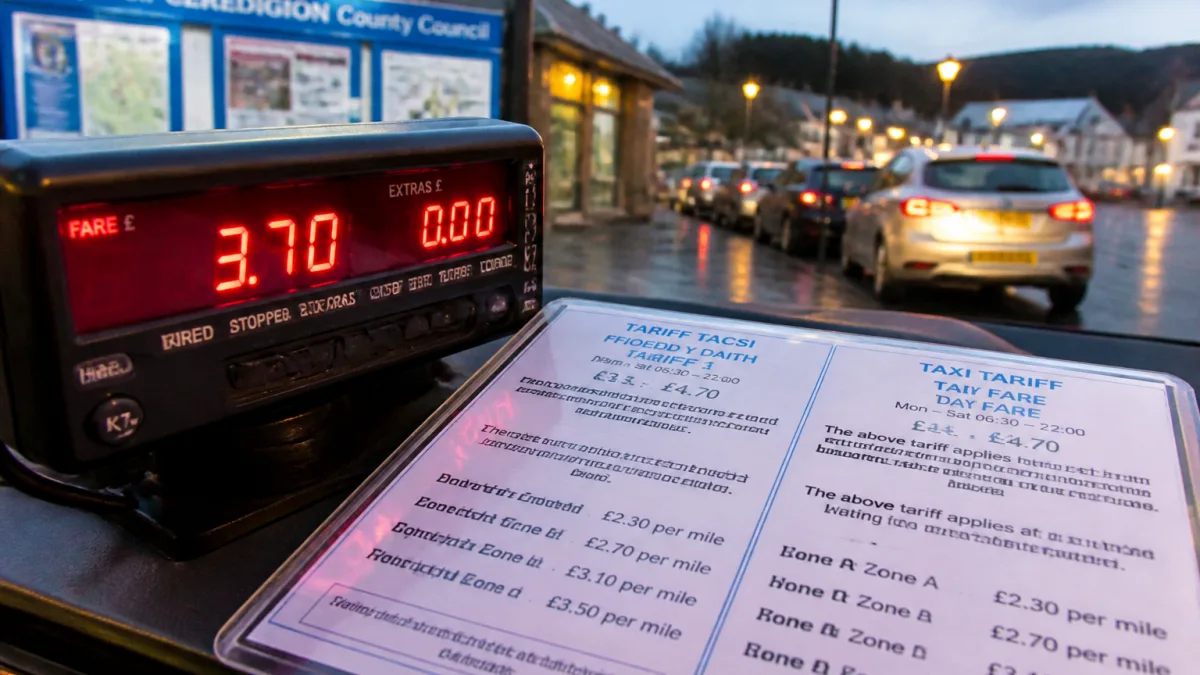
Cabinet approves first fare change since 2022
Taxi fares in Ceredigion will rise by 7% following a unanimous decision by Ceredigion County Council’s Cabinet on 7 July. The approval marks the first alteration to local tariffs since 2022 and follows a request from the taxi trade to address escalating operating costs. The county will move from the joint 11th highest taxi fares among Wales’ 22 local authorities to the sixth highest.
Under the revised structure, the standard daytime starting rate for the first half‑mile will increase from £3.50 to £3.70. The highest night or holiday tariff will rise from £7.00 to £7.40, with proportional increases applied per mile thereafter. Council officers said the change reflects pressures within the trade, including fuel, insurance and maintenance costs.
Public consultation shows majority opposition
The decision follows a public consultation in which 62% of 53 respondents disagreed with the proposed increase. A report presented by Councillor Matthew Vaux summarised the competing pressures between passengers and operators, noting both affordability concerns and the need to keep services viable in a sparsely populated county.
“A clear divide [exists] between concerns about the affordability of taxi fares for passengers and the financial sustainability of taxi services in Ceredigion.”
Respondents warned of a “negative impact” and “additional strain” on household budgets during the continuing cost‑of‑living crisis. The report highlighted particular implications for elderly residents, disabled people, students, low‑income households and non‑drivers who depend on taxis for essential trips such as work, healthcare, shopping and social contact.
Rural access and service sustainability in the balance
The council acknowledged that Ceredigion’s rural geography and limited public transport heighten the stakes for both users and providers. Industry feedback indicated that without a rise, businesses could struggle to retain drivers and maintain availability, especially in remote areas where journey distances are often longer. Critics, however, cautioned that higher prices risk deterring essential trips, potentially deepening isolation.
Respondents frequently highlighted the risk that higher fares could “increase isolation, reduce accessibility and place additional strain on people already affected by the wider cost‑of‑living crisis.”
How Ceredigion compares and what changes for passengers
With the uplift, Ceredigion’s tariffs will overtake those in neighbouring Pembrokeshire and Carmarthenshire. While the authority did not publish revised per‑mile figures alongside the starting rates, it confirmed that increases would be applied proportionally across the scale, including for night and holiday travel.
| Tariff element | Current | New |
|---|---|---|
| Daytime start (first half‑mile) | £3.50 | £3.70 |
| Highest night/holiday start | £7.00 | £7.40 |
For regular users—particularly those in villages with few bus services—the combination of a higher flag‑fall and adjusted per‑mile rates will mean paying more for routine trips. The council’s report underscores that the change is intended to shore up service reliability by keeping more vehicles on the road, though it accepts this may make some journeys less affordable.
Key issues flagged by the consultation
- Affordability pressures: Residents fear the rise will compound living‑cost challenges.
- Service viability: Operators argue the increase is needed to cover rising costs and retain drivers.
- Rural impact: Concerns about accessibility for people without alternatives, including elderly and disabled passengers.
Cabinet members concluded that, on balance, the 7% adjustment was necessary to sustain the local taxi network. The authority has signalled it will continue monitoring feedback from residents and the trade. No implementation timetable was outlined in the report, but once in force, the new scale will reset Ceredigion’s position near the top tier of Welsh taxi tariffs.