Construction on the second phase of Darlington’s walking and cycling improvement scheme is due to begin this week, council officers have confirmed, bringing closer the long-promised continuous route between West Park and the town centre.
Where works will take place
The latest stage will extend the existing route along Woodland Road, running from the Hollyhurst Road junction to Deneside Road, close to Tennis Dene. Work is scheduled to start on Monday at Dene Grove and to be carried out in phases intended to reduce disruption for local residents and road users.
Traffic and disruption arrangements
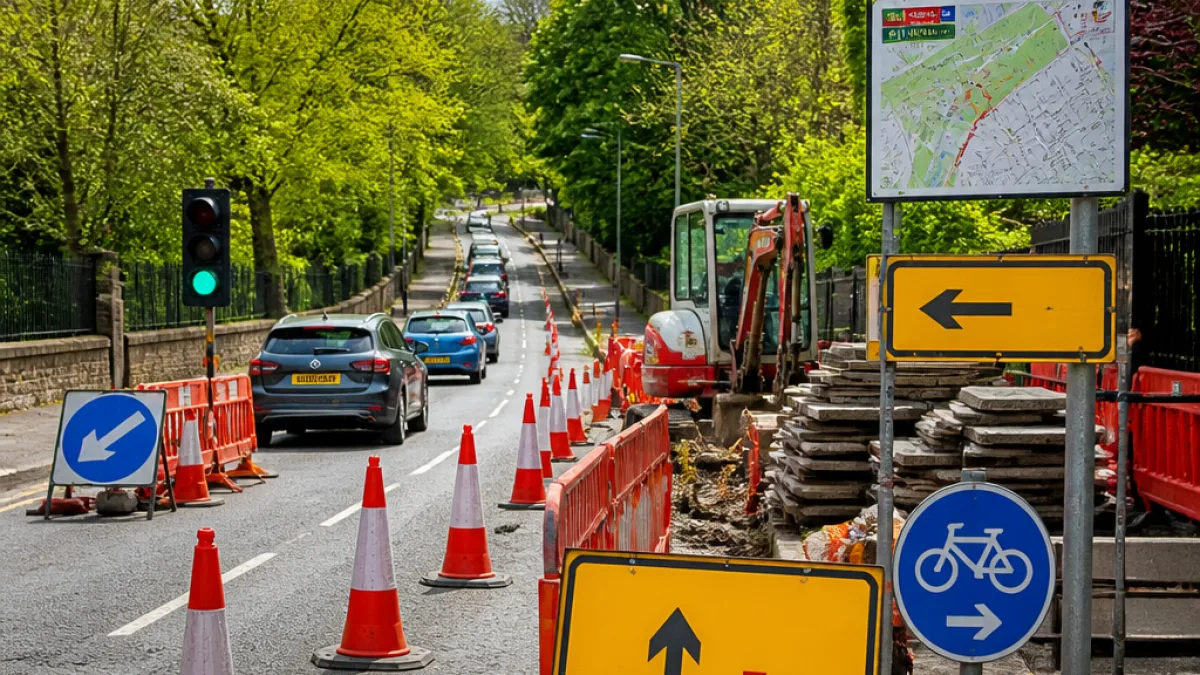
Darlington Council has said that two-way traffic will be maintained where possible, but warned that parts of the scheme will require temporary traffic lights, junction closures and pavement diversions during construction. The council expects the overall scheme to be completed in 2027.
- Route: Woodland Road (Hollyhurst Road junction to Deneside Road, near Tennis Dene)
- Start point for phase two: Dene Grove (works starting Monday)
- Completion: expected in 2027
Background and delays
The project has been on the council’s agenda since plans for a continuous walking and cycling link were first revealed in January 2022. Progress stalled after the authority failed to secure funding from the government’s Levelling Up Fund in 2023, creating uncertainty over whether the route would proceed. Council officials later confirmed in August 2025 that phase two would begin later that year, but the start date was pushed back again before the current announcement.
| Milestone | Date |
|---|---|
| Initial proposals unveiled | January 2022 |
| Levelling Up Fund bid unsuccessful | 2023 |
| Council confirmation of phase two | August 2025 |
| Construction due to begin (Dene Grove) | This week |
| Expected completion | 2027 |
Purpose and local benefits
Council leaders say the route is intended to make it “safer and easier” for people to choose walking and cycling, with benefits for both public health and the environment. The scheme will also introduce new priority crossings on side roads to help link communities along the corridor.
"It will also help to connect our communities by giving one safe, accessible route from West Park to the town centre," said Libby McCollom, Darlington Council’s cabinet member for local services, adding that the work should encourage more sustainable travel.
For residents, the phased approach aims to strike a balance between delivering improvements and limiting the impact of construction. Local drivers, bus users and pedestrians should expect temporary changes to normal routes while works are under way; the council has not ruled out short-term junction closures when they are needed to carry out specific pieces of work.
As the project moves from planning to physical works, the principal questions for communities will be the day-to-day management of disruption, how well temporary traffic measures are communicated, and whether the finished route delivers the promised improvements for people walking and cycling across Darlington.