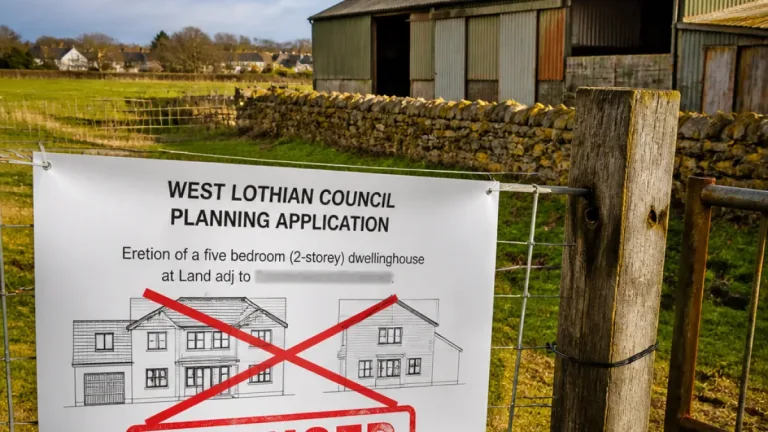
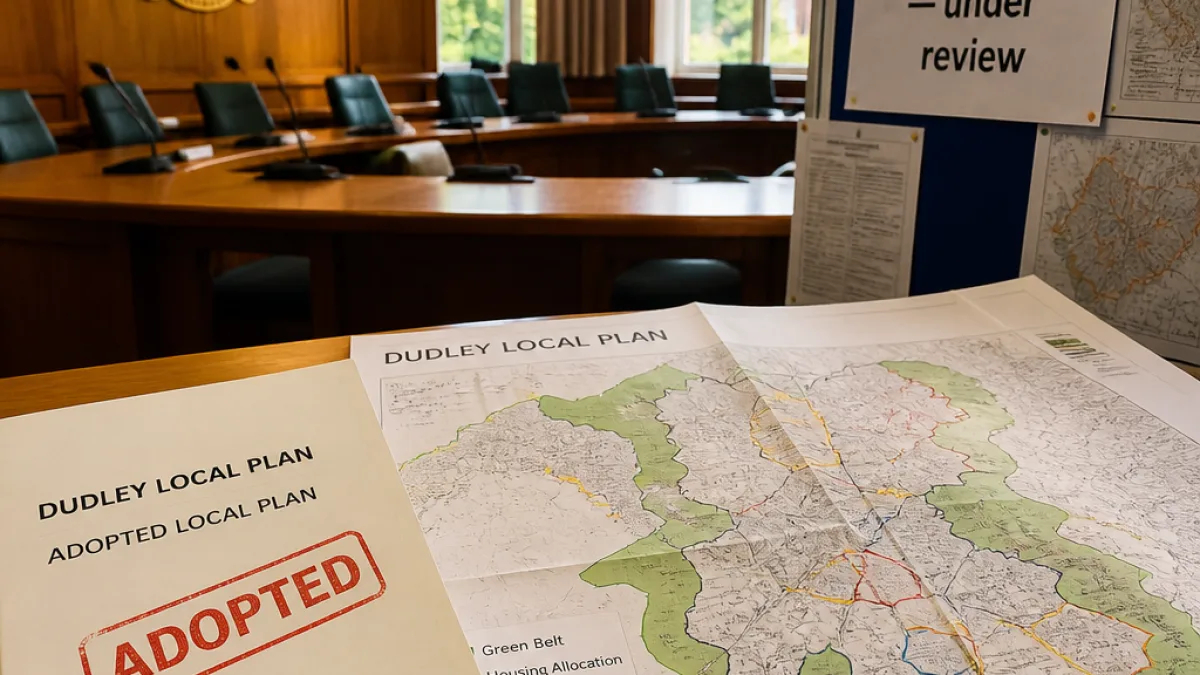
Dudley Council has formally adopted its long‑awaited local plan after councillors voted unanimously at a meeting on 13 July. The document will set the borough's planning framework to 2041, aiming to protect green belt land and guide where new development may take place.
What the plan covers and its recent history
The plan, which was submitted to the Planning Inspectorate for examination in February 2025, received approval following a public examination and has now been accepted by the full council. Officers said the plan's purpose is to provide certainty on land allocation and to safeguard green belt sites from future development proposals.
- Adoption date: 13 July (council vote)
- Plan period: to 2041
- Examination submitted: February 2025
New national housing targets force immediate review
Almost as soon as the plan was adopted, changes to government housing targets — introduced by the Labour administration after the general election — more than doubled the number of new homes the borough is now expected to provide. That shift means the council must begin work on a fresh local plan without delay.
| Item | Detail |
|---|---|
| Annual housing requirement (new target) | 1,514 homes per year |
| Plan coverage | Guides development up to 2041 |
| Submission to inspectorate | February 2025 |
Local councillors reacted with a mixture of relief and frustration. Cllr Ed Lawrence, who represents Kingswinford and Wall Heath — areas where two green belt sites have been under threat — welcomed adoption but warned the fight is far from over.
"The fact we are passing this local plan is a great relief to myself, to my residents and those who have campaigned so hard for many years to make sure these are not given away to developers. The battle is won but the war rages on, we know that immediately we have to start a new local plan based on the new government's ridiculous housing figures for Dudley."
Cllr Ryan Priest, the borough's Liberal Democrat leader, said he supported the adopted plan but described the change in targets as "a crying shame" because it renders the document temporary. He also expressed concern about the plan's failure to make specific provision for employment land, warning of long‑term consequences for local industry.
Local implications and next steps
For residents and community groups who campaigned to protect green belt sites, the adoption represents a tangible victory — but it is short‑lived. The council now faces the practical and political task of preparing a new plan to meet the upgraded target of 1,514 homes a year. That process will require fresh evidence, public consultation and further scrutiny at examination.
Key immediate consequences for Dudley include:
- Commencement of work on a new local plan to meet national targets;
- Renewed pressure on land allocations, including potential reassessment of green belt parcels already defended by campaigners;
- A spotlight on the borough's provision for employment land and how to retain industrial and manufacturing sites.
As the council enters the next planning cycle, residents can expect debates over where additional housing should be sited and how to balance growth with protecting local green spaces and jobs.