
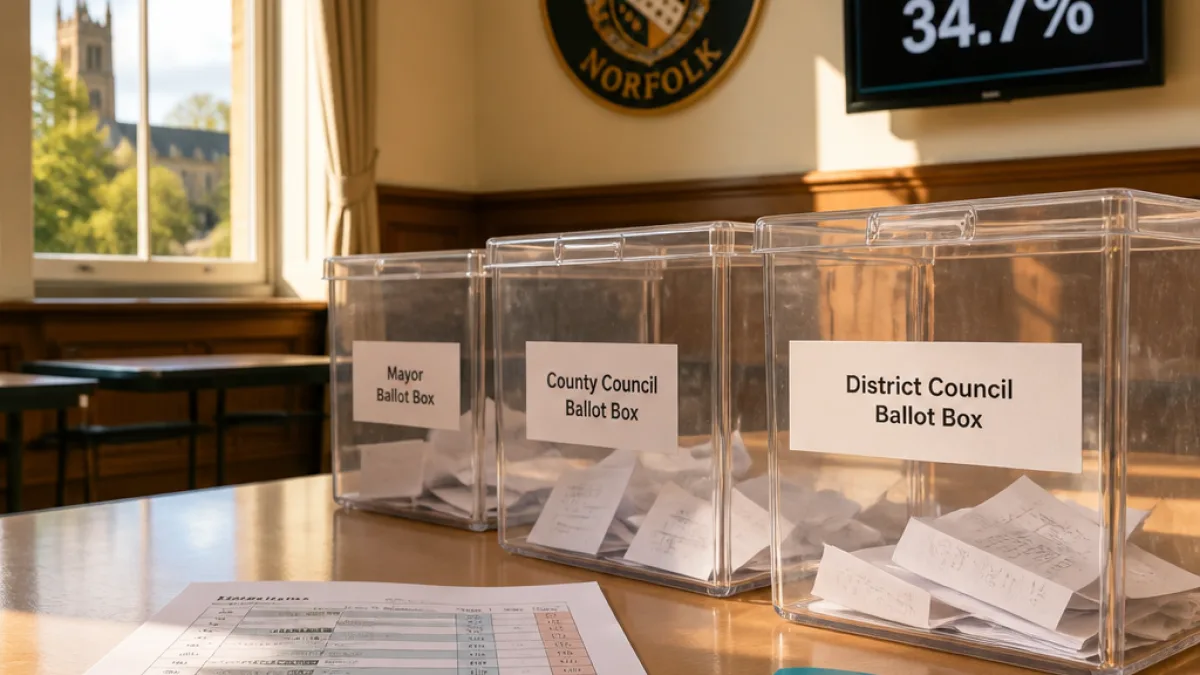
Colin Sutton, a retired detective known for leading high‑profile murder probes, has been confirmed as Norfolk’s Police and Crime Commissioner following a by‑election on Friday.
Election result and turnout
Sutton, standing for Reform UK, secured 32,647 votes and won by a majority of 14,299 over the Conservative candidate, Matthew Taylor. The contest was decided amid a low level of public participation: turnout was reported at about 17%.
“I will repay the trust the people of Norfolk have put in me… I believe I can make a difference and make things better,” Sutton said after the result was declared.
The by‑election followed the resignation of Sarah Taylor, who had been elected as a Labour PCC and later left the party to sit as an independent. The post carries a salary reported at around £76,000 a year and will, as things stand, be abolished in 2028 when policing powers in Norfolk are due to transfer to a new Norfolk and Suffolk mayoralty.
What the role does and why this matters
The police and crime commissioner is responsible for setting the strategic priorities for the constabulary, determining the budget — including the share raised through council tax — and holding the chief constable to account. PCCs also commission services for victims of crime. That means even a relatively short tenure can influence force direction and local funding decisions.
- Winner: Colin Sutton (Reform UK) — 32,647 votes
- Majority: 14,299
- Turnout: c. 17%
- Post value: c. £76,000 per year
Context and local impact
Sutton retired from the Metropolitan Police in 2011 after a 30‑year career during which he led inquiries into several notorious cases. During the campaign he emphasised a stronger focus on rural crime, arguing policing priorities were currently skewed towards towns and cities.
Local residents and councils will now be watching how quickly the new PCC moves to set priorities and whether any immediate changes to budgets or policing plans follow. With the office scheduled to be wound up in 2028, Sutton’s mandate will be for a relatively short period, but the commissioner still has statutory powers that can affect policing priorities and victim services in the county.
| Item | Figure |
|---|---|
| Votes for winner | 32,647 |
| Winning majority | 14,299 |
| Turnout | c. 17% |
| Post salary | c. £76,000 |
As Norfolk prepares for the planned transfer of PCC responsibilities to a combined mayoralty for Norfolk and Suffolk, the immediate question for local authorities, police leaders and residents will be how Sutton prioritises resources — particularly for rural communities — during his remaining time in office.