The Royal Hospital for Children in Glasgow has become the first centre in Scotland to install a 3D robotic-assisted exoscope for brain surgery, with a 13-year-old boy among the earliest patients to undergo the procedure using the system.
First-in-Scotland system aims to boost surgical precision
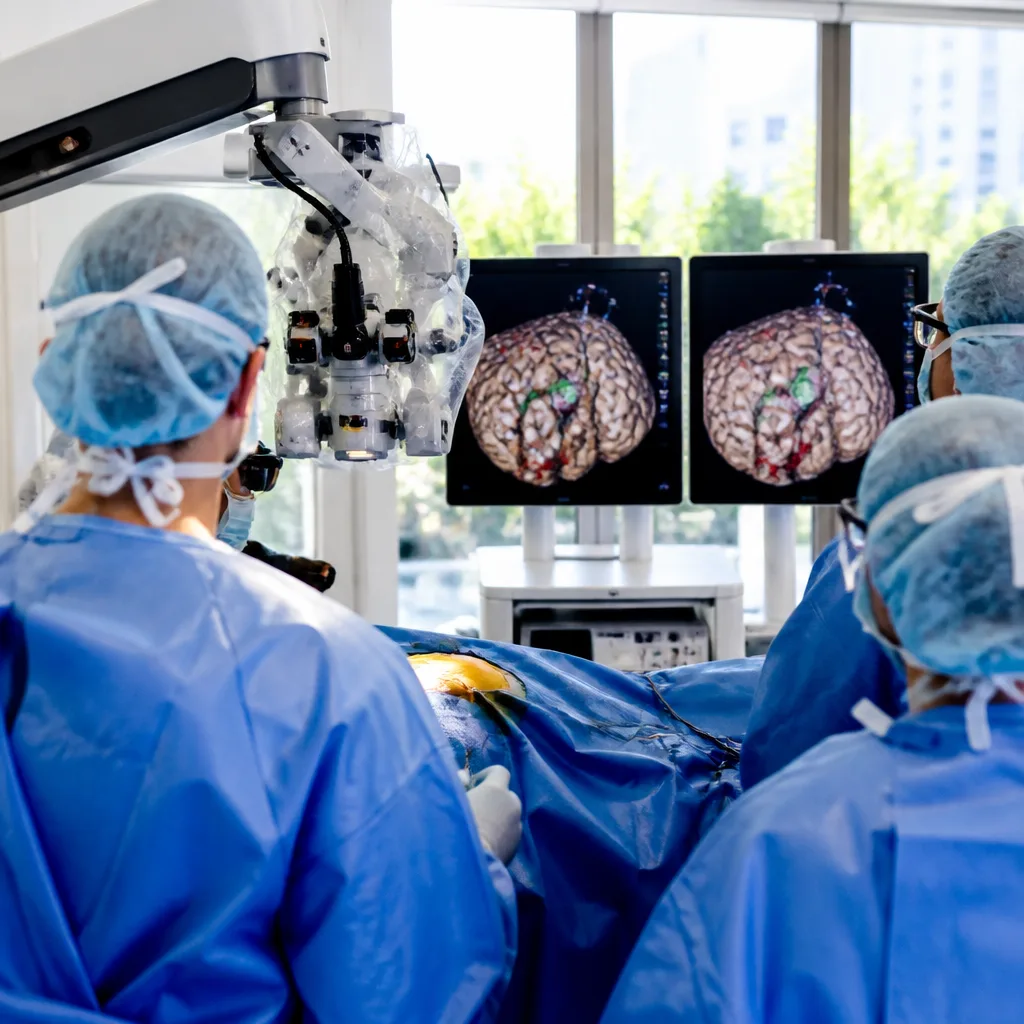
NHS Greater Glasgow and Clyde confirmed the introduction of the B. Braun Aesculap Aeos 3D Robotic Assisted Exoscope, a device designed to enhance precision during complex neurosurgery and improve outcomes. The technology, according to the health board, delivers “exceptional” image quality, strong illumination and improved depth perception for surgical teams.
Unlike traditional operating microscopes, exoscope platforms place advanced optics on a robotic arm and present the operative field through high-fidelity three-dimensional visualisation. The goal is straightforward: give surgeons a clearer, more stable view of delicate brain structures to support safer, more accurate decision-making in theatre. In practice, that can translate into more confident dissection around critical tissue and better coordination within multidisciplinary teams who can all see the same magnified view.
Teen patient among first to benefit
Toby Peart, aged 13 and from Strathpeffer in the Highlands, was one of the first to have surgery using the new system. He began experiencing pins and needles and pain in his left leg in April 2025, symptoms that worsened over several months. An MRI at Raigmore Hospital, Inverness, detected a brain tumour. He was referred within days to the Glasgow facility, where further assessment confirmed a 13–14mm non-cancerous tumour on the right side of his brain. Surgery took place in November 2025.
His father, Marc, described the strain of the diagnosis and rapid escalation to specialist care, as well as the risks outlined by the surgical teams, which included potential loss of sight or paralysis.
“It was without question the hardest few weeks of our lives. Toby is a quiet, gentle boy who never complains, so when he told us he was in pain, we knew something wasn’t right.”
“Everything happened incredibly quickly. One day we were expecting to wait a couple of weeks for MRI results and the next we were being told that Toby had a brain tumour and needed specialist treatment in Glasgow. It was a huge shock for all of us.”
“When Toby came out of surgery, he couldn’t move his left arm or leg and couldn’t feel anything. At that point, we didn’t know whether that would be permanent or whether things would improve.”
Post-operation, Toby initially experienced weakness and paralysis on his left side. According to the family, he has since made rapid progress in recovery with support from a multidisciplinary clinical team.
Why the exoscope matters
Brain surgery is a game of millimetres. A tumour measuring 13–14mm can sit close to networks controlling movement, language or vision. By combining high-resolution 3D visualisation with powerful illumination and enhanced depth perception, the exoscope aims to help surgeons distinguish fine anatomical boundaries in real time. For patients and families, the promise is not simply a successful operation, but a better chance of preserving function and speeding recovery—outcomes that remain the real benchmarks of surgical innovation.
NHS Greater Glasgow and Clyde says the system’s image quality and optical clarity are central to its clinical benefits. In theatres, this type of shared 3D view can also assist coordination among scrub staff, anaesthetists and neuromonitoring specialists, all of whom rely on moment-to-moment situational awareness during complex procedures.
From diagnosis to theatre: the critical path
Toby’s case highlights the importance of fast diagnostics and clear surgical planning. After the MRI scan in Inverness flagged a tumour, the referral to Glasgow allowed subspecialist teams to assess growth, location and operability before recommending an operation. Families are routinely counselled on material risks—here including potential paralysis and loss of sight—so that consent is fully informed. The exoscope does not eliminate risk, but its design is intended to support the precise manoeuvres that reduce it.
| Milestone | Detail |
|---|---|
| Symptoms began | April 2025 (pins and needles, leg pain) |
| Initial MRI | Raigmore Hospital, Inverness |
| Diagnosis | Non-cancerous brain tumour, right side |
| Tumour size | 13–14mm |
| Surgery | November 2025, Glasgow |
| Technology used | B. Braun Aesculap Aeos 3D Robotic Assisted Exoscope |
What’s next
With the exoscope now in place at the Royal Hospital for Children, Glasgow, more patients undergoing complex brain surgery could benefit from enhanced intraoperative visualisation. While long-term data on outcomes will take time to mature, the early use in a high-stakes paediatric case underscores why surgical teams are adopting the technology: clearer views, steadier hands, and a system built for the narrowest of margins.
- First in Scotland: NHS Greater Glasgow and Clyde installs the Aeos 3D Robotic Assisted Exoscope.
- Paediatric case: 13-year-old patient undergoes surgery after MRI detects a brain tumour.
- Clinical aim: Better image quality, illumination and depth perception to support complex neurosurgery.
The headlines will focus on the machinery, but the measure of success remains human: reduced complications, preserved function and recovery that lets children get back to being children. For one family in the Highlands, the arrival of a new tool in Glasgow’s operating theatres has already made a difference.