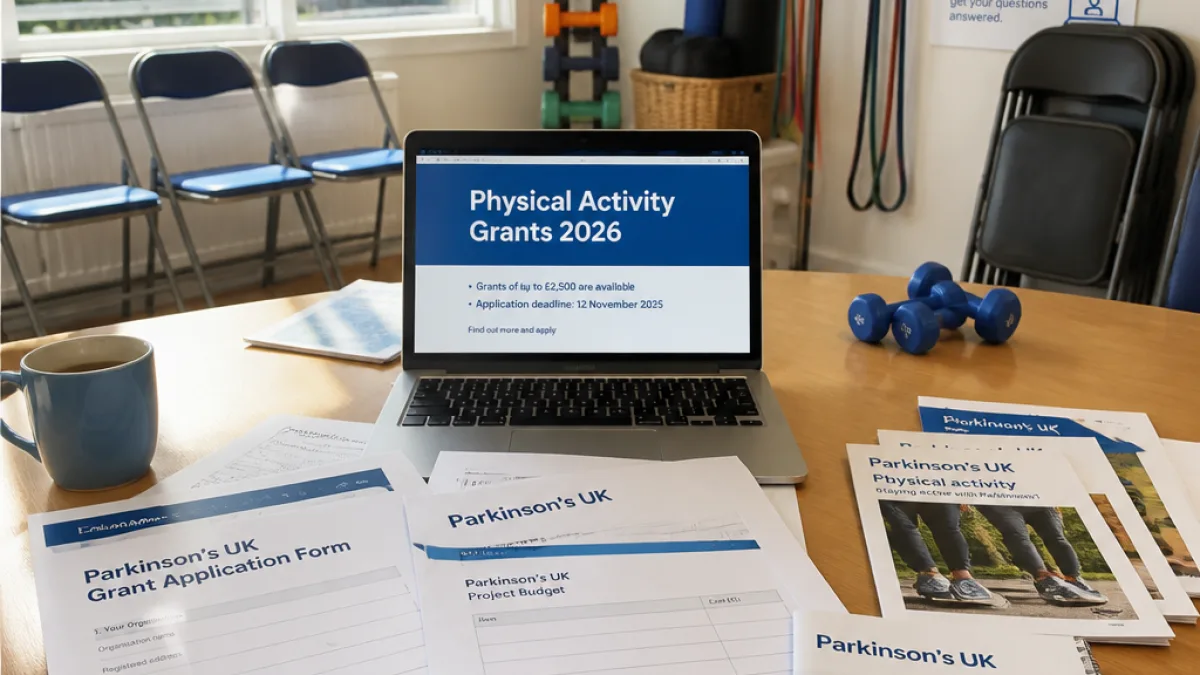
Parkinson’s UK has reopened its Physical Activity Grants programme for the sixth year, offering local groups and activity providers in Hartlepool the chance to apply for funding between £500 and £3,000. The scheme, which runs until the end of 2026, aims to help people living with Parkinson’s to be more active and improve their wellbeing.
Who can apply and what the grants cover
Local charities, community groups, sports clubs and other providers with a connection to Parkinson’s are eligible to apply. This year the charity has sharpened the application criteria to prioritise projects that can reach people who are inactive or have lower mobility, helping them to move more throughout 2026.
- Grant amounts: £500–£3,000
- Programme length: running through the end of 2026
- Focus: increase activity among inactive or lower‑mobility participants living with Parkinson’s
Scale and local implications
Since its launch in 2021, the programme has provided considerable backing nationwide — £936,000 has been awarded to create 392 new exercise projects. Projects funded so far have varied widely, from walking football and table tennis to Zumba and assisted rowing. For Hartlepool, successful bids could mean more local classes, tailored exercise sessions and greater support for residents living with Parkinson’s.
| Indicator | Figure |
|---|---|
| Total funding to date | £936,000 |
| Projects funded so far | 392 |
| Grant size available | £500–£3,000 |
Support for applicants
Parkinson’s UK is offering free "Meet the Funder" webinars throughout the year to advise potential applicants on the application process. That may be particularly useful for smaller community groups in Hartlepool that lack dedicated fundraising staff but have the local knowledge to run effective activity programmes.
“We’re incredibly excited to launch this year’s Physical Activity Grants Programme. After seeing the real difference our previous programmes have made in helping people with Parkinson’s to become and stay active, we can’t wait to support even more innovative, community‑led projects.”
The charity highlights several ways physical activity can benefit people living with Parkinson’s, including improved strength, balance and coordination, better sleep and cardiovascular health, reduced risk of falls and enhanced social interaction. For clinicians, carers and community organisers in Hartlepool, the grants offer an opportunity to widen local provision with funding that covers equipment, instructor costs, venue hire and outreach to less active participants.
Groups in Hartlepool planning to apply should consider how their proposals will reach people with lower mobility and those currently inactive. Evidence of partnership working, clear plans for measuring outcomes and a focus on inclusion are likely to strengthen applications.