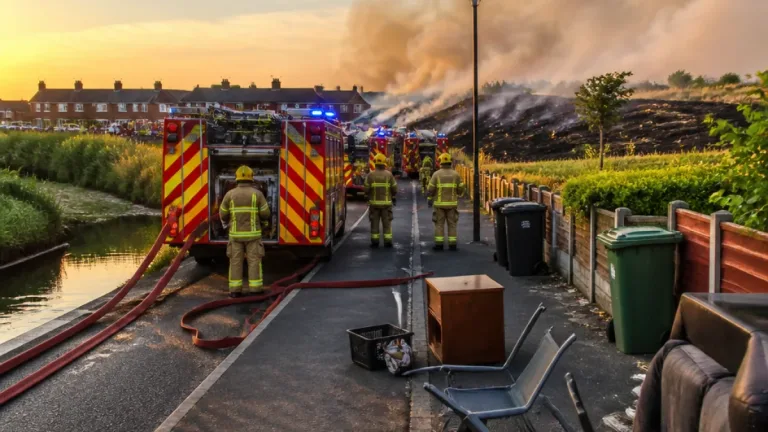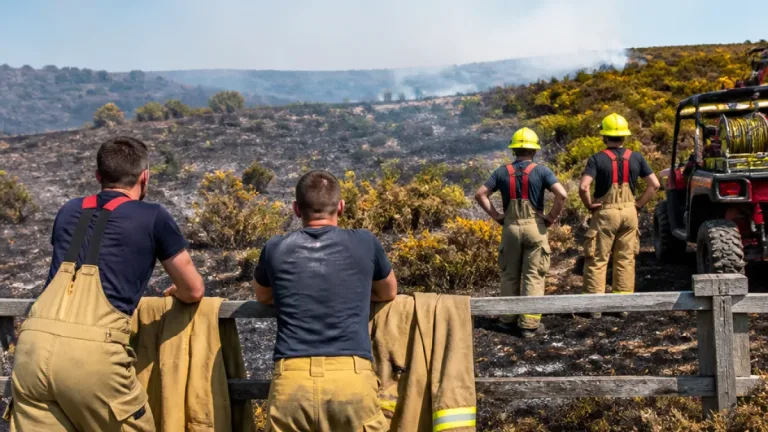
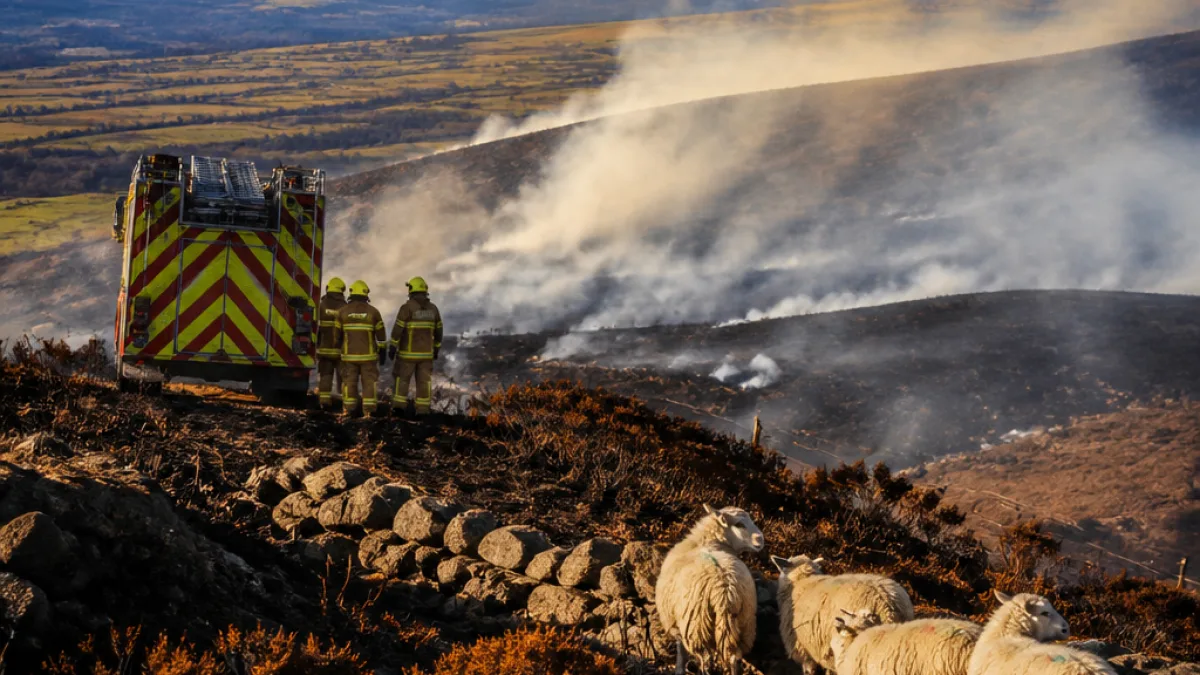
A substantial wildfire on the mountains surrounding Blaenavon has now been burning for four days, with crews continuing efforts to contain a blaze that emergency services say covers in excess of 200 hectares—an area comparable to about 300 football pitches.
Scale, terrain and conditions
South Wales Fire and Rescue Service (SWFRS) describes the incident as a significant wildfire affecting mixed vegetation including fern, gorse and bracken. The fire's perimeter measures around 5km, and the Welsh Government has warned it is likely to continue smouldering for several days.
Fire crews have worked continuously in hot, smoky and humid conditions, deploying specialist tactics and equipment. Changing wind directions have complicated containment efforts and carried smoke across wide areas of south Wales.
Impact on farming and environment
Local farmers report heavy losses to common grazing. Fourth‑generation sheep farmer Kyle Williams, who farms in Llanover, told InfoRadar the community has lost a substantial proportion of its common land, which provides winter feed for livestock.
"It has been incredibly concerning, very worrying. The biggest concern is that the area burning is the grazing land for our livestock. The effect is that we will go into winter, or the colder months, with much less food than usual."
Mr Williams estimated that between 40–60% of the common land used by local farmers has been affected. He also highlighted that much of the impacted hillside is designated as a Site of Special Scientific Interest (SSSI), noting potential long‑term consequences for rare plants and animals.
- Fire duration so far: 4 days
- Area affected: 200+ hectares
- Perimeter length: 5km
| Measure | Reported figure |
|---|---|
| Approximate area burned | 200 hectares |
| Perimeter | 5 km |
| Estimated loss of common land (local farmers) | 40–60% |
Drone footage released during the incident has shown extensive swathes of blackened hillside. While some individual farms have largely escaped direct damage, farmers on the common face reduced grazing capacity heading into colder months.
Fire crews and local farmers have been working together to create fire breaks to slow the spread. SWFRS continues round‑the‑clock operations and is adapting tactics as conditions change. The Welsh Government has signalled the blaze will take several more days to extinguish fully.
Residents are advised to follow guidance from emergency services on smoke and air quality and to avoid the affected upland areas until conditions stabilise.