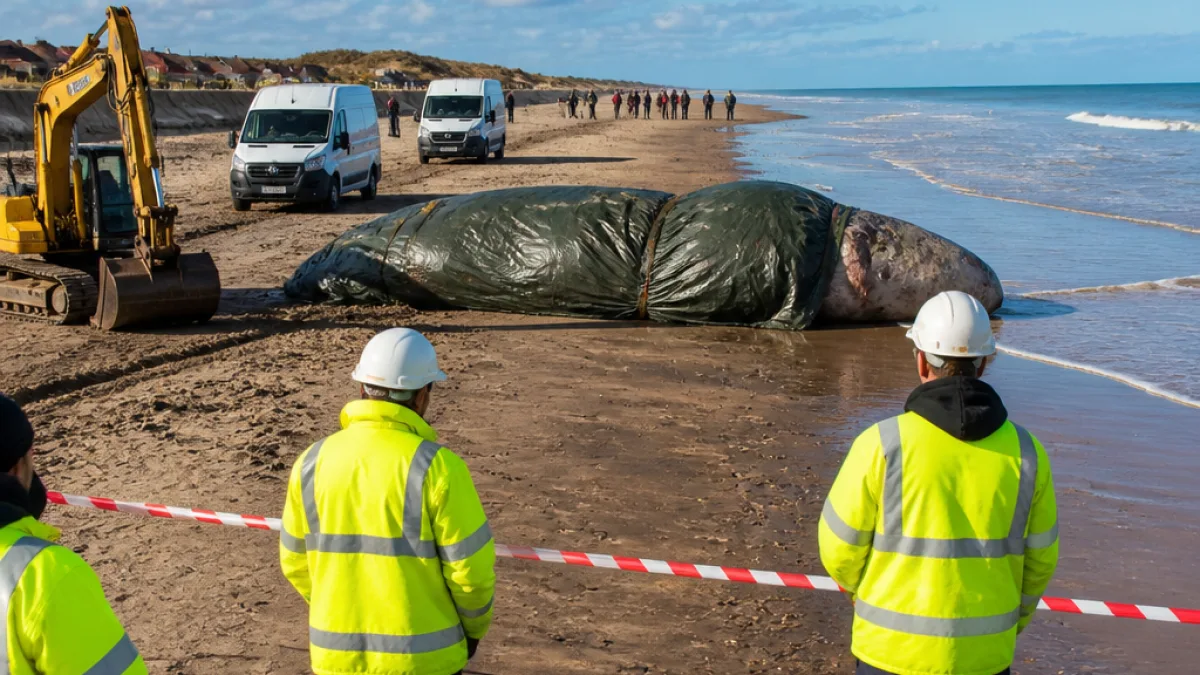
A dead minke whale has washed up on the sand at Hemsby, near Great Yarmouth, after being spotted on Thursday evening. The carcass was identified by Dan Goldsmith of the Marine and Wildlife Rescue.
Removal complicated by size and tides
Great Yarmouth Borough Council said teams are in the process of removing the animal but warned that the operation is likely to take some time. The council highlighted the practical difficulties posed by the whale's weight and condition, together with local tide patterns that limit working windows.
"The council is in the process of removing the dead whale from the beach at Hemsby. However, it is quite a complex task because of the weight of the animal and its condition. The tide patterns, which limit the time when work can be carried out, are also a factor. It may take some time for the animal to be removed safely, and it is important people stay away from the animal while the work is carried out."
Local officers and rescue teams will co-ordinate the removal to ensure safety and to reduce disturbance to the shoreline. Officials have advised members of the public to keep clear of the site while operations are under way.
About minke whales and local context
Minke whales are the smallest of the great baleen whales and can reach substantial weights. The species is known to be seen off Norfolk’s coast from time to time, and a number have been recorded washing ashore in the county in recent years.
- Species identified: minke whale
- Location: Hemsby beach, near Great Yarmouth
- Key challenges for removal: weight, condition and tide patterns
| Previous local strandings | Location | Year |
|---|---|---|
| Minke whale | Old Hunstanton | June 2023 |
| Minke whale (about 30ft) | Heacham | December 2019 |
Dan Goldsmith of Marine and Wildlife Rescue noted that minkes are "often seen along the coast" and that several have washed up in Norfolk over the years. The species can weigh up to 20,000 pounds, underlining why removal is a complex and resource-heavy task.
Advice for residents and visitors
Council and rescue services have stressed public safety while removal takes place. Practical points to note:
- Do not approach the carcass — rot and gases can make nearby areas hazardous.
- Follow local authority instructions and any cordons or signage on the beach.
- Expect disruption to normal beach activity while teams work during tidal windows.
The presence of the whale follows a handful of sightings and strandings around Norfolk in recent years. Local authorities will continue to manage the situation, balancing environmental considerations and public safety during the removal operation.