New circuit puts Newcastle upon Tyne on faith-tourism map
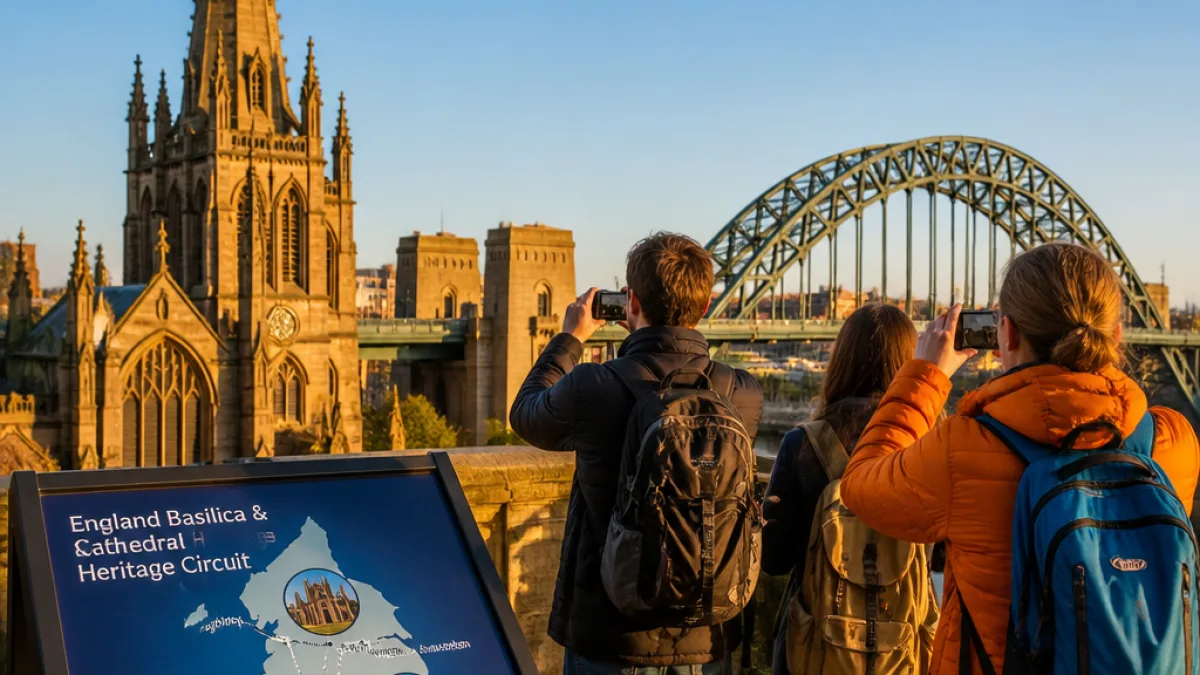
Newcastle upon Tyne has been singled out alongside London, Birmingham, Keighley and Walsingham in a curated route promoting England’s ecclesiastical heritage to international visitors. The itinerary, highlighted by industry outlet Travel And Tour World, positions the city within a national strand of faith-focused travel that blends sacred sites, architecture and living histories.
The move comes amid growing interest in church and cathedral visits across England. The Church of England estimates that over 10 million people step into cathedrals annually, underscoring their pull as cultural and architectural attractions as well as places of worship. Advocates of the circuit argue that these journeys broaden the country’s visitor economy by appealing to travellers seeking context, storytelling and craftsmanship beyond conventional sightseeing.
these destinations collectively demonstrate how faith tourism continues to diversify England’s visitor economy while enriching regional travel experiences.
What the inclusion means for the city
Being listed as part of a national ecclesiastical route signals fresh visibility for Newcastle upon Tyne among international audiences. While the announcement groups the city with four other destinations, it also emphasises that each place offers a distinct narrative shaped by local history and accessibility. For local operators, this creates a springboard for joined-up offers that could link places of worship, heritage walks, guided storytelling and photography-friendly experiences.
The feature highlights a spectrum of styles and traditions available across the circuit, from Byzantine Revival and Gothic Revival to medieval pilgrimage themes and Victorian craft. It references London’s Westminster Cathedral and the Marian shrine at Walsingham as standout draws within a single, connected journey. The overall pitch is to present an “authentic” route for visitors who want to combine architecture, sacred art and regional histories rather than focus solely on well-trodden city-break itineraries.
Why now: a broader shift in visitor behaviour
Industry observers note that experiential travel has been climbing for years, with heritage- and story-led days out increasingly sought after. For a city like Newcastle upon Tyne—already on the map for culture, nightlife and waterfront landmarks—the faith-tourism angle provides a complementary strand that can lengthen stays and disperse footfall across different neighbourhoods at different times of day.
Local businesses that stand to benefit include accommodation providers, guided-tour firms, independent cafes near heritage hotspots and transport operators linking the city to other nodes on the circuit. The messaging also dovetails with efforts to extend the season, as cathedrals and churches attract visitors year-round, smoothing peaks and troughs in demand.
How Newcastle upon Tyne fits into the national route
The circuit draws together five locations, each flagged for its role in telling England’s religious and architectural story. The source material underscores two anchor references—Westminster Cathedral in London and the internationally known Marian shrine at Walsingham—while pointing to a broader mix of styles and narratives across the route.
| Destination | Highlights (as described) |
|---|---|
| London | Westminster Cathedral; part of a wider Byzantine Revival to Gothic Revival range |
| Birmingham | Included on the heritage circuit; distinct local narrative and visitor experiences |
| Newcastle upon Tyne | Featured on the circuit; positioned within England’s cathedral and basilica story |
| Keighley | Named as a stop; connected to Victorian-era craftsmanship within the route’s themes |
| Walsingham | Internationally recognised Marian shrine; longstanding pilgrimage tradition |
What happens next
For Newcastle upon Tyne, the immediate opportunity is to align existing cultural assets with the circuit’s core promise: meaningful encounters with architecture, sacred art and heritage. That could mean scheduling guided access hours, packaging tickets with nearby attractions, refining interpretation for international audiences, or coordinating with transport providers to simplify multi-stop journeys. The city’s inclusion gives local stakeholders a prompt to present cohesive itineraries that work for day-trippers and multi-day visitors alike.
- Potential economic uplift: faith-motivated and culture-focused travellers typically seek in-depth experiences, which can translate into longer stays and higher local spend.
- Year-round appeal: sacred sites support off-peak visitation, helping spread demand beyond summer months.
- Place-branding benefits: being on a national circuit builds recognition among overseas tour planners and niche travel media.
The wider picture, according to the report, is that England’s ecclesiastical landmarks are gaining ground as a compelling strand of cultural tourism. Newcastle upon Tyne’s presence on the route puts the city in front of audiences who value context, craft and continuity—elements that, if effectively showcased, can strengthen the local visitor offer without relying on blockbuster events.