
Two north-east organisations have secured European Space Agency backing to study whether satellite technology can bolster safety and oversight as green hydrogen projects scale up across the UK.
Local partnership backed to explore practical monitoring service
Northallerton-based AmbaSat Ltd and Teesside University’s Net Zero Industry Innovation Centre (NZIIC) have been awarded a €250,000 contract to carry out a 12-month feasibility study.
The work will examine how a blend of wide‑area sensing, resilient communications and cloud-based reporting could be combined into an operational service to support industrial hydrogen production, storage and distribution.
“Hydrogen is clearly going to play an important role in the wider energy transition, but it also brings practical challenges around monitoring, reporting and confidence in day-to-day operations.”
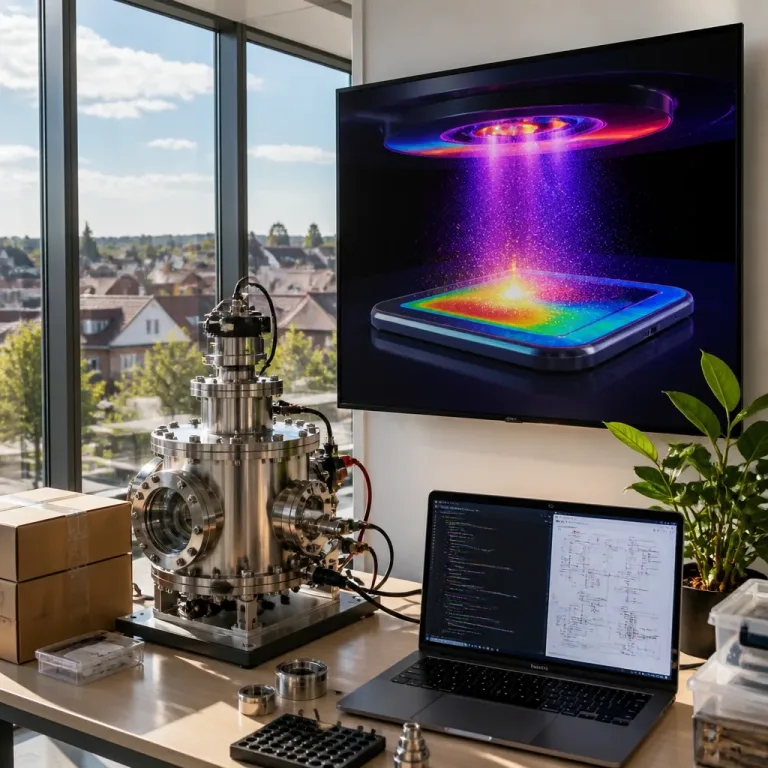
The project will pair Teesside University’s Raman LIDAR research with AmbaSat’s remote monitoring, communications and reporting platform. The partners say the aim is not to produce a finished product within the year, but to decide whether a viable commercial demonstration should follow.
Why satellites might matter for hydrogen
Operators of hydrogen infrastructure face particular pressures as schemes move from planning into operation. Fixed, point-based sensors can be effective at single sites, but they may not give the full picture for large complexes, remote facilities or networks of sites. The study will look at whether satellite-enabled systems can:
- provide wider-area detection and situational awareness
- improve resilience of communications for remote monitoring
- streamline cloud-based reporting to support regulators and operators
That combination could help reassure communities and investors, and improve on-site safety by offering more comprehensive monitoring options where conventional approaches struggle.
Regional significance and next steps
The contract is part of a growing focus on the north-east as a hub for hydrogen development and low-carbon industry. If the feasibility study concludes a demonstration is justified, it could attract further investment and potentially create a pathway to trials at industrial sites across Teesside and the wider region.
| Partner | Role |
|---|---|
| AmbaSat Ltd | Remote monitoring, communications and reporting platform |
| Teesside University (NZIIC) | Raman LIDAR research and applied research input |
| European Space Agency | Contract funder (€250,000 over 12 months) |
For local councils, businesses and residents the study could yield practical gains: clearer reporting for operators, improved incident detection across larger or remote sites, and evidence to guide safe expansion of hydrogen infrastructure. The partners stress any future demonstration would follow the feasibility phase and further funding decisions.
As hydrogen technology moves from concept to industry-scale deployment, projects such as this aim to address the twin needs of safety and confidence — essential if the north-east is to fulfil ambitions for low-carbon growth.