Work steps up at landmark copperworks
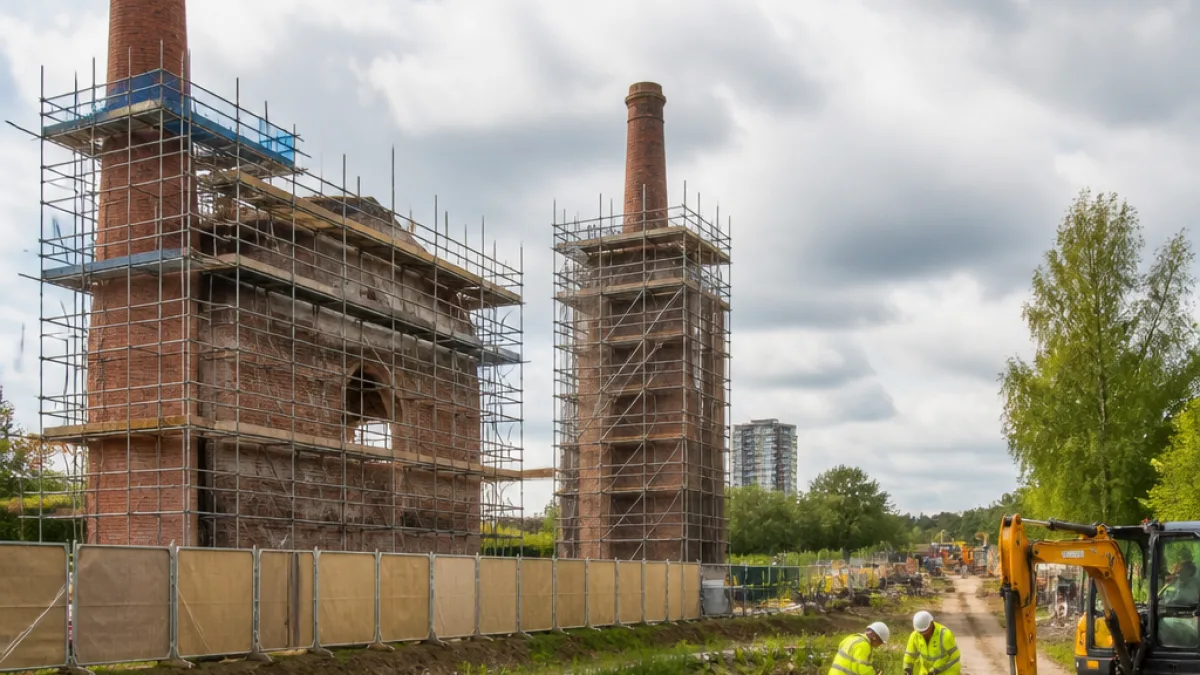
Visible progress is being made at Swansea’s historic copperworks as the latest phase of restoration gathers momentum on the Vivian and Musgrave Engine Houses, together with the neighbouring V&S No.1 locomotive shed. Contractors Andrew Scott Ltd are now active on site, with scaffolding encasing the landmark chimneys and safety hoardings installed to secure the area while preparatory works continue.
The scheme, led by Swansea Council, aims to stabilise and restore the listed structures so they can be repurposed for new uses that respect their industrial heritage. Since mid-April, the team has undertaken site set-up, significant vegetation clearance and preparations for detailed condition surveys of the principal buildings. A new sustainable drainage feature described as a pond has been excavated to manage surface water, and initial works have begun to improve access routes into the site.
Foundations for future public use
While the current activity is focussed on making the site safe and ready for comprehensive restoration, the longer-term ambition is to unlock a mix of uses that could include food, retail and exhibition space. The council believes such a blend would help draw more people to the Lower Swansea Valley, encouraging residents and visitors to explore a part of the city that played a defining role in its industrial story.
“It’s great to see clear progress being made on site at these iconic buildings,” said council leader Rob Stewart. “The engine houses are a key part of Swansea’s heritage, and this scheme will help bring them back into meaningful use while creating new opportunities for the area.”
Stewart also pointed to ongoing efforts along the River Tawe corridor, referencing the presence of Penderyn at the copperworks, restoration of the historic laboratory building, and proposals for additional boating pontoons. Plans for a new river walkway and new facilities along the river are also being advanced, alongside a major tourism destination set to open nearby. He added that Swansea City AFC intends to create new experiences for supporters at the stadium, signalling wider regeneration activity radiating from the valley floor.
What residents can expect in the coming weeks
- Continued site preparation, including access improvements and protective measures around key structures.
- Ongoing infrastructure work to support later restoration phases.
- Condition surveys to inform how the buildings can be safely and sensitively brought back into use.
Although the copperworks has long been a magnet for heritage enthusiasts, recent activity is making the transformation plainly visible to passers-by, with the chimneys scaffolded and the perimeters secured. The council’s goal is to conserve the distinctive character of the buildings while setting them up to accommodate modern, publicly accessible functions.
At a glance: current activity on site
| Element | Status/Action |
|---|---|
| Scaffolding to chimneys | Installed to enable safe access for surveys and works |
| Safety hoardings | Erected to secure the working area |
| Vegetation clearance | Completed in priority areas since mid-April |
| Condition surveys | Preparations underway for detailed assessments |
| Drainage feature | New sustainable pond excavated |
| Access routes | Initial improvement works started |
Part of a wider riverside renewal
The copperworks sits at the heart of the Lower Swansea Valley, where council-led initiatives aim to re-establish the Tawe corridor as a place for culture, leisure and enterprise. The presence of Penderyn at the site, the restoration of the laboratory building, and proposals for pontoons and a riverside walkway suggest a future in which historic assets are linked by new amenities. If the engine houses and V&S No.1 shed can be adapted for a blend of public-facing uses, the area could gain a cluster of attractions with year-round footfall.
For nearby communities, the benefits would be practical as well as cultural: improved connectivity along the river, enhanced public spaces and opportunities for local traders once the buildings host events or hospitality. The council and its contractor have indicated that works will remain visible over the coming weeks as enabling tasks continue, paving the way for the more intricate phases of restoration.
Progress at the copperworks is incremental by necessity, governed by the condition of historic fabric and the need to retain authenticity. Nevertheless, the stepped approach now evident on site represents a clear move from planning to delivery. With scaffolding in place, surveys imminent and infrastructure taking shape, the project is entering a period where residents can expect to see steady, tangible change at one of Swansea’s most recognisable industrial landmarks.