Court upholds narrow construction of mortgagee exclusion in section 106 agreement
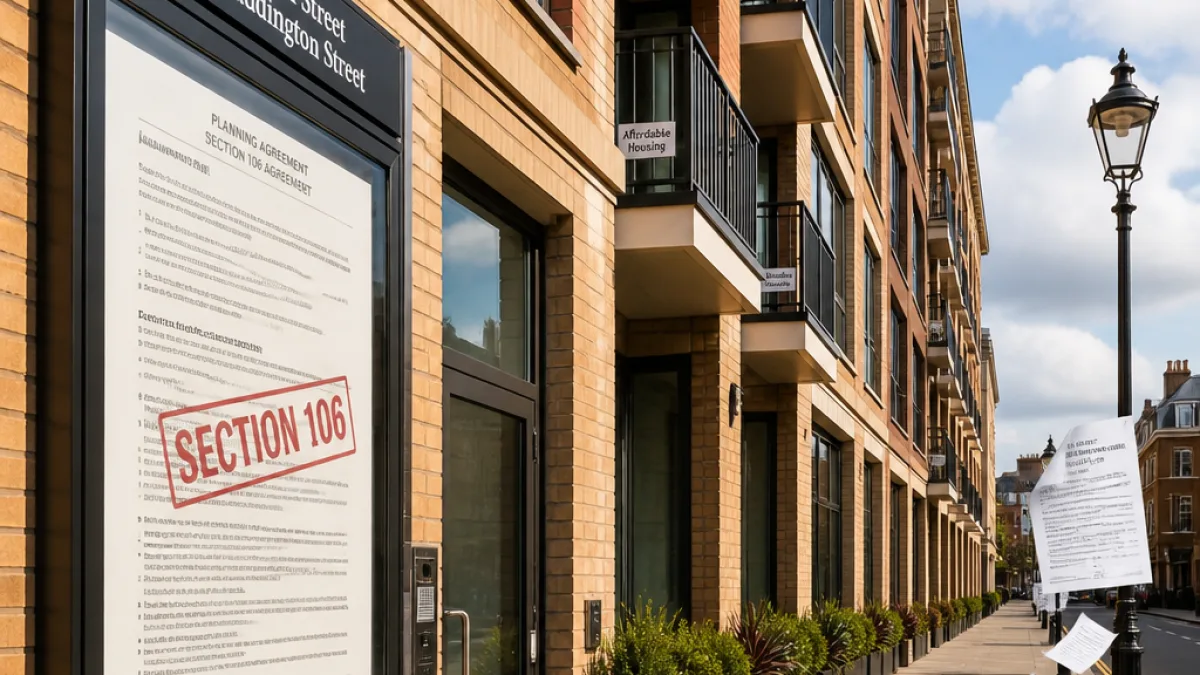
Westminster City Council has failed in its appeal challenging a judge’s interpretation of a section 106 planning obligation affecting a mixed‑use development at Chiltern Street and Paddington Street, W1. The agreement restricted the use of 16 of the 60 flats in the scheme to affordable housing, to be provided through long leases to a registered social provider (RSP).
The legal dispute turned on the meaning and timing of a mortgagee exclusion clause in the section 106 agreement. Clause 10.1.1 stated that the developer’s obligations were not binding on, nor enforceable against, certain mortgagees and their assignees.
“the developer’s obligations were not binding upon nor enforceable against ‘any mortgagee of a registered social provider or any receiver appointed by such mortgagee or any person deriving title through any such mortgagee or receiver’.”
The RSP was later removed from the register kept under the Housing and Regeneration Act 2008. Its mortgagee then assigned the long leases of the 16 affordable flats to a purchaser. The central legal question was whether that purchaser could rely on the mortgagee exclusion: did the mortgagee need to qualify at the date the mortgage was granted, or at the later date when the mortgagee transferred the mortgagor’s interest to a buyer?
The High Court had earlier ruled in favour of the purchaser on the basis that the mortgagee qualified at the earlier date (the date of the mortgage), a decision recorded as [2025] EWHC 1789 (Ch). The council appealed but the appeal was dismissed, leaving the original construction intact.
Local consequences and legal context
The ruling has immediate implications for Westminster's efforts to secure affordable housing through planning obligations. It underscores how carefully‑worded contractual protections for mortgagees can operate to remove long‑term use restrictions where the qualifying status of a social landlord changes.
- Scheme affected: mixed‑use development at Chiltern Street/Paddington Street, W1.
- Units with restriction: 16 flats out of 60.
- Key legal instruments: section 106 agreement; Housing and Regeneration Act 2008; clause 10.1.1.
Planning lawyers note that modern interpretation of section 106 agreements applies general principles of contractual construction and considers the commercial and statutory context. Local authorities seeking durable affordable housing outcomes will be watching how wording and timing in these clauses are drafted and negotiated.
| Item | Detail |
|---|---|
| Development | Chiltern Street & Paddington Street, W1 |
| Flats in development | 60 |
| Flats restricted as affordable | 16 |
| Case citation | [2025] EWHC 1789 (Ch) |
The dismissal of the appeal leaves the High Court's interpretation operative. For residents and councillors in Westminster, the decision is a reminder that the durability of affordable housing secured through planning obligations depends not only on policy intent but also on precise legal drafting and the registration status of social landlords.
Further implications for future developments within the borough may include more stringent checks on the status of intended RSP partners and revised clause drafting to prevent similar outcomes where councils wish to preserve affordable housing covenants.