Wokingham is frequently held up as a model of contented suburban life, a place that tops quality‑of‑life lists and attracts admiring national coverage. Yet a number of familiar assumptions continue to circulate, shaping how the borough is perceived and, crucially, how its services are understood. Recent local discussion has set out to dismantle some of those myths, exposing the gap between reputation and reality.
Myth 1: A mere appendage to Reading
One of the most persistent narratives reduces the borough to an outpost of its larger neighbour. Geography and strong transport ties have helped that shorthand take hold, but the history tells a more substantial story. The town’s civic identity reaches back centuries: Wokingham received a market charter in 1219 and later built a reputation for silk production that supplied buyers well beyond England. That heritage underlines a long‑standing autonomy which predates modern commuting patterns.
Even today, the municipal map can surprise. A prominent example is that the expansive Microsoft UK site at Thames Valley Park sits within Wokingham borough, though public conversations often credit Reading. As one recent explainer put it:
“Wokingham’s distinct identity predates modern commuting by centuries.”
Myth 2: Uniform affluence means universal comfort
Another assumption holds that residents are uniformly well‑off. It is true the borough scores highly on national indices, ranking among the least deprived in England. But interpreting that as a proxy for wealth overlooks how central government funding formulas interact with those rankings. Because Wokingham appears comparatively prosperous on paper, it has historically received the lowest level of government funding of any council in the country, according to the local analysis cited.
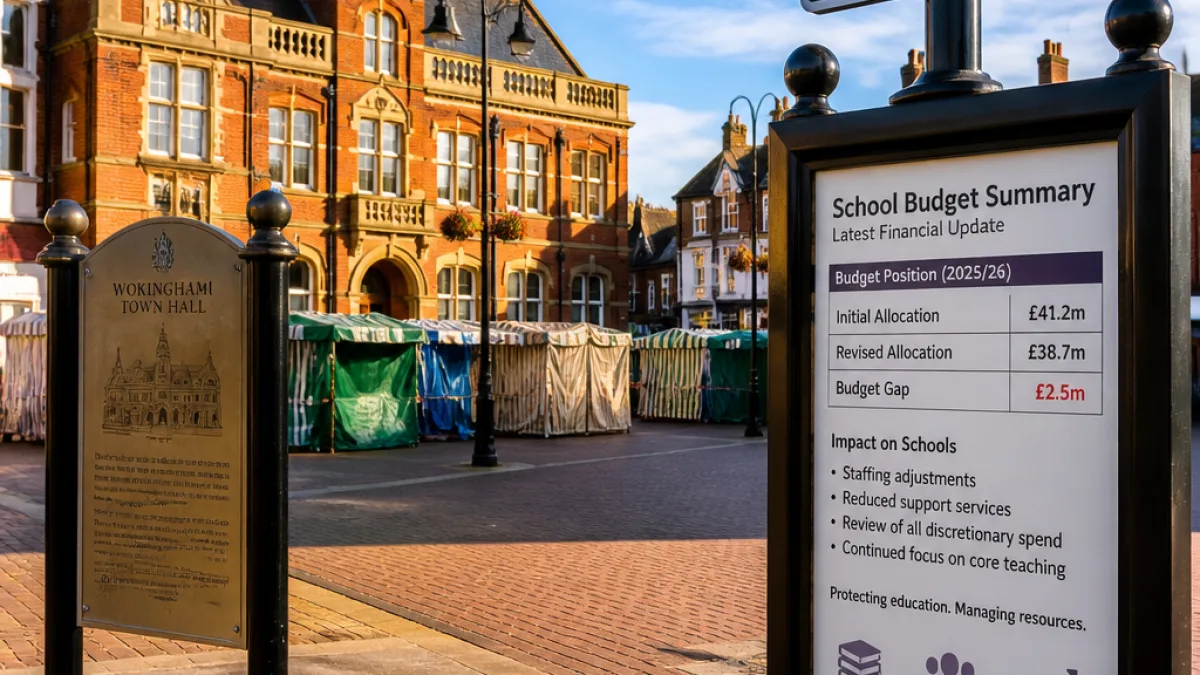
The effect is concrete. Tight settlements ripple through local services, including school funding per pupil, which is described as constrained relative to the national picture. Meanwhile, households confront the same cost‑of‑living pressures and housing strains felt elsewhere. The headline image of blanket prosperity masks the nuance — and can limit the resources available to meet need.
At a glance: myth versus reality
| Claim | What the record shows |
|---|---|
| Wokingham is just a suburb of Reading | Documented civic history (charter in 1219), independent identity, and key sites such as Microsoft UK at Thames Valley Park falling inside the borough |
| Everyone here is wealthy | Low measured deprivation brings lowest central funding for the council, affecting services, with residents facing typical cost‑of‑living pressures |
Why these myths matter locally
These misconceptions are not merely academic. They can colour how outsiders, decision‑makers and even residents themselves understand service pressures. If the borough is assumed to be cushioned from economic headwinds, funding debates risk overlooking how constrained budgets shape school provision and other public services. Likewise, reducing Wokingham to a commuter adjunct underplays the responsibilities that come with a significant business base and a growing, diverse population profile across the borough.
What residents should watch
Scrutiny of the council’s settlement and how it allocates finite resources remains essential. The relationship between perceived prosperity and actual funding will likely continue to feature in local discussions about children’s services, education and community infrastructure. Equally, the ongoing reminder that Wokingham’s boundaries and institutions are distinct from Reading’s will matter for planning, transport negotiations and how the area presents its economic strengths.
- Identity: A long‑standing civic story, not simply a commuter by‑product.
- Funding: A low deprivation score translates into tighter central support, with tangible effects.
- Services: Schools and local amenities operate within those constraints, despite headline affluence.
The myths endure because they contain a sliver of truth: Wokingham benefits from strong connections to Reading and often returns positive social statistics. But the fuller picture is more complicated, and more relevant to everyday life. Recognising the nuance — and challenging shorthand that obscures need — is part of ensuring the borough’s distinct identity and public services are represented accurately where it counts.