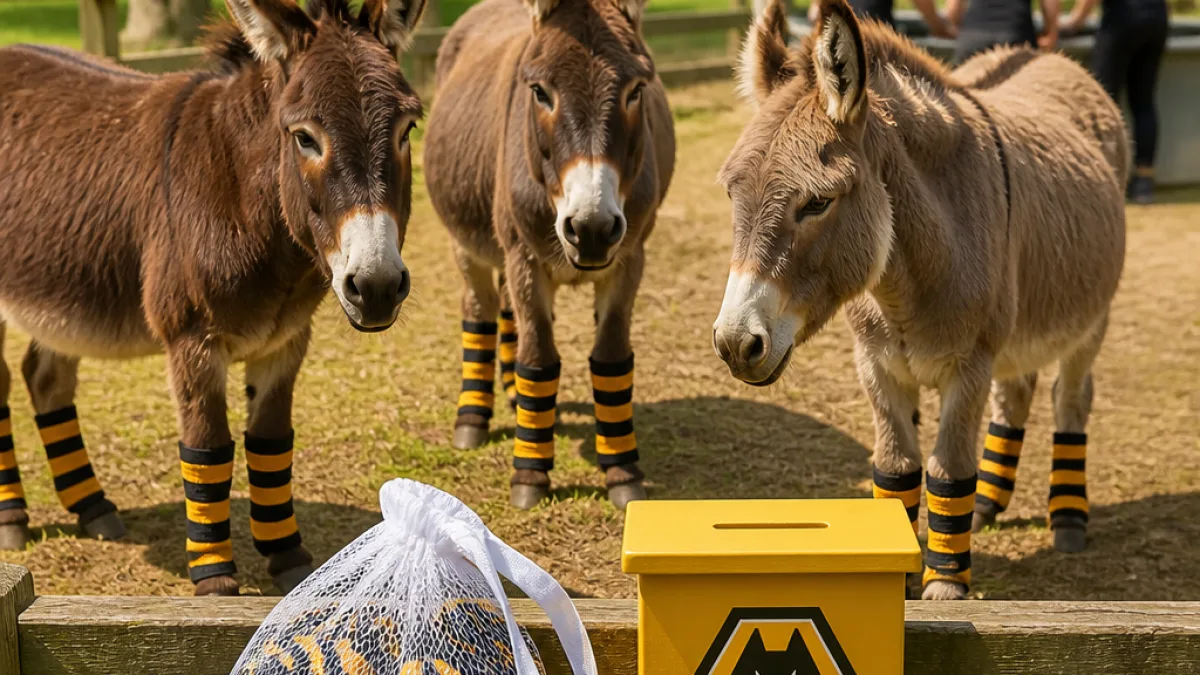
A local animal charity has found an unusual way to protect its donkeys from painful, infection‑prone fly bites: dressing them in socks bearing the colours of Wolverhampton Wanderers.
Practical protection with a local twist
Staff at the group explained that the socks act as a simple barrier against biting flies, helping to prevent wounds that can become infected and require veterinary treatment. The measure is already having an impact on their running costs: volunteers say that fewer animals are now needing professional treatment for fly‑related infections.
"They look cool and are supporting the local team," said one staff member. "I didn't realise the foundation work with a lot of the same clientele that we do... it's a nice connection."
The donated kit arrived in quantity and is reported to wash well, giving the charity spares so the animals can be kept protected even when items need cleaning.
Community organisations working together
The initiative has brought together two strands of local work. Donkey E.A.R.S offers activities for people with special educational needs and disabilities, those living with dementia, social prescribers and care homes. The Wolves Foundation runs community projects focused on health and wellbeing, disability sport, youth engagement and schools. Those overlapping aims have helped form the partnership that supplied the socks.
Staff at the donkey centre said the animals responded well to the extra attention, although attempts to involve them in some footballing fun were, in their words, unsuccessful: the donkeys were "very grateful" but uninterested in playing football.
- Donkey E.A.R.S works with vulnerable adults and care settings.
- Wolves Foundation provided the donated socks.
- Socks serve as a low‑cost barrier against biting flies, reducing vet interventions.
| Organisation | Role |
|---|---|
| Donkey E.A.R.S | Animal care and community activities |
| Wolves Foundation | Provided donated socks; community engagement |
For residents and volunteers in Wolverhampton, the partnership is a reminder that small, pragmatic ideas can bring tangible benefits: keeping animals healthier, cutting charity costs and strengthening community ties. Those interested in supporting similar local projects should contact the organisations directly to find out about donations or volunteering opportunities.
While the socks may not make the donkeys into athletes, they are helping protect the animals and allowing staff to redirect savings into other vital care work.