The National Trust's archaeology team has uncovered fresh evidence of earlier occupation at Greyfriars House and Garden in Friar Street after a week-long test excavation that formed part of the Festival of Archaeology.
What was found and why it matters
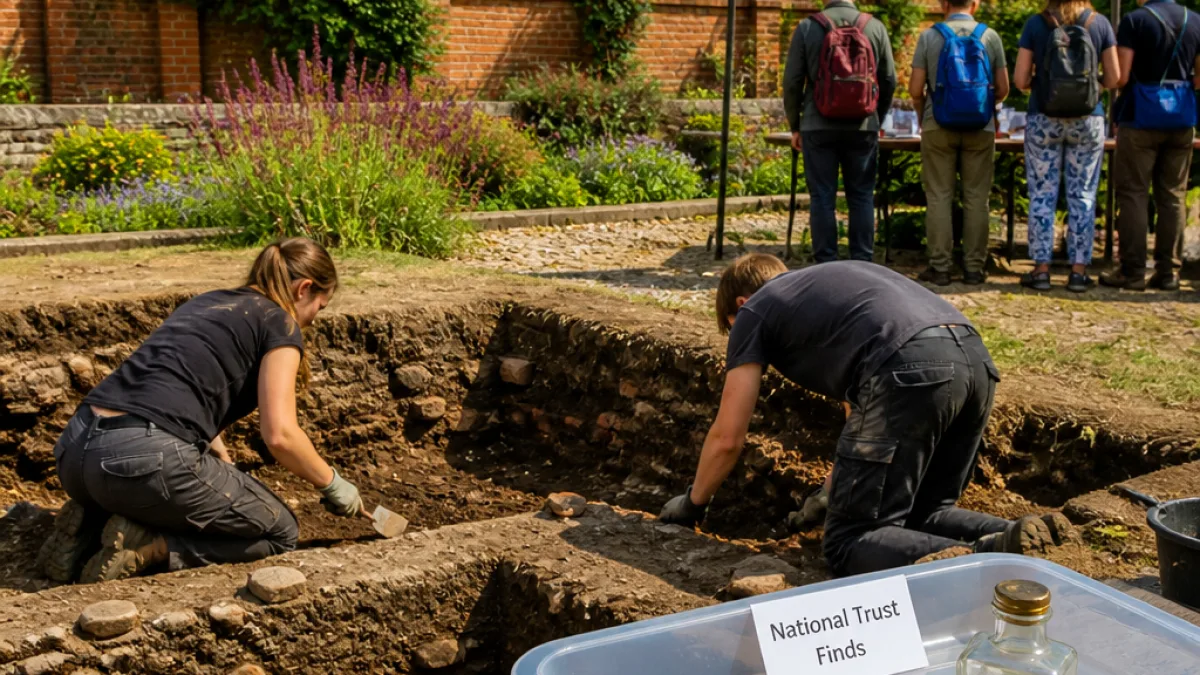
Volunteers and staff opened two large test pits in the walled garden and recovered material that suggests activity on the site possibly dating back to the medieval period. Among the later discoveries was a small early 20th-century scent bottle, marked as made by Savilles, thought to be associated with a 1920s fragrance.
| Item | Probable period |
|---|---|
| Undated structural evidence / pottery (general) | Possibly medieval |
| Scent bottle (marked Savilles) | Early 20th century (c. 1920s) |
"I am so pleased we have made these new discoveries which can possibly tell us more about the earlier occupation of the site and therefore Worcester's history and it's been especially enjoyable to have people from Worcester come along and join in to help us too."
The regional archaeologist's remarks underline two things: the potential of small urban digs to fill gaps in the city's past, and the value of public participation. The team have deliberately run the work as an open activity, showing the excavation process and inviting residents to take part.
Event for the public — when and what to expect
Organisers are holding a public event on the final day of the dig with free entry to the garden and the café. The session runs from 10:00am to 3:00pm tomorrow, and will allow visitors to:
- Meet the archaeological team and ask about the discoveries
- Handle finds under supervision
- Try a sand tray dig and learn basic excavation techniques
- Follow a heritage trail around the site
As the team backfill the test pits, volunteers will be on hand to describe the week's work and share the stories the objects begin to tell. The National Trust said the activities are suitable for all ages, making the event a practical way for families and history enthusiasts to engage with Worcester's heritage.
Local context and what comes next
Greyfriars sits within Friar Street's historic core and has been of interest to residents and visitors for some time because of its garden and listed buildings. While the recent evidence does not yet allow firm conclusions about the site's full chronology, it provides important pointers for future study and for how the site is interpreted to the public.
Photos and further information have been published online by the National Trust. Entry to the garden and café is free; anyone planning to attend the event tomorrow is advised to check the Trust's web pages for any last-minute updates.