County-wide sponsorship scheme advances to planning stage
Dozens of East Lothian roundabouts could soon carry small sponsorship signs after 23 planning applications were lodged with the local authority. The proposals, submitted by Outdo Media Ltd, cover locations stretching from Musselburgh to areas east of Dunbar, and form part of a revenue-raising initiative endorsed by the council last year.
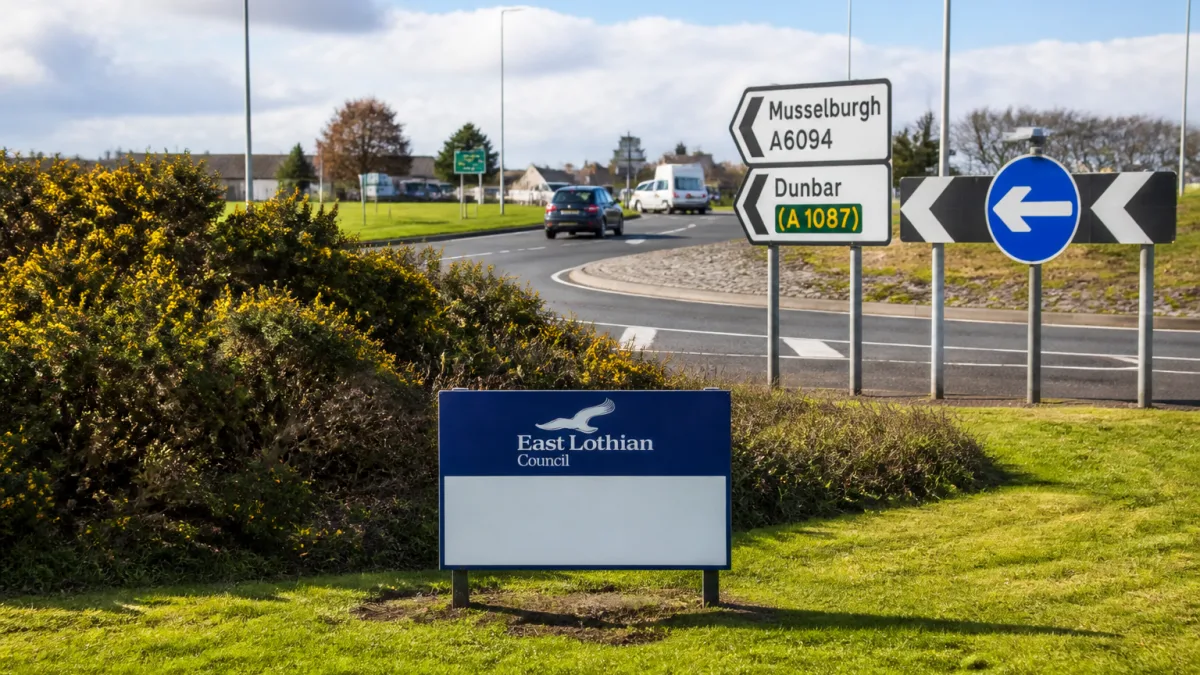
Drawings accompanying the applications indicate a low-profile unit measuring approximately 91cm high by 111cm wide. The design features a defined sponsor panel for a business message, beneath East Lothian Council branding. Each application will be assessed by the council’s planning service in line with the adopted policy and standard planning considerations.
Policy agreed at Cabinet with strict exclusions
The council approved a sponsorship and advertising policy for roundabouts at a Cabinet meeting in September last year, setting out what can and cannot appear on public-facing signs. While up to 24 roundabouts were identified for potential sponsorship or advertising, the policy includes clear content prohibitions. These mirror approaches used by West Lothian Council and the City of Edinburgh Council.
- Not permitted: political or party material; trade union promotions; religious organisations or content that could be regarded as prejudicial.
- Commercial restrictions: promotions for alcohol, tobacco, sex, and "contraceptives and associated products and services, except relating to health promotion".
- Operational model: delivery managed by a third-party provider with the council receiving a share of income.
“An update to the policy on sponsorship and advertising on roundabouts was agreed at Cabinet in September last year. It was agreed that this will be managed through a third-party provider with East Lothian Council receiving a percentage of the income obtained. The company carrying out this work is responsible for all costs associated with marketing, hardware, advertising consents and installations so any income generated comes at zero cost to East Lothian Council.”
The council has indicated that the scheme is structured so that installation and operating costs are borne by the provider rather than the public purse. It is also understood there is no separate approval required for each sponsor’s message beyond the overarching controls set out in the policy and any advertising consents secured by the provider.
What residents can expect on the ground
Should planners grant consent, motorists are likely to notice compact signs at selected roundabouts that include a sponsor name or logo within the designated panel area. The intention, according to the approved policy, is to generate income for the council while maintaining a consistent look and avoiding visual clutter. The dimensions in the lodged drawings suggest the signs will be relatively modest compared to typical roadside billboards, reflecting the greater safety and amenity considerations at junctions.
| Scheme element | Detail |
|---|---|
| Applications lodged | 23 roundabouts across the county |
| Policy capacity | Up to 24 roundabouts identified for sponsorship |
| Sign size (approx.) | 91cm high x 111cm wide |
| Management | Third-party provider (applications by Outdo Media Ltd) |
| Council costs | Zero (provider covers marketing, consents, installations) |
Planning scrutiny and local impact
Each of the 23 individual applications will be considered in due course by the planning authority. While decisions turn on planning merits and policy compliance, the content safeguards already adopted by the council place clear limits on what may appear on the sponsor panels. Residents and local businesses can inspect and comment on the proposals via the East Lothian Council planning portal in the same way as other applications.
The initiative aligns East Lothian with neighbouring authorities that already use roundabout sponsorship to support services, while attempting to balance potential income with public standards. The chosen exclusions remove the most sensitive categories of advertising and set expectations for a uniform format, which the provider must implement at its own expense.
Next steps
Planning officers will review each site and design against local planning policies, including road safety, amenity and visual impact. If approved, installation would be undertaken by the provider and the council would then receive a percentage of income generated. The timescale for any roll-out will depend on the determination of the applications and subsequent arrangements led by the third party.