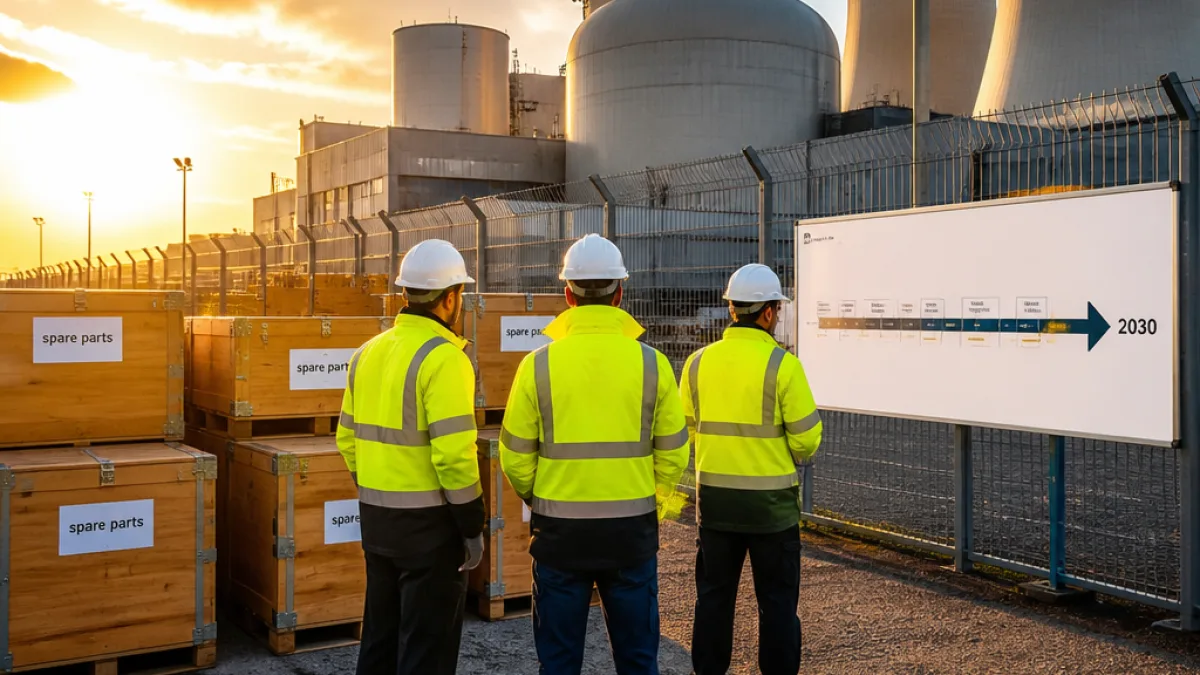
EDF has announced that Hartlepool Power Station will remain in service until March 2030, two years longer than its previously cited closure date. The operator said the decision follows a detailed technical review of key components and the wider resilience of the supply chain.
Why the extension was granted
EDF pointed to inspections of the station's boilers and the graphite cores that form part of the reactor structure as central to its latest operating assessment. The firm said these checks, together with consideration of spare parts and contractor availability, supported the case for keeping the plant online for the extra period.
"The significance of this cannot be understated, given the UK's exposure to volatile gas prices and the need to protect households by providing baseload power,"
— Tom Greatrex, chief executive of the Nuclear Industry Association, welcomed the move as important for energy security.
Local and regional consequences
Hartlepool's power station, commissioned in 1983, is one of a group of older reactors across the UK whose operational lives have been extended several times since their original 25-year design lives. For Hartlepool residents the extension will have several practical effects:
- Continued employment — the plant will keep providing jobs and supporting local contractors for an additional two years;
- Energy contribution — the station will continue supplying baseload electricity to the grid, helping to hedge against fluctuations in gas prices;
- Local economy — ongoing operations maintain business for supply-chain firms and service providers in the area.
Context within the national fleet
EDF has been managing the UK fleet of older reactors since 2009 and has repeatedly reviewed their lifetimes. The company's announcement mirrors a wider pattern of phased, evidence-led decisions on how long existing nuclear capacity should remain in service while new projects are developed.
| Item | Detail |
|---|---|
| Plant | Hartlepool Power Station |
| Original commissioning | 1983 |
| New confirmed operating end | March 2030 |
EDF said the extension followed a "detailed review" of component condition and supply-chain resilience. The announcement arrives amid ongoing national debate about how to replace aging nuclear capacity and deliver new low-carbon energy projects at pace.
For Hartlepool, the extra two years of operation offers a period of continuity while the town and region continue to adapt to the long-term shift in the UK's energy mix.