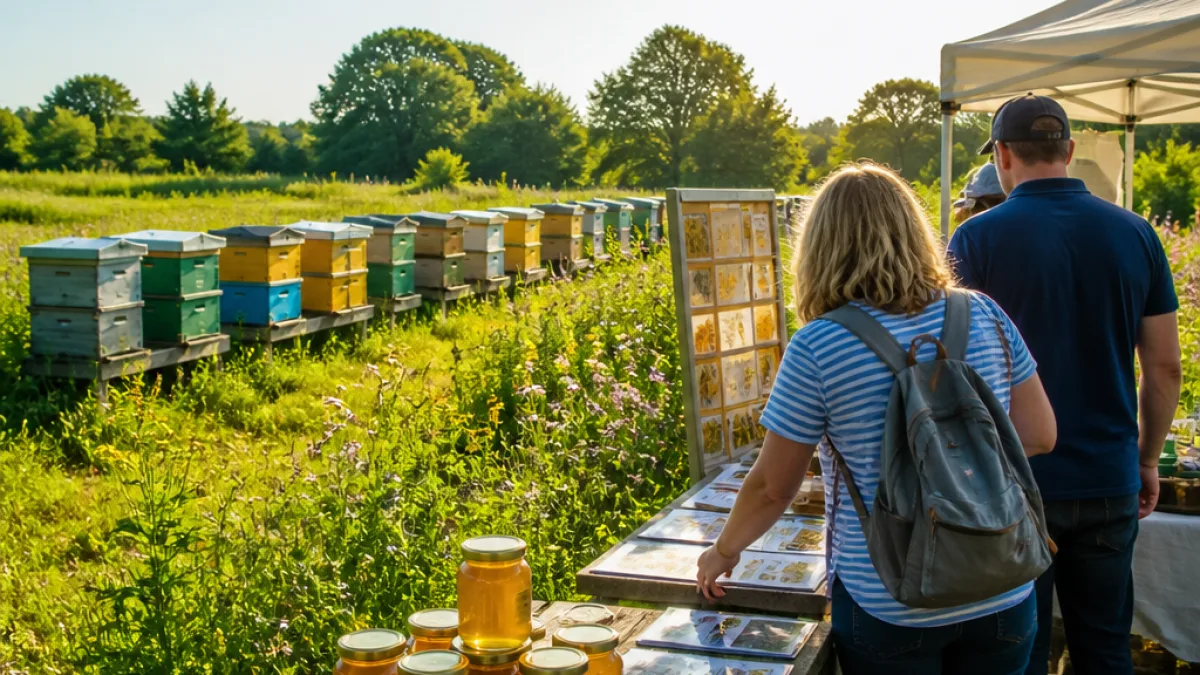
Home Farm MK, a local beekeeping business, is predicting a 30% rise in honey harvested from its hives this year, crediting a run of productive nectar sources rather than weather alone. The company, which looks after approximately 100 hives across Milton Keynes and neighbouring counties, began its main summer harvest in July and has been taking part in community events to promote local food and pollinator awareness.
Why yields are up
The business attributes the anticipated boost to what it describes as a consistent sequence of plants flowering through spring into summer, providing sustained forage for its colonies. While warm, dry conditions are sometimes assumed to be the primary influence on honey volumes, Home Farm MK says the continuity of nectar-producing flowers has been the critical factor.
"Bees need useful flowers producing nectar, and they need that forage to continue. This year we have seen a strong sequence from spring into summer, which has made it one of our best seasons."
The company is a member of the Bee Farmers Association and has been active locally with educational sessions and retail events. During July it ran two "Meet The Bees" sessions and a honey-spinning demonstration, in addition to harvesting activities.
Local engagement and sales
Home Farm MK sells directly to the public and attends pop-up markets in and around the city. Its next scheduled appearance is at the Eat Street MK Sunday Market at the Discovery Centre on 16 August, where the team will be offering jars of honey and information about how local parks, hedgerows, gardens and crops support pollinators.
- Number of hives: ~100
- Predicted increase in yield: 30%
- Upcoming market appearance: Eat Street MK, Discovery Centre, 16 August
What this means for Milton Keynes
A stronger harvest can support small local producers by increasing supply for markets and by providing opportunities for public outreach about pollination and local ecology. It also offers a reminder of how urban and peri-urban green spaces — parks, gardens and hedgerows — contribute to food production indirectly by sustaining pollinator populations.
| Item | Figure |
|---|---|
| Managed hives | ~100 |
| Predicted harvest uplift | 30% |
| Next public event | Eat Street MK, 16 August |
For residents interested in local food provenance or pollinator health, visits to such markets and educational sessions provide a chance to learn where produce originates and how the local environment affects it. The company encourages people to ask about the floral sources that contribute to different honey flavours and to consider how planting choices in gardens and public spaces can influence local bee forage.
Home Farm MK’s outlook is notable in the context of wider concerns about pollinator declines. While the forecast relates to the business’s own hives and does not indicate wider regional trends, it does highlight how sequential nectar availability within a season can sustain colony productivity.
Residents wanting to buy locally produced honey or attend the Farm’s events can look for Home Farm MK at community markets and educational pop-ups across Milton Keynes in the coming weeks.