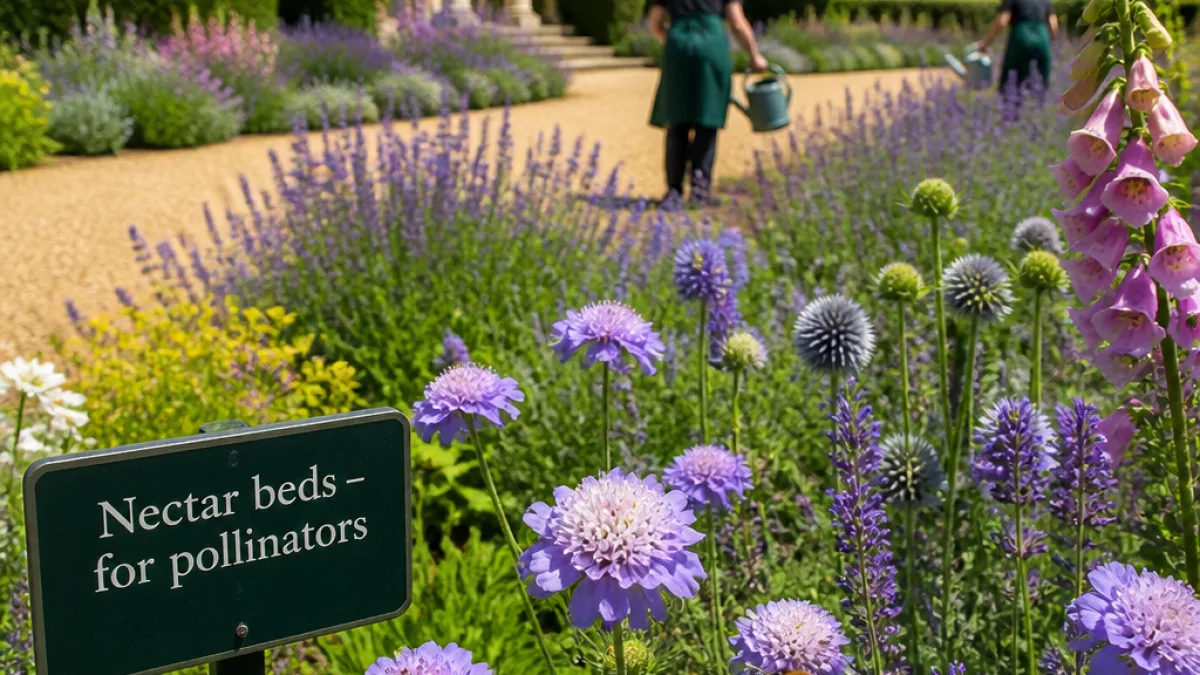
Horwood House Hotel in Little Horwood, near Milton Keynes, has begun a targeted planting scheme to help bumblebees cope with the county’s recent hot weather. The 4‑star manor is introducing a mix of nectar-rich species across its 38-acre grounds to extend the period when flowers are available to pollinators.
Plants chosen to give nectar through the season
The hotel said the programme is a direct response to monitoring by the Bumblebee Conservation Trust, which indicates that extreme heat can reduce the ability of fluffy pollinators to fly and forage. To address that seasonal shortfall, Horwood House is planting varieties chosen to flower at different times so nectar is available “right through the season”.
"We've chosen a mix of plants like verbena, lavender and scabious because they flower at different times, giving bees a reliable source of nectar right through the season, even in extreme heat,"
Jenny Beal, gardening consultant at Horwood House, said the new beds are being sited near the wedding gazebo, around the rear and side of the Manor House and beside the front brick wall. Additional planting will take place in the estate’s well garden, where increased ivy growth is being encouraged for its autumn flowers.
Practical choices and local conservation
The plants listed by the hotel are those known to provide extended nectar resources and to suit pollinators with different feeding anatomies. Hotel management emphasised a sense of stewardship over the historic estate as a reason for the scheme.
- Primary species introduced: verbena, globe thistle, rosemary, lavender, borage, scabious, foxgloves
- Additional measure: encouraging ivy in the well garden for autumn nectar
- Locations: beds near the gazebo, around the Manor House and beside the front brick wall
Caroline Morrone, General Manager at Horwood House Hotel, said: "As custodians of a beautiful historic estate, we feel a real responsibility to protect the wildlife that calls it home. Bumblebees are under increasing pressure from extreme weather, so this planting..." (quote truncated in source).
What this means locally
For residents and visitors in and around Milton Keynes, the scheme offers accessible habitat for pollinators on private land that is visible and close to public events such as weddings. The choice of long-flowering plants aims to reduce periods when food is scarce — a particular risk during heatwaves, when bumblebees can overheat and become unable to forage.
| Plant | Role for pollinators |
|---|---|
| Verbena | Long-flowering nectar source |
| Globe thistle | Pollinator-attracting, late summer nectar |
| Rosemary | Early nectar, evergreen structure |
| Lavender | High nectar output over a prolonged period |
| Borage | Attractive to many bee species |
| Scabious | Extended flowering season |
| Foxgloves | Good for long-tongued bumblebees |
| Ivy | Autumn nectar when others have finished |
The hotel’s approach reflects a growing interest among private landowners in pragmatic steps to support invertebrate populations amid changing weather patterns. While the planting alone will not reverse long-term declines, it contributes to a network of forage sites that can help pollinators survive periods of extreme heat.
Local residents interested in similar measures can look to the species list used at Horwood House as a starting point for pollinator-friendly gardening that emphasises staggered flowering times and year-round resources.