A major collaboration led by Loughborough University has been recommended for funding under the Natural Environment Research Council’s Opening up the Environment programme, aiming to build more inclusive routes into environmental science for young people across the East Midlands.
A unified, place-based model
The project, titled The C3ITEES Passport: a unified model for opening up the environment, will develop a structured, locally grounded approach to help schools, communities and young people engage with environmental topics, climate adaptation and potential careers in the field. The University of Nottingham will play a key role, joining a partnership that brings together universities, a national survey body, a government agency and regional organisations.
Who is involved
The partnership spans higher education, research and practice. The following organisations are listed as collaborators:
| Partner | Type |
|---|---|
| Loughborough University | University (lead) |
| University of Nottingham | University |
| British Geological Survey | National research body |
| University of Leicester | University |
| Nottingham Trent University | University |
| Environment Agency (East Midlands) | Public agency |
| Charnwood Forest Geopark | Regional partner |
Additional regional partners are also referenced as part of the collaboration.
What the Passport sets out to achieve
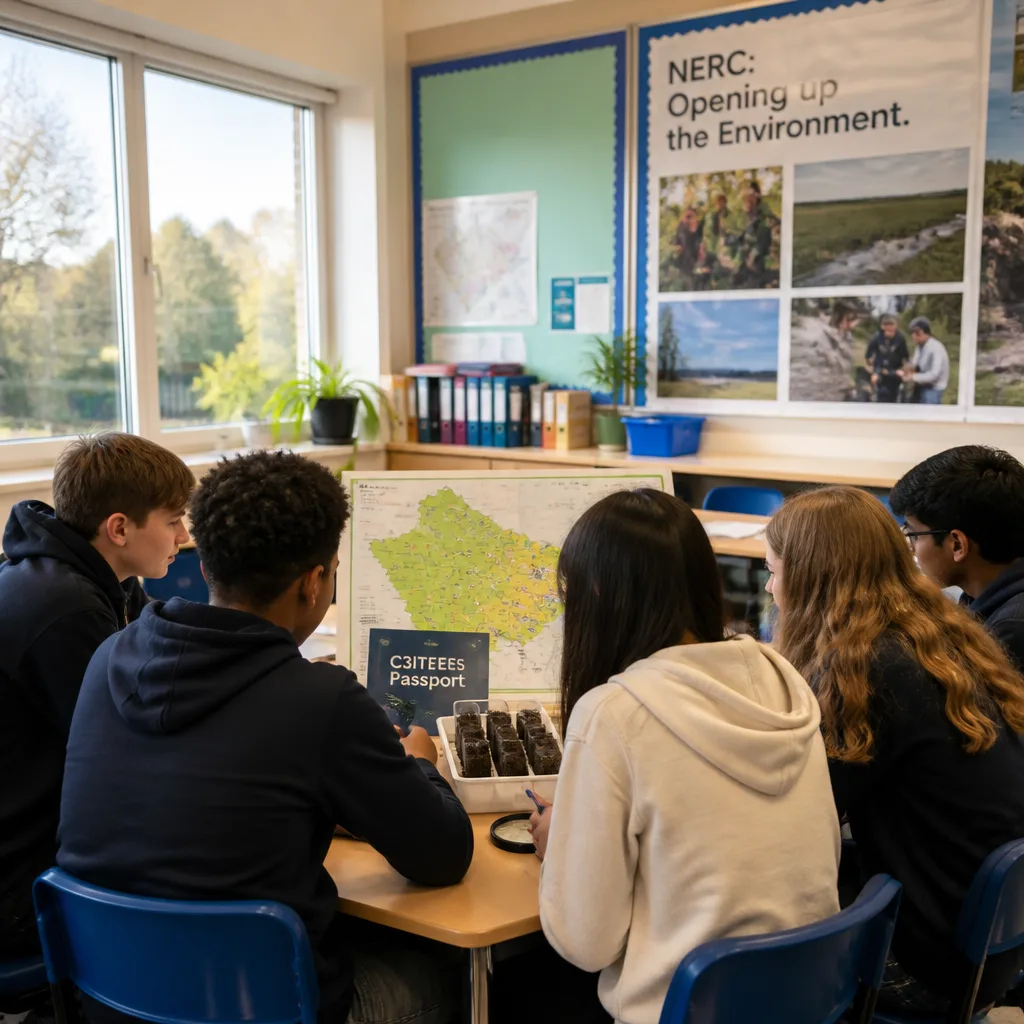
At the heart of the programme is the C3ITEES Passport—an engagement model designed to build young people’s confidence, knowledge, skills and aspirations over time. Through repeated, cumulative activities, participants will be encouraged to explore their local environments, understand environmental challenges and see how they can contribute to more sustainable futures.
- Develop a structured progression in environmental learning and experience.
- Encourage exploration of local environments and real‑world challenges.
- Strengthen career awareness in environmental science and climate adaptation.
- Connect schools, communities, researchers, practitioners and employers via a shared model.
The initiative explicitly targets pathways that link formal education with community engagement and professional practice, aiming to reduce barriers for those who may not otherwise encounter sustained, high‑quality exposure to the environmental sciences.
Scaling up earlier work
Partners describe the new phase as a regional scale‑up from earlier activity in Nottingham. That prior work, part of the first phase of funding, set the foundations for building wider participation. The project team highlights the value of subjects such as Geography and Environmental Science, not only for understanding complex societal challenges but also for the transferable skills students develop—skills that are recognised by employers.
“We’re excited to continue our work with partners in Nottingham from phase one of this funding, scaling up to the regional focus of C3ITEES… We hope the next stage of C3ITEES will allow as many young people in the East Midlands as possible to experience the breadth of the environmental sciences.”
Why it matters
By creating a shared model of progression across education and employment settings, the collaboration aims to bring greater coherence to how young people encounter environmental science—moving from isolated projects to pathways that build momentum over time. That coherence is intended to help learners see where early curiosity can lead, including routes into study and future employment across the region.
With partners spanning universities, a geological survey, a public environmental agency and a geopark, the project is positioned to link classroom learning with field‑based understanding and practitioner insight. For schools and communities, the promise is a clearer map of opportunities. For employers and practitioners, it offers a structured way to connect with emerging talent and broaden participation.
While formal funding confirmation is referenced as a recommendation at this stage, the programme’s goals reflect a wider push to ensure that environmental literacy, practical skills and career awareness are accessible to a broader cohort of young people. In a region marked by varied landscapes and communities, a place‑based approach may help translate large‑scale environmental challenges into meaningful, local action—and, ultimately, into long‑term pathways in the environmental sector.