The scale of housing need in the North East has been laid bare by a new assessment showing that 42,961 households are living in what regional leaders describe as unsuitable accommodation, with a further around 4,300 people recorded as homeless or in concealed arrangements.
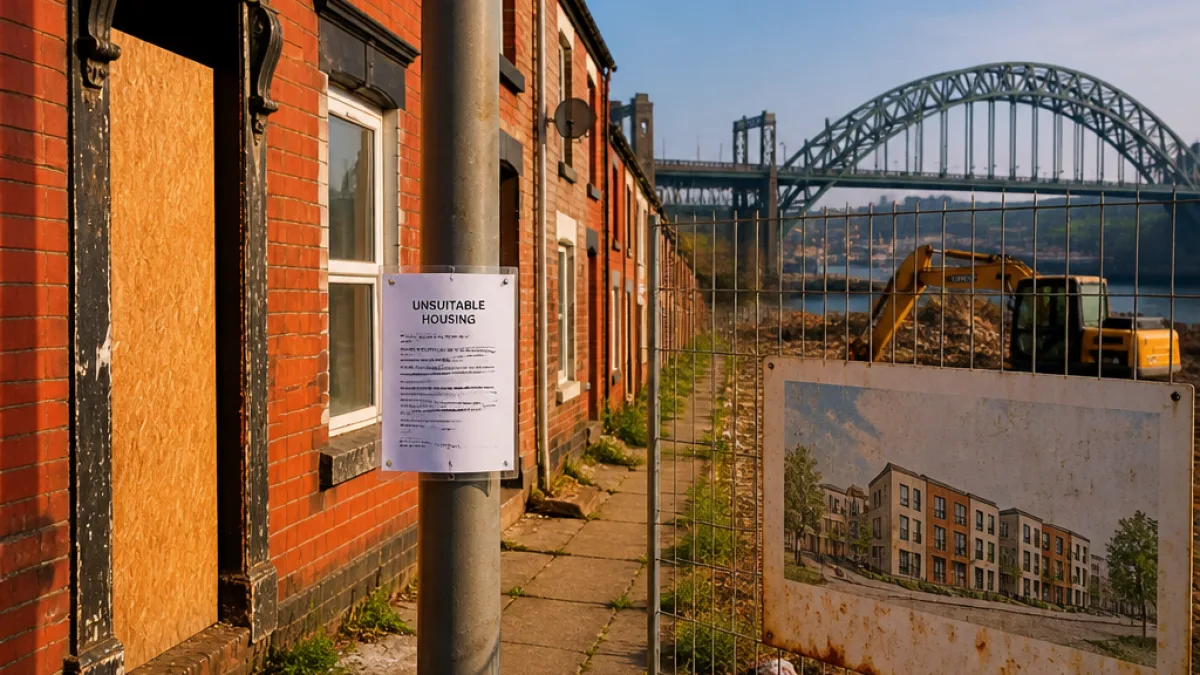
"unsuitable housing"
The report, which was considered by the North East mayoral authority, highlights rising pressure on homelessness services — demand has increased by 27% over the past five years — and underlines particular shortfalls in one-bedroom and accessible properties. More than one-third of affected households include children, the analysis says.
Funding and delivery targets
To tackle the backlog, the mayor and council leaders approved a plan seeking to deliver 15,000 social and affordable homes across Northumberland, Tyne and Wear, and County Durham over the next decade. As part of that, the region will deploy £143 million secured from the National Housing Delivery Fund intended to unlock up to 4,600 new homes by 2030.
The fund is aimed at getting stalled or unviable sites moving by addressing issues such as land remediation, infrastructure deficits and site viability. The mayor’s office warned that housing output across the North East needs to rise to a rate around 40% higher than recent delivery levels to meet anticipated demand.
Where the pressure is greatest
The study by Iceni Projects points to several specific challenges:
- Shortage of affordable one-bedroom properties;
- Insufficient supply of accessible homes for people with mobility needs;
- Heightened pressure in rural communities, partly linked to second-home ownership.
More than 16,000 households are recorded as suffering from overcrowding, according to the assessment. The combination of overcrowding, concealed households (people staying with friends or family) and those in unsuitable or temporary accommodation is placing additional demand on local services.
What this means for Gateshead
For Gateshead and neighbouring councils the figures underline the need to prioritise sites that can deliver smaller, affordable homes and dwellings with accessible designs. The agreed use of national funding to address viability and remediation barriers could accelerate building on problem sites, but the mayor’s office estimates that overall delivery must increase substantially to meet the region’s needs.
| Metric | Figure |
|---|---|
| Households in unsuitable accommodation | 42,961 |
| Households overcrowded | 16,000+ |
| Homeless or in concealed arrangements | around 4,300 |
| Increase in homelessness service demand (5 years) | 27% |
| Target social & affordable homes (10 years) | 15,000 |
| National Housing Delivery Fund secured | £143 million |
| Homes to be unlocked by 2030 with fund | 4,600 |
Local authorities and the mayor’s office will need to translate the funding and targets into deliverable schemes: bringing forward suitable sites, securing necessary infrastructure and ensuring schemes include the smaller and accessible units identified as priorities.
The assessment underscores the complex nature of the North East’s housing shortfall: it is not only a matter of overall numbers but of the right mix of homes in the right places. For residents and local services in Gateshead, the immediate questions will be where homes can be built quickly and how councils will address the needs of overcrowded and concealed households while larger programmes come on stream.