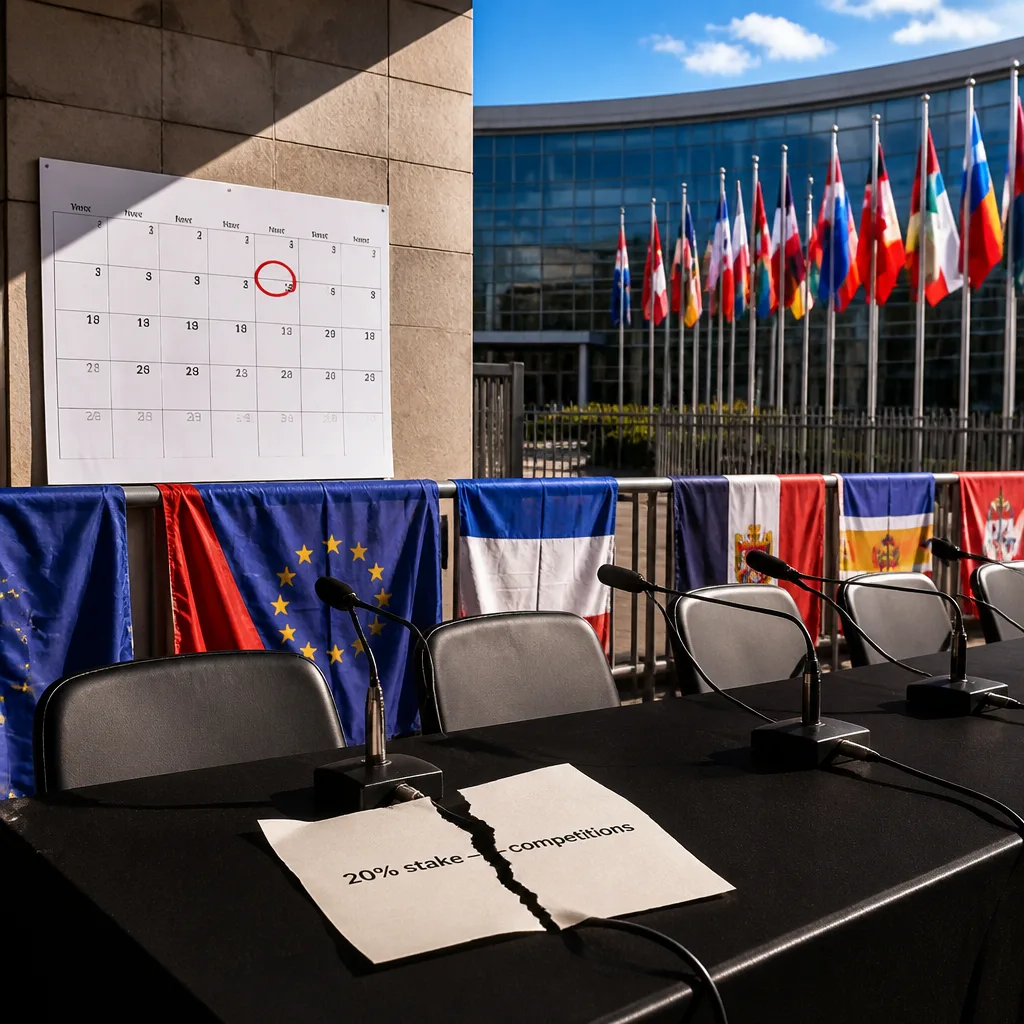
European football's governing body has declared that UEFA and its national associations will not take part in FIFA competitions if a proposal to sell a stake in the body that runs the World Cup is ratified. The statement — delivered on the afternoon of 30 July — represents a dramatic escalation in a dispute that centres on FIFA president Gianni Infantino and a contentious plan to bring private investors into the organisation’s competitions.
Immediate sporting consequences
The ultimatum threatens to upend tournaments already on the calendar. An immediate worry is the U20 Women’s World Cup in Poland, which begins on 5 September and includes many European nations. UEFA has warned its boycott would be activated should FIFA accept the funding arrangement, raising the prospect of European teams withdrawing partway through competitions.
- Key near-term events: U20 Women’s World Cup (starts 5 September); Women's World Cup qualification play-offs in October involving England, Scotland, Wales and Northern Ireland.
- Deadline: Nations reportedly have until 19 September to accept FIFA’s deal and must fund $20m by 1 January if they agree.
Political and governance implications
UEFA described the arrangement as an unacceptable transfer of ownership in competitions built over generations and warned that private investment would make commercial returns a constant pressure on sporting decisions — from formats to calendar choices. The dispute centres on a proposal to sell a 20% stake in a FIFA subsidiary intended to run competitions, partially financed by private investors. Reports have named one investor linked to the US political sphere.
"Uefa and its national associations will not participate in Fifa competitions," the governing body said.
There is considerable uncertainty about the next steps. A senior European football source told the BBC they believed the broader consequences of the policy had not been fully considered — a comment that underlines how rapidly events have moved and how little consensus exists outside FIFA’s inner circle.
What it means for the UK
For British players and supporters the implications are stark. UEFA vice‑president and former Wales international Laura McAllister emphasised the human cost, noting the prospect of missing historic opportunities — such as Wales’ potential first senior World Cup qualification via the autumn play‑offs — was unconscionable. She placed responsibility squarely on FIFA’s shoulders, saying national associations had been pushed into this position by actions from the world governing body.
| Item | Potential impact |
|---|---|
| U20 Women’s World Cup | European withdrawals could occur mid‑tournament |
| Women's World Cup play‑offs | Qualifying paths for UK nations may be jeopardised |
At this stage FIFA had not issued a formal response. The confrontation raises questions not only about the governance model preferred for international football but also about the political durability of Gianni Infantino’s presidency. UEFA’s language — calling the plan irresponsible and a failure of leadership — signals a deep rupture that could force a negotiated retreat or prompt a wider realignment among confederations and national associations.
The coming days will test whether FIFA can assuage European concerns or whether the boycott threat will be enacted, with real sporting consequences for teams, players and fans across Britain and Europe.