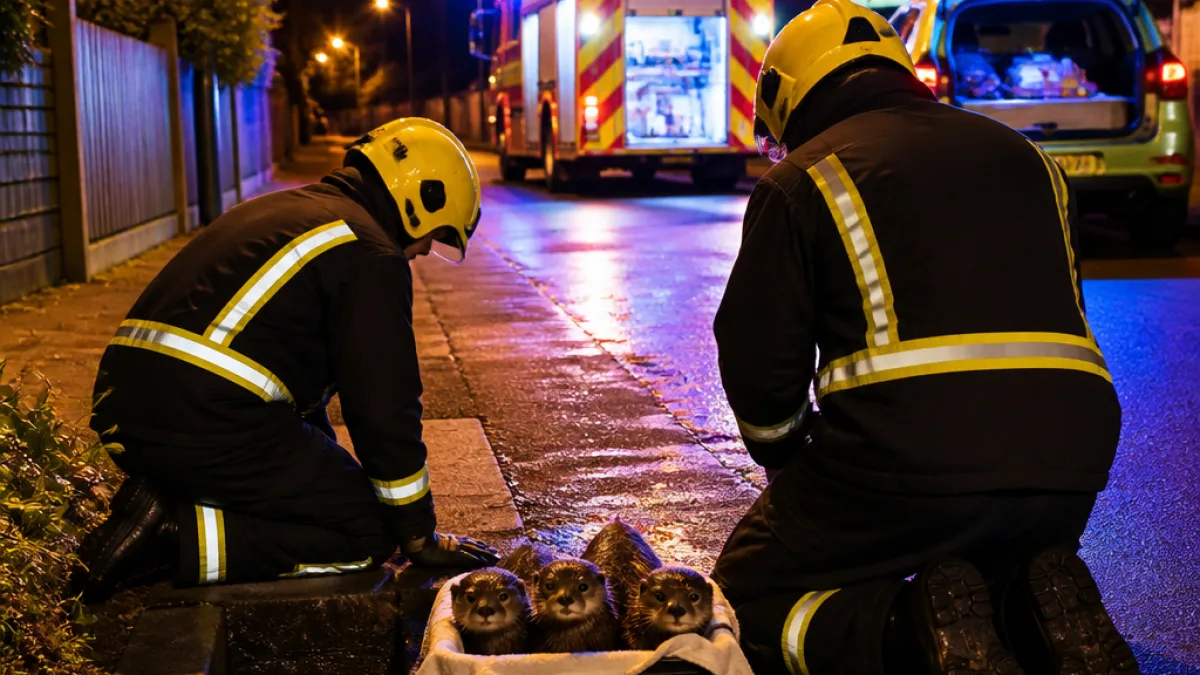
Firefighters at East Leake station have rescued three baby otters found trapped inside a storm drain on Lantern Lane, the service confirmed. The animals were located after a member of the public reported noises coming from the drain at about 21:34 BST on Wednesday.
Immediate rescue and welfare
Crews worked to remove the cubs safely from the drain and they were handed into the care of a local wildlife sanctuary in the early hours. A volunteer transported the otters to Linjoy Wildlife Sanctuary in Etwall, Derbyshire, where staff reported the animals arrived "cold, hungry and looking really poorly" at about 23:20.
"The vet told us the otters were very cold and extremely hungry. They are now being hand-fed and cared for until they are strong enough to return to the wild."
Linjoy staff said the youngsters had begun to recover after being warmed and given milk. Plans were then made to move them on to a larger RSPCA-run facility for further care.
Where they will go next
On Thursday, staff from Linjoy confirmed the cubs would be transported to Stapeley Grange, an RSPCA wildlife centre in Cheshire, where veterinary teams can continue round-the-clock care and rehabilitation with a view to eventual release back into the wild.
- Location: Lantern Lane, East Leake
- Initial find: 21:34 BST, Wednesday
- First sanctuary: Linjoy Wildlife Sanctuary, Etwall
| Event | Time / Detail |
|---|---|
| Call to fire service | 21:34 BST: noises reported from drain |
| Arrival at Linjoy | Approx. 23:20 BST: cubs cold and hungry |
| Planned transfer | To Stapeley Grange, RSPCA centre in Cheshire |
The rescue drew on the combined efforts of the emergency service crew and wildlife carers. A spokesperson from East Leake Fire Station said the animals were "very cold and extremely hungry" when vets examined them. Volunteers and staff have begun the slow process of hand-feeding and stabilisation, which is crucial for orphaned or abandoned young mammals.
For local residents, the incident is a reminder that wildlife can sometimes end up in urban drainage systems and that early reporting can make the difference. If you find an animal in trouble, contact the emergency services or a local wildlife rescue organisation; they can advise on immediate steps and ensure the animal receives professional care.
Anyone in Nottinghamshire with information about the incident or similar wildlife rescues can contact the local fire and rescue service or RSPCA branches for guidance. The hope now is that, after expert rehabilitation, the otters will be strong enough to return to their natural habitats in due course.