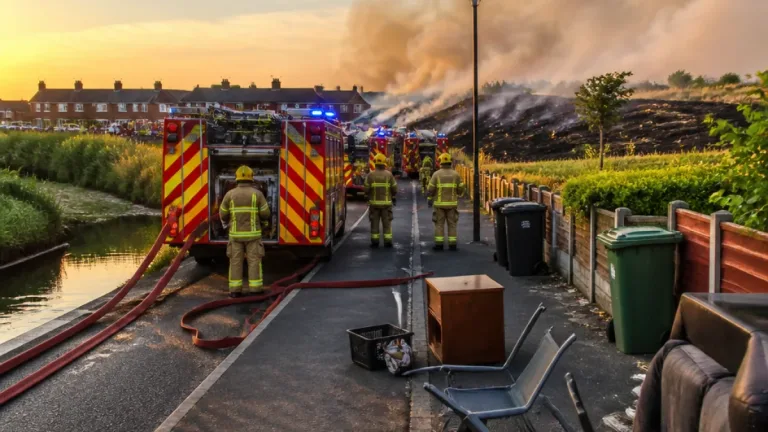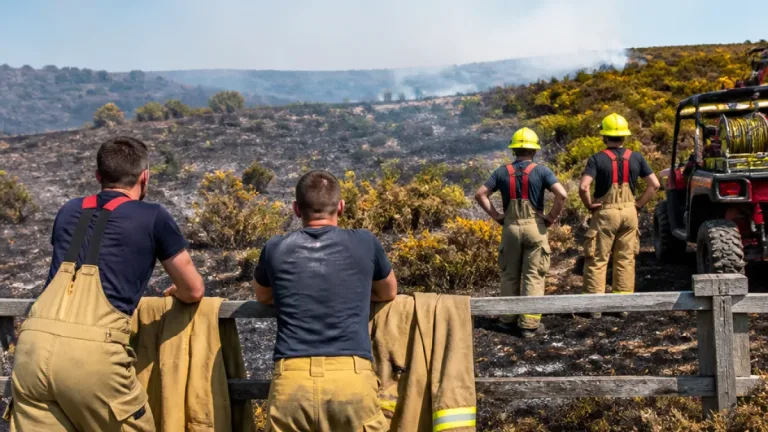
Crews are still engaged on the long-running moorland fire that began on 24 June at Tintwistle Moor in the High Peak, with a multi-agency response continuing into its fourth week.
Current response and resources
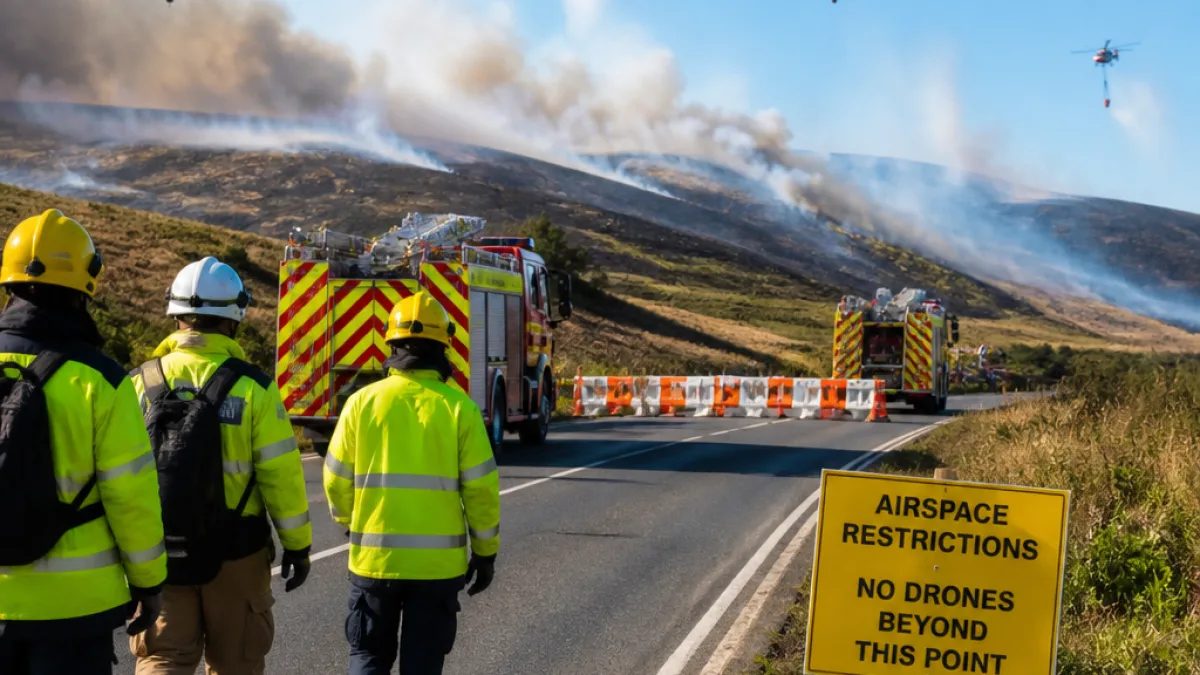
Derbyshire Fire and Rescue Service (DFRS) says there are currently 65 firefighters at the scene, supported by 15 mountain rescue personnel and 10 United Utilities staff. Four helicopters are undertaking aerial water drops to tackle overnight flare-ups in the Crowden and Arnfield areas.
| Resource | Number |
|---|---|
| Firefighters | 65 |
| Mountain rescue personnel | 15 |
| United Utilities staff | 10 |
| Helicopters | 4 |
Timeline and scale
DFRS received the first reports of the fire on 24 June. On 2 July the service handed operational responsibility to United Utilities and the wider Peak District Fire Operations Group, who took charge of damping down hotspots around Arnfield Moor and Didsbury Intake. Fire crews returned on 9 July to assist partners with further suppression and checks and have remained on site since.
Earlier in the incident, on 10 July, the area affected was estimated at about 2.6 million square metres — more than 350 football pitches.
Access, safety and public advice
Emergency services have stressed the need for the public to avoid impacted moorland and to follow all restrictions and road closures while operations continue through the school holidays.
- A628 closure: The A628 is shut both ways between Hollingworth and Flouch to allow safe access for emergency crews and partner agencies.
- No drones: Airspace restrictions remain over this incident and a separate moorland fire at Dovestone Reservoir and Swineshaw Moor. Flying drones in the area could disrupt aerial firefighting and endanger crews.
- Avoid affected areas: Members of the public should not attempt to access Arnfield, Crowden or adjacent moorland until authorities confirm it is safe.
"As we head into the school holidays and firefighting operations continue, we are asking members of the public to support the response by avoiding affected moorland areas and complying with all restrictions and road closures,"
The quoted request came from a DFRS spokesperson, reflecting ongoing concerns about public safety and the need to maintain safe working space for emergency teams.
Local impact and continuing risk
Although crews report improvement compared with the first week on site, flare-ups have been recorded and resources remain committed. The continued deployment of both ground crews and aerial assets indicates persistent hot spots and the complexity of extinguishing fires on peat and moorland, where deep-seated heat can reignite surface flames.
Residents, visitors and road users in the High Peak and surrounding areas should expect restrictions to remain while suppression and monitoring continue. Authorities have not announced an end date for operations.
InfoRadar will provide further updates as emergency services release new information.