The government has confirmed the legal names to be given to the four new unitary authorities due to replace Devon’s existing councils, setting out the scale of representation and transitional arrangements as the county prepares for major local government change.
What has been decided
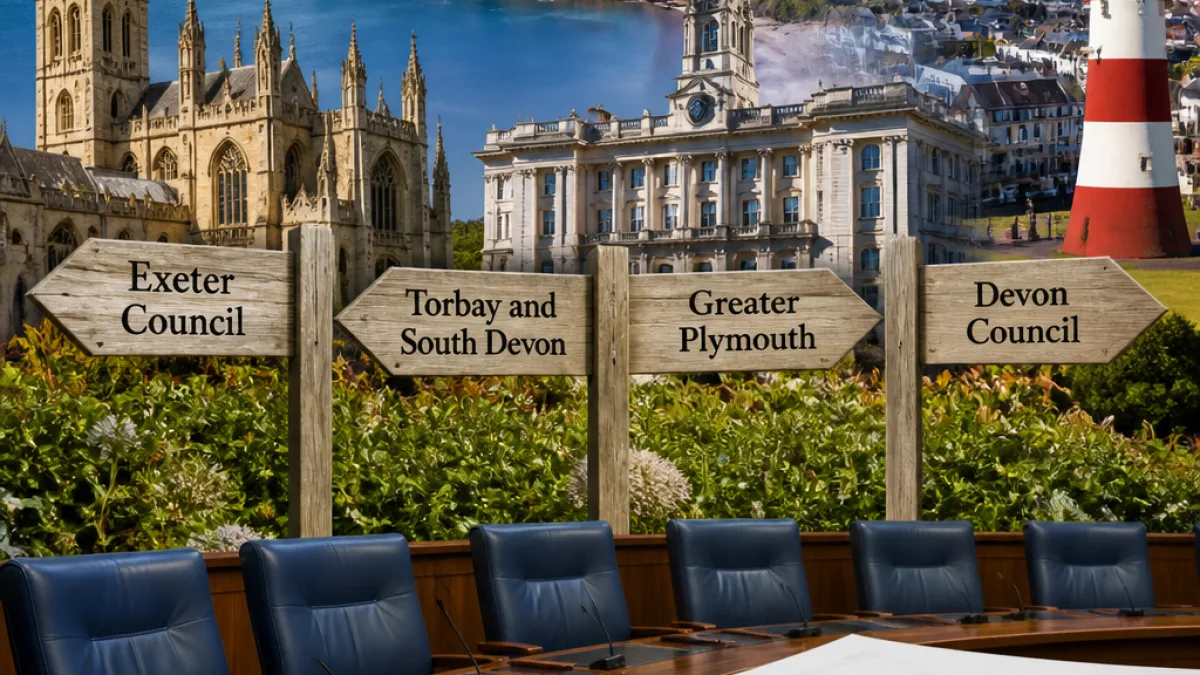
When they are established, the four new councils will be called Exeter Council, Torbay and South Devon, Greater Plymouth and Devon Council. The new authorities are expected to take on responsibility for all local services within their boundaries and are due to launch by April 2028.
One of the most striking implications of the reorganisation is a planned reduction in the overall number of elected members. Across the county’s existing 11 councils there are currently 481 councillors; that total is set to fall to 321 under the new arrangements — a decrease of roughly one third.
Councillor allocation and likely effects
The distribution of seats across the new authorities is as follows:
| New council | Number of councillors |
|---|---|
| Devon Council | 103 |
| Exeter Council | 86 |
| Greater Plymouth | 68 |
| Torbay and South Devon | 64 |
Fewer councillors will almost certainly affect ward sizes and the caseloads of elected members. Larger geographical wards in rural and coastal areas may mean councillors have to cover more ground and represent a wider range of local issues. The precise ward boundaries and electoral arrangements will follow later stages of the reorganisation process.
Transitional structures and money
A government letter to the chief executives of Devon’s current councils sets out expectations for joint committees to manage the establishment of the new authorities. Proposed joint committee make‑ups cited in the correspondence indicate how current district and county representatives might work together during the transition, with the largest joint committee planned for the new Devon Council.
Financial support for the process has also been confirmed. The government will make available £900,000 per new unitary — a total of £3.6m for Devon — to support formation. There is also potential additional funding of £150,000 per unitary to assist with the transfer and continuity of children’s and adult social care services.
- Four unitary councils to replace 11 existing authorities.
- Councillor numbers reduced from 481 to 321.
- Transitional joint committees and targeted funding announced.
The letter requests further information from Devon’s councils by August to help progress the set‑up work. Once established, the new councils will be able to apply to change their legal names if they choose to do so.
For residents and community groups the coming months will bring consultations on ward boundaries, representation and the delivery of services. The scale of the changes — both administrative and practical — means town and parish councils, local charities and service providers will need to engage with the programme to ensure continuity for communities, particularly in rural and coastal areas where needs can be dispersed and complex.
The confirmation of names and seat numbers is a key milestone in the reorganisation. The next steps will determine how democratic representation, service delivery and local accountability are preserved or reshaped as the new councils prepare to assume full powers.