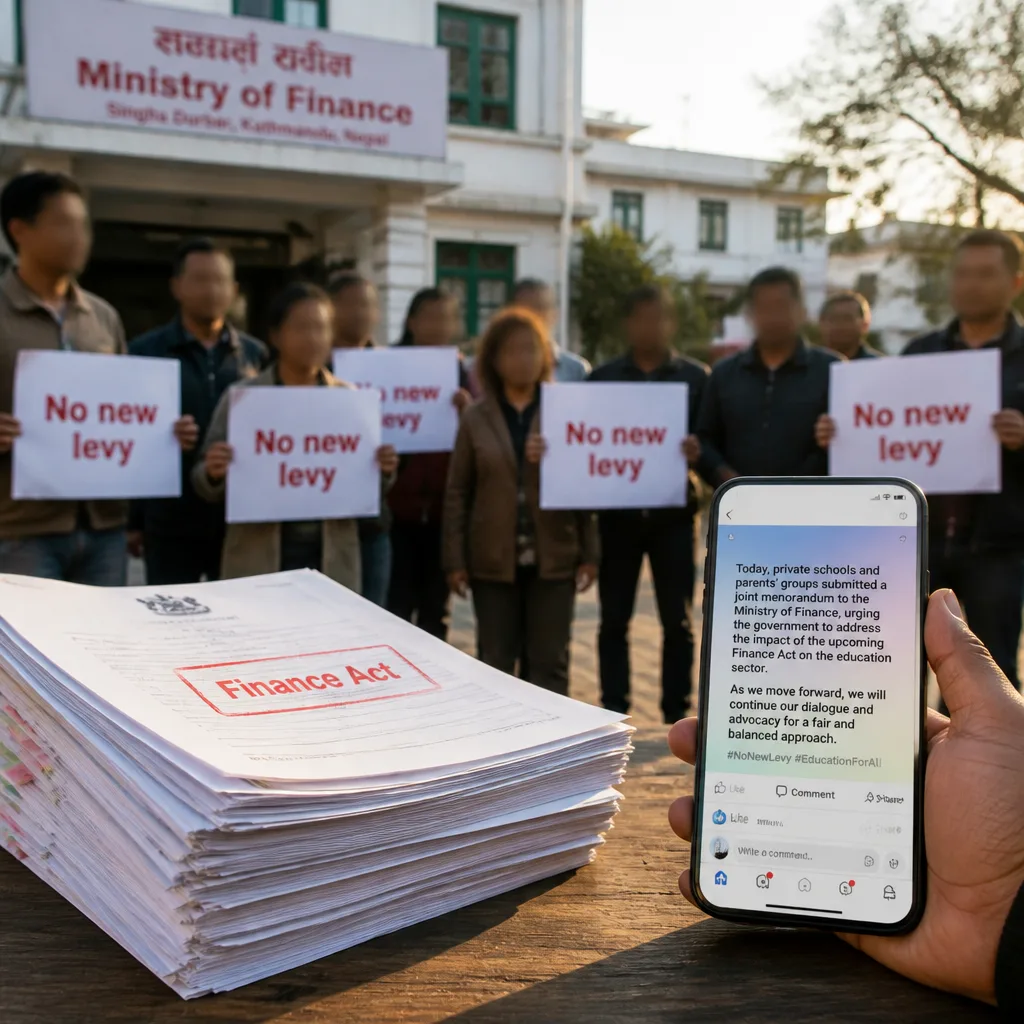
Prime Minister Balendra Shah has declared that the government will not implement a newly introduced three percent “education equity” and “health equity” fee on private services, saying the measure would place an unfair burden on the public.
Immediate U‑turn after public criticism
The announcement, posted on the prime minister's social media accounts, came just days after the levy took effect and followed widespread public opposition. Shah said he had consulted Finance Minister Swarnim Wagle before deciding not to enforce the levies “for the time being”.
“Implementing the three percent equity fee on private education and health services as proposed would impose an additional financial burden on the general public and create unnecessary hardship.”
Shah said the fees had originally been intended to finance social welfare schemes — improving education and healthcare in remote and disadvantaged areas, supporting Dalit and marginalised children, expanding health insurance and widening the tax base — but the government reconsidered after listening to public concerns.
Legal and procedural complications
Despite the prime minister's announcement, the levy was introduced through the Finance Act, which was passed by both the House of Representatives and the National Assembly. Legal experts highlighted that a statement on social media does not, in itself, repeal or suspend a statute.
Any change to taxes enacted within a Finance Act typically requires the same formal steps used to approve them: a Cabinet decision and following the statutory procedures for amendment. That sequence has not been reported as completed, leaving open questions about the formal status of the three percent fee.
- Policy aim: raise funds for social welfare, education and health in disadvantaged areas.
- Action taken: PM announced non‑enforcement following public opposition and consultation with the finance minister.
- Outstanding issue: law was enacted via Finance Act, so formal repeal or amendment would need proper legislative procedure.
What this means for parents and providers
For parents and private providers, the immediate practical effect is uncertain. While the government says it will not enforce the charges now, schools, private clinics and insurers will need clear, written guidance from the Cabinet or finance ministry to know whether they must collect the charge, remit funds or adjust fees.
| Item | Status (as reported) |
|---|---|
| Three percent education equity fee | Announced: not to be enforced (social media statement) |
| Three percent health equity fee | Announced: not to be enforced (social media statement) |
| Legal status of Finance Act measures | Enacted by Parliament; formal amendment required to repeal |
The prime minister reaffirmed a commitment to review policies that meet public dissatisfaction, but until ministers and legal authorities take the formal steps to amend the Finance Act, there will be ambiguity. Parents, private education providers and healthcare services should look to formal statements from the Cabinet or finance ministry for definitive guidance on billing and compliance.
This episode underscores the tension between rapid political responses to public sentiment and the constitutional and legislative processes that govern tax law. For now, the levies remain in the statute book unless and until the government follows the required procedures to alter them.