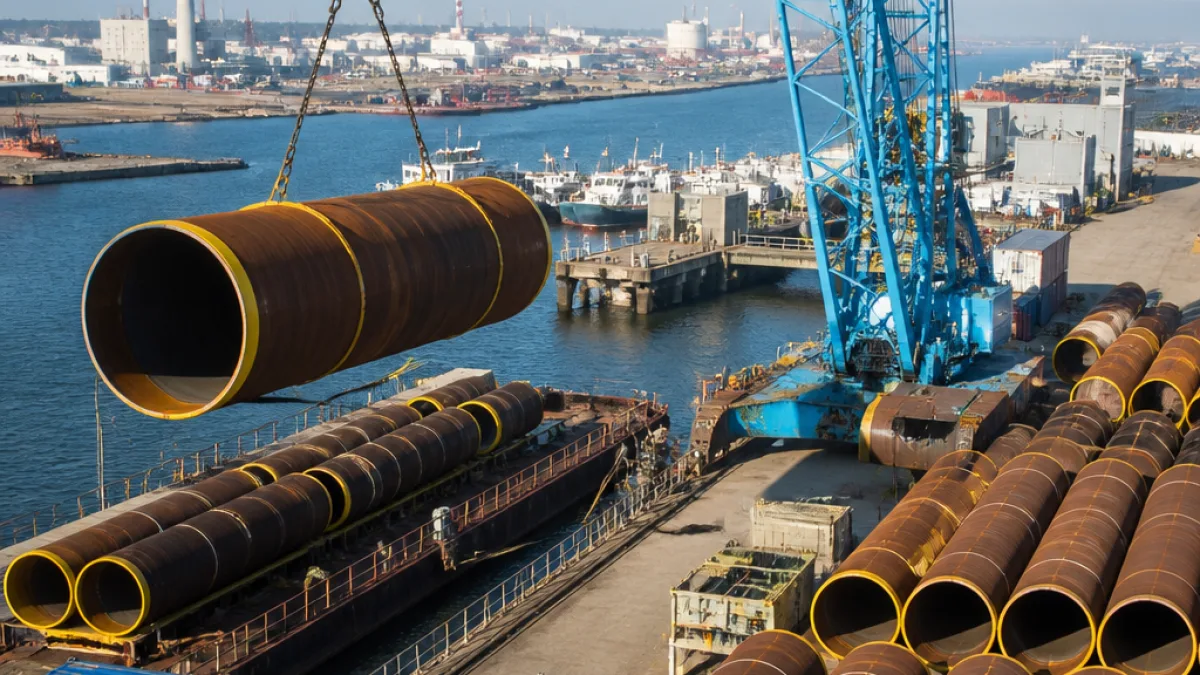
The Northern Endurance Partnership (NEP) has commenced offshore construction activity for the UK’s first dedicated carbon dioxide transportation and storage network, with work centred at PD Ports' Port of Hartlepool. The campaign began with the arrival of linepipe joints at Saipem’s Hartlepool logistics facility and marks a major phase for the Teesside–Humber decarbonisation plan.
Local manufacturing and jobs at the fore
Saipem is delivering the offshore element of the programme. The contract will provide the steel pipework needed to assemble a 149-kilometre, 28-inch offshore pipeline and associated landfall structures capable of transporting captured CO₂ to storage sites beneath the North Sea. More than 60% of the pipe joints were produced locally at the former Liberty Steel pipe mill in Hartlepool, now operated by Corinth Pipeworks.
The initial logistics and handling are supporting local employment: approximately 150 skilled jobs are directly linked to the programme, with an additional 35 positions created including apprenticeships. PD Ports says it will manage around 12,000 concrete-coated linepipe joints with a combined weight of about 170,000 tonnes. Site teams of between 40 and 60 employees will cover engineering, logistics, procurement and communications for the project on the port estate.
NEP said the project is helping drive economic growth across the region.
Scale and regional significance
NEP and project partners estimate the network, once operating, will be able to move and store up to 23 million tonnes of CO₂ annually — a capacity that would represent a substantial share of the UK's emissions management capability. The work is already contributing to regional contract awards: more than £2 billion in contracts have been given to over 260 UK-based companies, and the NEP programme together with Net Zero Teesside Power is forecast to support around 3,000 jobs.
Onshore construction is under way and NEP says the overall project is now approximately one-third complete. PD Ports has invested in new equipment at the Hartlepool terminal — more than £1 million — to handle the pipework and to prepare the port for future offshore cargo operations linked to the development.
What this means for Hartlepool
- Direct employment opportunities in logistics, engineering and manufacturing related to the pipeline work.
- Longer-term regional economic activity from contract awards and supply chain spending.
- Upgrades to port handling capability that may attract further offshore industry work.
For Hartlepool the project cements a role in the UK's emerging carbon capture, utilisation and storage (CCUS) infrastructure and extends the town’s industrial profile beyond traditional port activity. With a material portion of the pipeline manufactured locally and with handling facilities upgraded on the quayside, the development is already having tangible effects on output and employment at the port.
| Metric | Figure |
|---|---|
| Pipeline length | 149 km |
| Pipeline diameter | 28 inch |
| Annual CO₂ capacity | 23 million tonnes |
| Contracts awarded | £2 billion to over 260 UK companies |
| Local jobs supported | 150 direct, plus 35 new positions and apprenticeships |
Project partners say there will be ongoing phases of fabrication, transportation and installation as the offshore campaign progresses. For residents and businesses in Hartlepool this represents both immediate opportunities in employment and supply chain work and a longer-term change in the port’s industrial activity.
As the programme moves forward, InfoRadar will continue to track local job numbers, contract award details and any further investment at Port of Hartlepool.