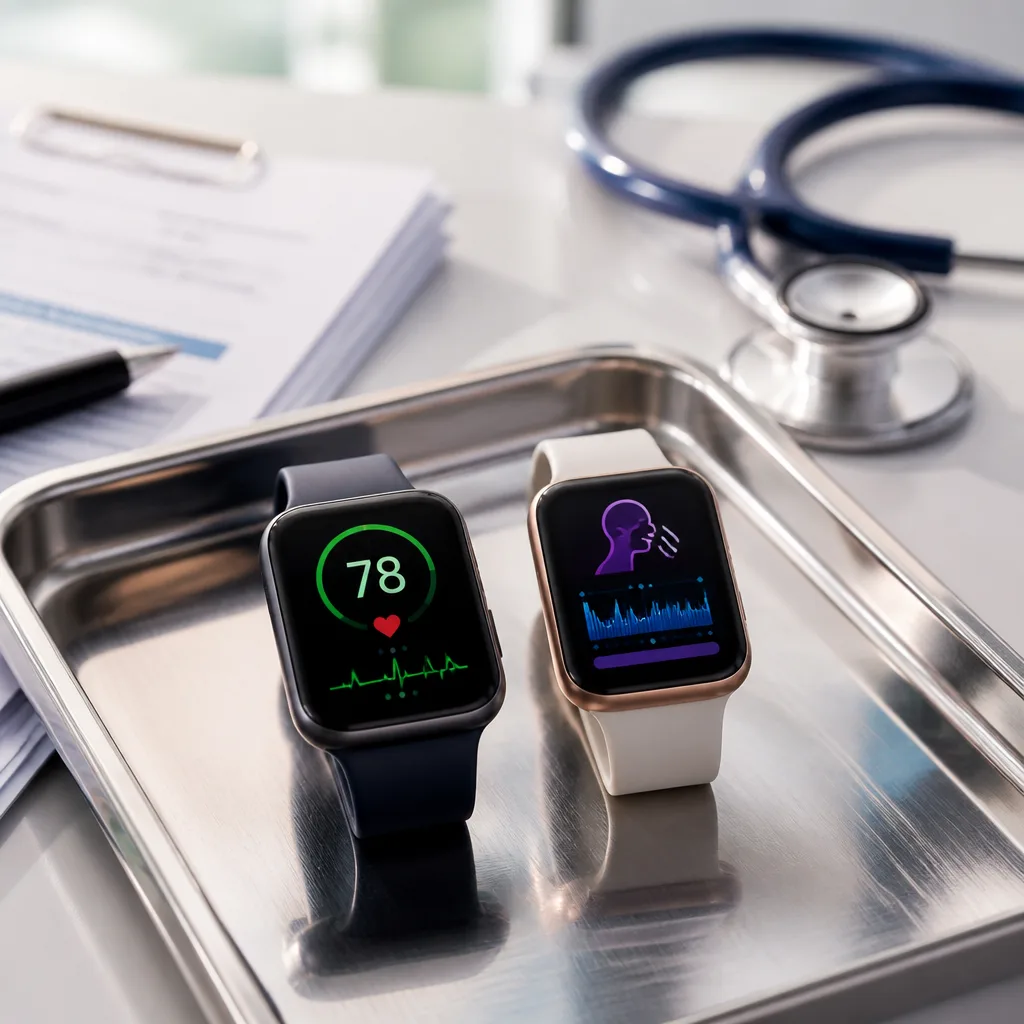
Samsung has launched health-oriented updates for its latest wearables, the Galaxy Watch Ultra2 and Galaxy Watch9, that pair continuous biometric sensing with on-device artificial intelligence to provide personalised wellness guidance. The firm says the watches translate complex bodily signals into simple, actionable recommendations across areas such as sleep, cardiovascular health and recovery.
What the devices monitor
At the centre of the new features is Samsung’s BioActive sensor, which continuously records biometric information about a wearer’s lifestyle and physiology. That data is used by on-board AI tools to build an individual health profile and offer tailored prompts intended to help users understand and manage their wellbeing.
- Sleep Apnoea feature — the company states this is supported by a new FDA clearance and AI algorithms to identify breathing disruptions during sleep.
- Vitals monitoring — tracks personal baseline values while asleep and provides alerts for substantial deviations.
- Heart Health Score — produces a single, interpretable measure of cardiovascular condition with personalised lifestyle suggestions.
- Daily Cardio Load — offers training guidance, estimating workout volume and recovery needs.
- Fitness Index — presents a broad view of physical fitness and sets tailored goals.
- Hearing protection — warns about unsafe noise exposure and produces noise‑related reports.
Clinical research and implications
Samsung describes these capabilities as grounded in years of clinical research carried out in partnership with academic and medical institutions. By combining long-term consumer data with clinical evidence, the company aims to make its recommendations both more accurate and more meaningful for users managing chronic risks or tracking fitness and recovery.
| Feature | Primary aim |
|---|---|
| Sleep Apnoea | Detect breathing disturbances during sleep |
| Vitals | Alert on significant deviations from personal baselines |
| Heart Health Score | Summarise cardiovascular wellness and suggest lifestyle changes |
What this means for users and health services
The move highlights a broader trend: consumer wearables are increasingly offering functions that intersect with clinical care. For individuals, these tools promise more continuous monitoring and earlier recognition of changes in condition. For healthcare services, there are potential benefits — and challenges — around interpretation of device data, management of alerts, and ensuring that clinically significant findings are integrated into formal care pathways.
Samsung emphasises that the watches aim to give proactive, personalised guidance across sleep, activity, cardiovascular health and recovery. Users and clinicians should, however, be mindful that wearable-derived information is an adjunct to — not a substitute for — professional medical assessment.
The company has also expanded style choices, offering a variety of bands tailored to different lifestyles to accompany the technical updates.
As these products roll out, regulators, clinicians and users will be watching closely to see how on-device AI and continuous sensing affect health outcomes, service demand and how data is interpreted in everyday care.