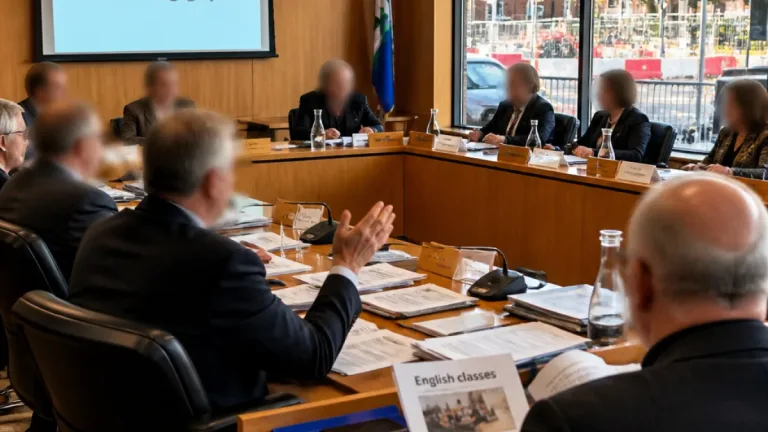

The National Institute of Economic and Social Research (NIESR) has told the new government that its early policy promises will require either higher taxes or reductions in public spending because the state has no further capacity to borrow. The intervention flags rising inflation and weak growth as central constraints on the Treasury as it assesses how to pay for a series of measures announced in the prime minister’s first week.
Fiscal pressure on fresh commitments
NIESR’s assessment draws attention to roughly £2 billion of initiatives unveiled as part of the administration’s opening policy set, including a cap on bus fares, a cut to VAT on energy bills and a 20% reduction in pub business rates. The think‑tank said these and other pledges come at a moment when borrowing is effectively at capacity.
"It's a tough, tough job being chancellor and I wouldn't wish it on anyone,"
The institute’s director, speaking at a Westminster briefing, warned that inflationary trends were likely to raise living costs more than the Bank of England currently anticipates, increasing the prospect that interest rates will need to climb again in pursuit of the inflation target.
Economic outlook in brief
NIESR’s figures presented a subdued near‑term growth profile and above‑target inflation expectations that compound fiscal constraints:
- Inflation: projected to rise to 3.8% next year (well above the 2% target the Bank of England aims for).
- Growth: quarterly GDP growth of 0.6% and 0.4% in the first two quarters of the financial year, sliding to 0.1% in the third quarter, according to the think‑tank’s analysis.
| Item | Amount |
|---|---|
| Policy commitments announced | ~£2bn |
| Defence funding shortfall | £4.7bn |
| Earlier defence overspend cited | £13bn |
Options and constraints for the Treasury
According to NIESR, the combination of higher inflation and fragile growth would leave the Treasury with limited scope to borrow to cover additional commitments without risking upward pressure on interest rates and public borrowing costs. The institute said, in effect, that the funding gap will have to be resolved through tax increases or cuts in other spending — a stark framing for ministers as they reconcile manifesto objectives with fiscal realities.
The briefing also noted a separate immediate pressure on defence spending: the Treasury must identify an extra £4.7 billion to close a gap in current plans. That figure sits alongside an earlier reported shortfall of £13 billion in defence budgets that has already prompted ministerial departures and debate about how to meet commitments.
Political and policy implications
The NIESR warning lands at a politically sensitive moment for the government. It constrains the scope for further fiscal giveaways and intensifies scrutiny of how the chancellor and prime minister will prioritise competing objectives — from transport and energy relief to social care and defence. Suggestions that options include the sale of government debt instruments as a form of finance were noted, but the think‑tank’s central message remained that conventional borrowing capacity is exhausted.
For ministers, the choice set outlined by the institute is straightforward in principle but difficult in practice: either raise additional revenue or reprioritise and cut existing commitments. Both routes carry electoral and economic consequences, and the government will face urgent pressure to set out credible plans that align promises with the constraints identified by NIESR.