Planning milestone for landmark city venue
Derby City Council has submitted formal proposals to bring the Guildhall Theatre back into full use, setting out a programme of works that combines modernisation with protection of the building’s historic character. The council confirmed that the application was filed on Friday, marking a key step in a long-trailed restoration effort for the city centre venue.
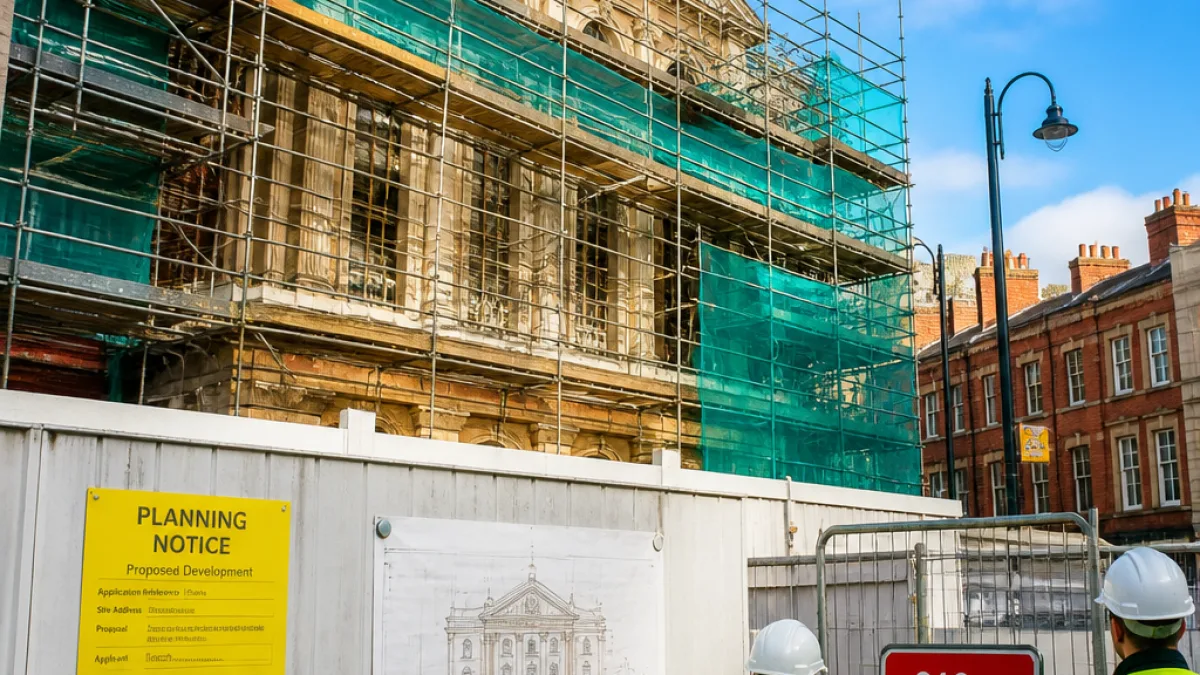
Preparation on site has been underway for months. In January, councillors gave the green light for detailed inspections to guide the restoration, and since then technical surveys have been progressing to identify the safest way to safeguard the theatre’s decorative ceiling and fabric. Scaffolding was installed both internally and externally to allow specialist teams to carry out this work.
What the plans include
The submitted scheme points to a full refurbishment of the building, with a series of updates intended to make the venue more flexible and accessible while retaining its heritage features. Key elements trailed by the council include:
- A new café area to enhance daytime use and improve the visitor welcome.
- Flexible seating in the auditorium to support a broader range of performances and community events.
- Upgraded access routes and toilet provision, addressing longstanding inclusion and comfort needs.
The council said the design brief balances operational improvements with conservation, ensuring that restoration methods respect the building’s historic significance while meeting modern safety standards.
Funding commitment and civic aims
The project is underpinned by £10 million in government funding allocated to support the return of a key cultural facility to the heart of Derby. Setting out the administration’s ambitions for the venue, the council leader, Nadine Peatfield, said:
“Our vision is to see the community back at the Guildhall to enjoy live performances and events, working with arts and cultural groups across the city. The £10 million of government funding that we've received towards this project is a once-in-a-generation opportunity to restore this much-loved building for future generations.”
Behind-the-scenes work to protect heritage
According to the council, specialist surveys have focused on understanding the condition of the theatre’s ceiling and other heritage features so that the restoration plan can be designed around what is required to preserve them. The use of scaffolding inside and outside the building has enabled close inspection and careful planning ahead of any intrusive works.
The local authority emphasised that this stage is about getting the conservation and construction sequence right: by establishing the condition of the fabric now, the works can be scheduled and specified to minimise risks and protect the venue’s original details.
What it could mean for audiences and the city centre
Although the planning documents will be subject to assessment in the usual way, the direction of travel is clear: the Guildhall would be refitted to serve a wider range of users, with improved facilities designed to support daytime activity as well as performances. This has potential benefits for footfall in the Market Place area, particularly if the café and flexible seating allow programming that spans local groups, small-scale touring shows and community events.
Improved accessibility is a notable feature of the plans. Better step-free routes, enhanced sanitary provision and adaptable seating are expected to broaden who can use the space and how it can be used. The council’s stated intention is for the building to host collaborative work with arts and cultural organisations from across the city, once reopened.
At a glance: proposed upgrades
| Project area | Planned change |
|---|---|
| Auditorium | Introduction of flexible seating |
| Public facilities | Enhanced access and toilet provision |
| Front of house | Creation of a new café space |
| Heritage | Preservation of historic features, including the ceiling |
Next steps
With the planning application now submitted, the focus shifts to the statutory process. Officers will review the proposals against heritage considerations and building regulations, informed by the technical surveys already completed. The council has indicated that enabling works and careful sequencing will continue to be guided by what the inspections reveal, particularly in relation to protecting original fabric.
For residents and arts groups, the latest move provides the first formal look at how the Guildhall could operate once works are completed. While timelines, contractor appointments and detailed phasing will come through subsequent approvals, the current plans set out the practical features that would shape audience experience and make the venue more resilient for future use.