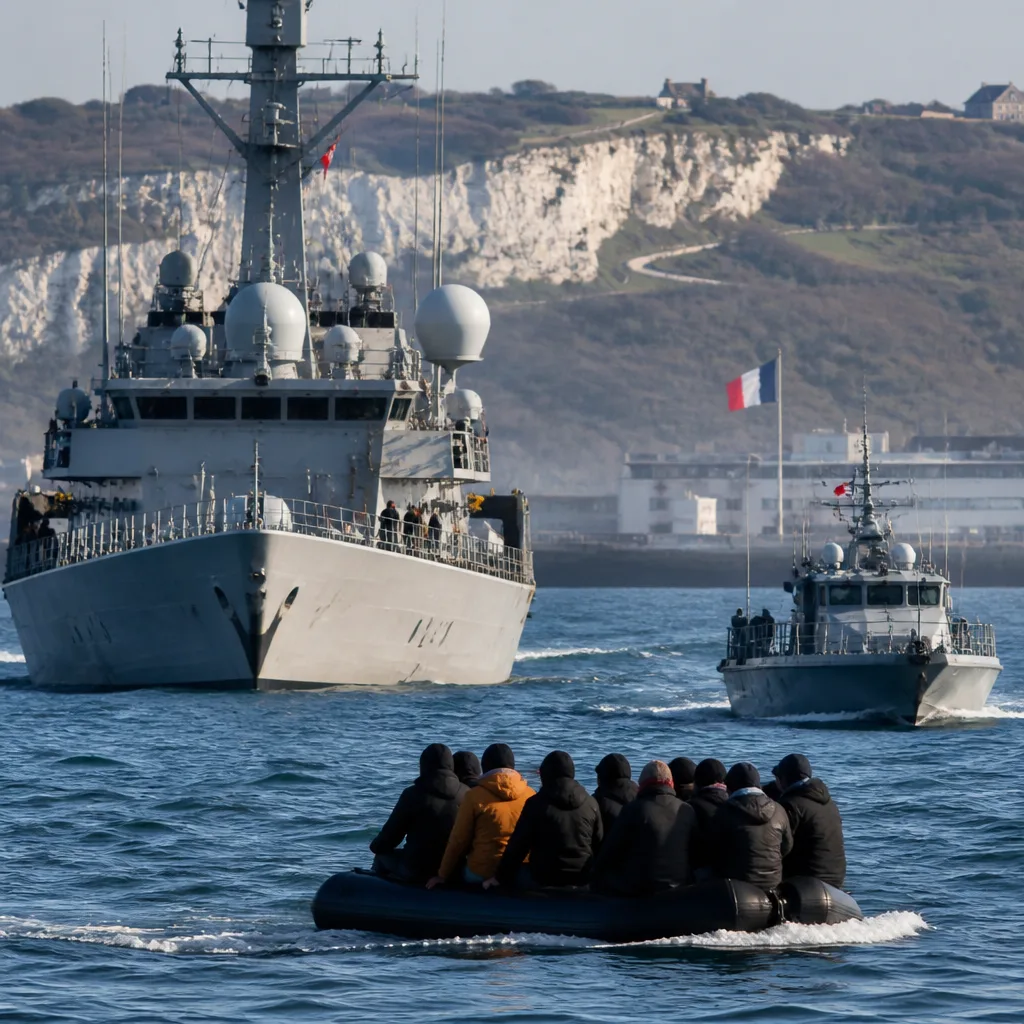
A proposal by Reform UK to deploy Royal Navy ships to intercept small migrant vessels in the English Channel and return them to French or Belgian shores has been strongly rejected by the French authorities as unlawful and a breach of sovereignty.
Paris warns of legal and diplomatic breach
The French ministry of the interior — the counterpart to the UK Home Office — said the measure would amount to a violation of French sovereignty and contravene the law of the sea and international law. The intervention came after Reform UK unveiled an operation it called Operation Fortress, which would create a joint military and surveillance command to track and detain unauthorised boats.
“This would constitute a violation of French sovereignty, as well as a violation of the law of the sea and international law.”
Reform UK leader Nigel Farage described the plan at a press conference as potentially the largest military operation in the Channel since the Second World War, asking rhetorically: “When you think about it, what is the Royal Navy for?” He said intercepted occupants would be given food, water and medical checks before being returned to France or Belgium on UK vessels.
Legal and military experts voice objections
The proposal has attracted criticism from across the political spectrum, from former naval officers, and from legal and migration specialists. Experts say the UK would require explicit French agreement to place British vessels close to or returning people to French shores, and that unilateral action risks breaching maritime conventions and bilateral accords already in place.
- Diplomatic risk: France characterises the plan as an infringement of national sovereignty.
- Legal obstacles: Maritime law and international obligations would need to be addressed; legal commentators say consent from France is necessary.
- Operational scale: Reform UK proposed a broad command involving the Royal Navy, Royal Marines, RAF and army alongside a surveillance unit.
The French ministry also pointed to existing bilateral measures with the UK, saying those agreements have contributed to a decline in crossings in 2026. That comment underlines Paris’s preference for working through established cooperative channels rather than unilateral military measures in the Channel.
Political context at home
The announcement comes as Reform UK seeks to sharpen its platform on migration ahead of the next general election and a by-election expected next week. The party framed the proposal as a demonstration of what it called the Royal Navy’s role in protecting the nation, while opponents have described the plan as politically driven and lacking practical detail.
| Actor | Position |
|---|---|
| Reform UK | Proposes joint military operation to intercept and return boats |
| France (Interior Ministry) | Rejects plan as violation of sovereignty and maritime/international law |
| Legal experts & former officers | Warn of legal, operational and safety issues; say French consent needed |
The clash underlines how migration across the Channel remains a fraught issue, stacking operational, legal and diplomatic problems on top of domestic political debate. While Reform UK casts the proposal as decisive action, Paris’s firm reply signals that any attempt to use British military assets to return people to French territory would face immediate and substantial international resistance.
As the debate continues, the practicalities of mounting such an operation — from legal authorisation to coordination with French authorities — remain unresolved, and ministers in both capitals would have to confront the wider consequences for bilateral relations if the plan were pursued.