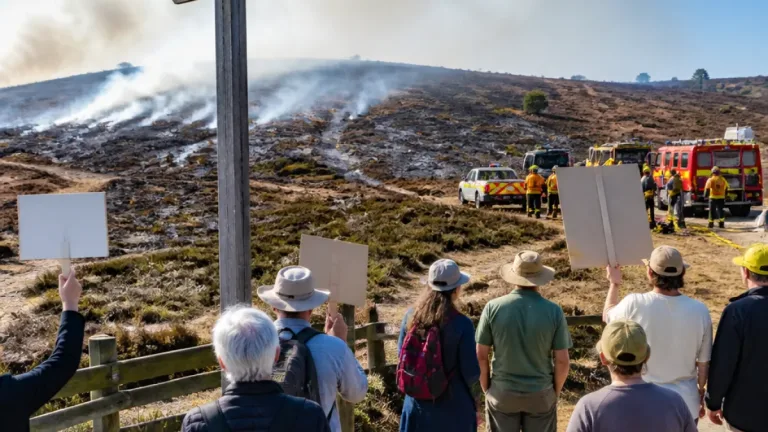
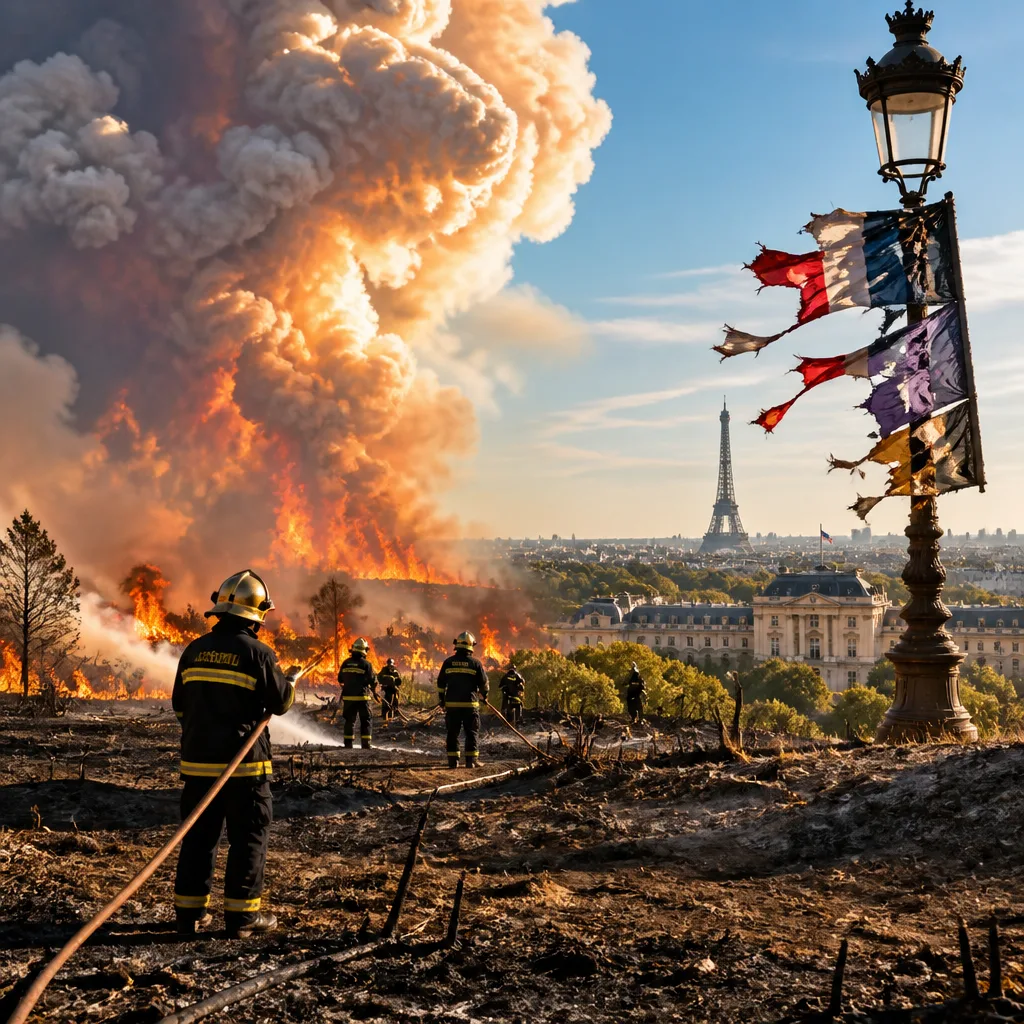
On 24 July firefighters confronting unprecedented blazes in south‑west France witnessed a pyrocumulonimbus — a fire‑generated storm — as flames devastated homes, farms and businesses in the Gironde. The physical inferno has been matched by a political one in Paris: a party system upended by snap elections and rising extremes now hampers the state’s capacity to respond and governs under acute scrutiny with the April 2027 presidential vote looming.
From two blocs to three
The constitutional model of the Fifth Republic, created by Charles de Gaulle in 1958 and long characterised by a two‑bloc dynamic, has been fractured. Emmanuel Macron’s independent ascent — founding Republic on the Move — already challenged that arrangement. The president’s decision to call snap legislative polls in 2024 completed the disruption.
When ballots were counted, France no longer presented a binary contest but three distinct forces:
- Extreme right: a bloc boosted by Marine Le Pen’s National Rally (RN).
- Far left: an unstable coalition dominated by Jean‑Luc Mélenchon’s France Unbowed (LFI), later dissolved.
- Centrist government: the remains of Macron’s movement, renamed Renaissance, which performed well below expectations.
| Bloc | Main force | Political consequence |
|---|---|---|
| Extreme right | National Rally (RN) | Rapid electoral gains |
| Far left | France Unbowed (LFI) | Fragile coalition, later dissolved |
| Centrist | Renaissance (ex‑Republic on the Move) | Electoral disappointment |
Paralysis and performance
Since the elections, the government has struggled to advance legislation effectively. The executive has been described as flailing, with ministers unable to secure stable majorities and public projects delayed. Commentary within Paris points to a presidency more preoccupied with legacy management than with immediate governance, a critique intensified by the scale and human cost of the wildfires.
The environmental emergency has therefore become a lens on institutional weakness: national capacity to coordinate relief, recovery and preventative measures is being judged against a backdrop of political fragmentation and mutual recrimination among parties.
Consequences for 2027
With the presidential election scheduled for April 2027, the wildfires and the political turmoil they illuminate are likely to shape the campaign narrative. Voters will evaluate incumbency and competence in crisis management, while parties on the extremes exploit perceived government failings. The breakdown of the traditional two‑bloc system raises questions about coalition formation, legislative stability and the future contours of the Fifth Republic itself.
The twin emergencies — environmental and political — are therefore interlinked: the immediate task of firefighting and reconstruction feeds into a longer term contest over institutional resilience, party realignment and the balance of power in French democracy.
“A different kind of pyrocumulonimbus… has been wreaking havoc on the country’s political landscape.”
The coming months will test whether France’s institutions can both respond to acute disaster and adapt to a transformed partisan map without further erosion of public trust.