Naver brings 1784 smart‑building tech to Tokyo Midtown Yaesu
Team Naver, the collaborative organisation that develops smart‑building systems at Naver's 1784 headquarters in Korea, will introduce its robotics‑based building operating system to Tokyo Midtown Yaesu. The project, announced on Tuesday, is the first external commercial deployment of the platform and pairs Naver with Mitsui Fudosan and NTT East.
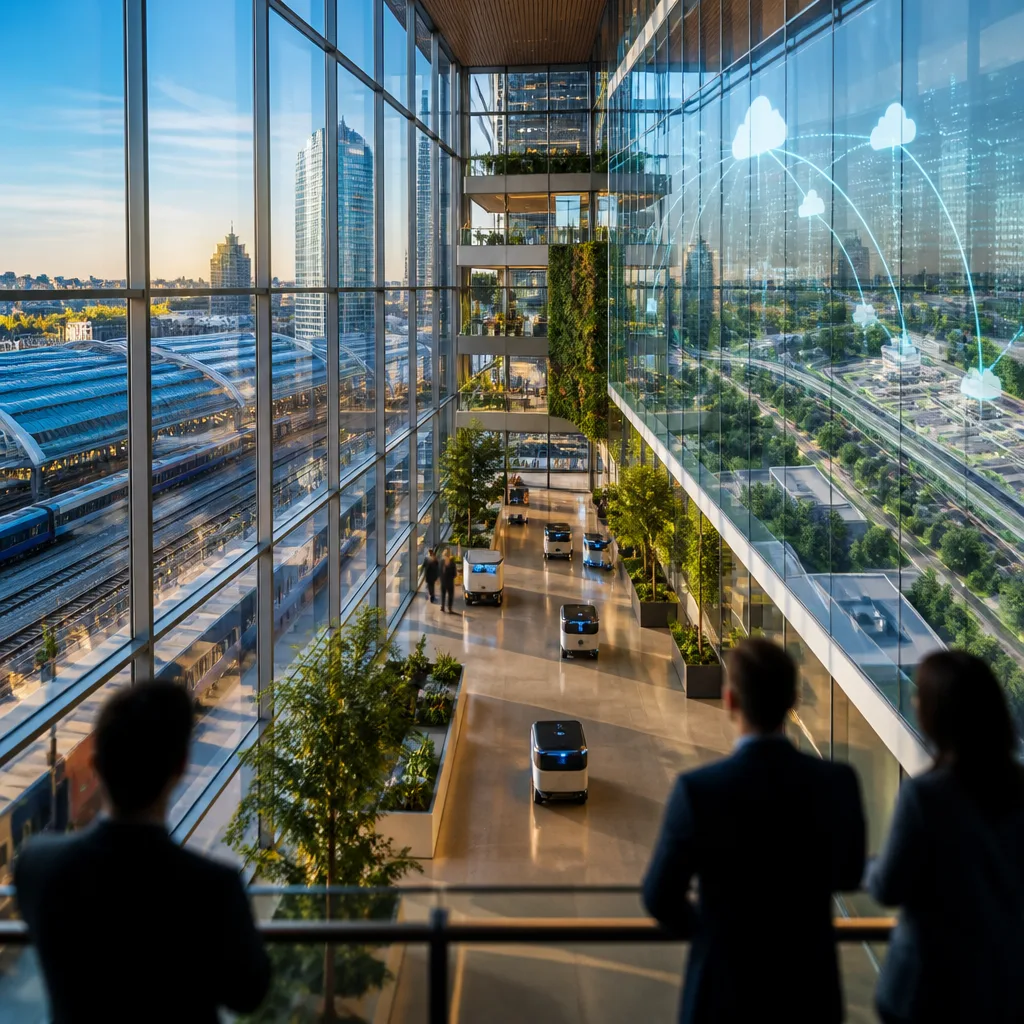
The 45‑storey mixed‑use complex adjacent to Tokyo Station — which contains offices, retail, a hotel, a bus terminal and an elementary school — will initially host a cloud‑based autonomous robot delivery service. Naver says the service is informed by four years of robot operations at its 1784 site and by analysis of operational sensor data, spatial maps, time‑dependent routes and recurring issues to improve performance.
What technology is being installed
Team Naver will supply core elements from its 1784 stack, including:
- Rookie — an indoor autonomous delivery robot;
- ARC brain — a multirobot orchestration and control system;
- Digital twin technology — virtual models of building spaces for planning and monitoring;
- ARC eye — vision‑based positioning to locate robots indoors.
Mitsui Fudosan will operate the delivery services and handle integration with the building’s facilities, while NTT East will manage construction of the digital twin environments and the maintenance of delivery robots.
| Partner | Primary role |
|---|---|
| Naver (Team Naver) | Technology provider: robots, cloud control, digital twin, positioning |
| Mitsui Fudosan | Service operator and facility integration |
| NTT East | Digital twin construction and robot maintenance |
Why this matters
Unlike some early experiments that required bespoke infrastructure — robot‑only lifts or dedicated cloud systems — Team Naver says it has optimised its platform to run in conventional buildings. That suggests a model aimed at retrofitting existing commercial properties rather than rebuilding to accommodate robotics, potentially lowering barriers for wider adoption.
The use of a cloud‑based multirobot controller and vision‑based positioning highlights a shift toward centralised orchestration and software‑driven navigation, rather than specialised on‑site hardware. For building owners and operators, this can mean:
- faster deployment in mixed‑use properties,
- reduced need for costly structural changes, and
- operations refined by continuous data from live services.
For tenants, customers and city planners, the project will be watched as an early test of whether robotics and digital twins can be woven into dense, multi‑function urban complexes without major disruption.
The Tokyo Midtown Yaesu deployment will be the first commercial application of the 1784 model outside Naver’s own campus and represents a measurable step in moving building automation from pilot labs into everyday environments.