OpenAI has unveiled a new initiative intended to help small businesses adopt and operationalise conversational AI, as major software vendors roll out product-level AI features and services aimed at commercial users.
What OpenAI announced
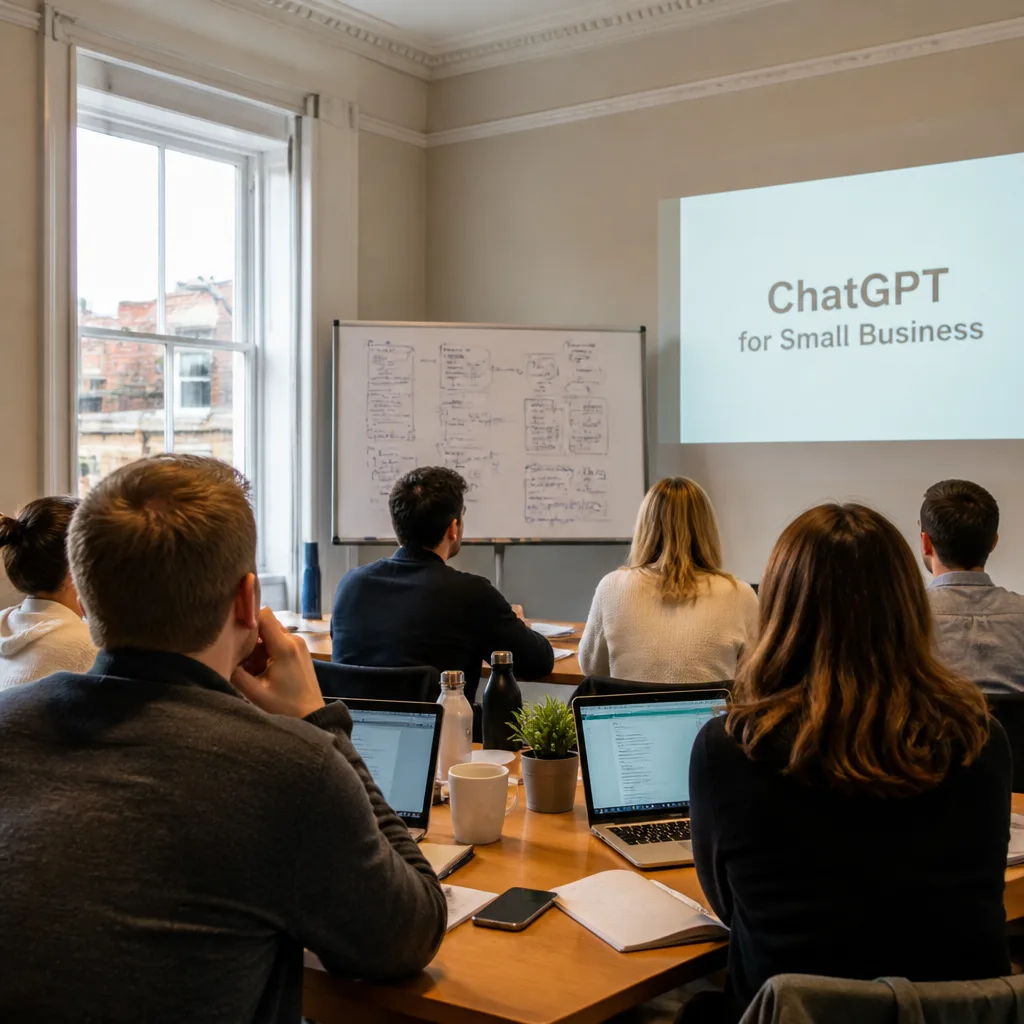
The company has introduced a programme called ChatGPT for Small Business, which combines educational materials, live training and practical guidance designed to help entrepreneurs and smaller firms use AI to automate tasks, increase productivity and scale operations. The effort follows OpenAI’s earlier work on agent‑style features such as ChatGPT Work, which assist with multi‑step projects.
“We believe AI can be a force multiplier that extends individual expertise … and gives everyone access to world class tools they need to achieve their greatest ambitions,”
Why this matters
Many smaller companies lack the time or budget for bespoke AI consultancy, relying instead on trial and error, online tutorials and occasional contractors. Programmes that combine practical training with accessible tools aim to lower that barrier, making AI adoption less about technical experimentation and more about everyday process improvement.
- Access and training: OpenAI’s programme focuses on skill development and practical deployment rather than only selling software.
- Product integration: Microsoft’s closer integration of AI with Excel points to AI becoming embedded in standard office software.
- Competing approaches: Other vendors, including Anthropic, have also launched outreach to small businesses, indicating a broader market push.
Other notable moves this week
For smaller firms the ecosystem is evolving rapidly: Microsoft has been enhancing Excel with AI capabilities; Intuit introduced a QuickBooks payment card aimed at business finance workflows; and Anthropic is pursuing small business engagement programmes of its own. Meanwhile, a new class of tools lets models such as Claude learn workflows by observing on‑screen activity, further reducing the friction of configuring automation for specific tasks.
| Area | Recent development |
|---|---|
| Training | OpenAI: ChatGPT for Small Business |
| Office software | Microsoft: deeper Excel + AI integration |
| Payments | Intuit: QuickBooks card |
| Workflow learning | Anthropic/Claude: models that observe and learn workflows |
Implications for UK businesses
For British SMEs the changes lower the technical overhead of experimenting with AI, but raise new questions on governance, data handling and vendor lock‑in. Firms will need to balance the productivity gains of prebuilt AI features against privacy, compliance and long‑term control of critical business processes.
The commercialisation of AI into everyday business tools is accelerating. For small business owners, the key choice is not whether AI will matter, but which vendor ecosystems they will trust to manage the transition.