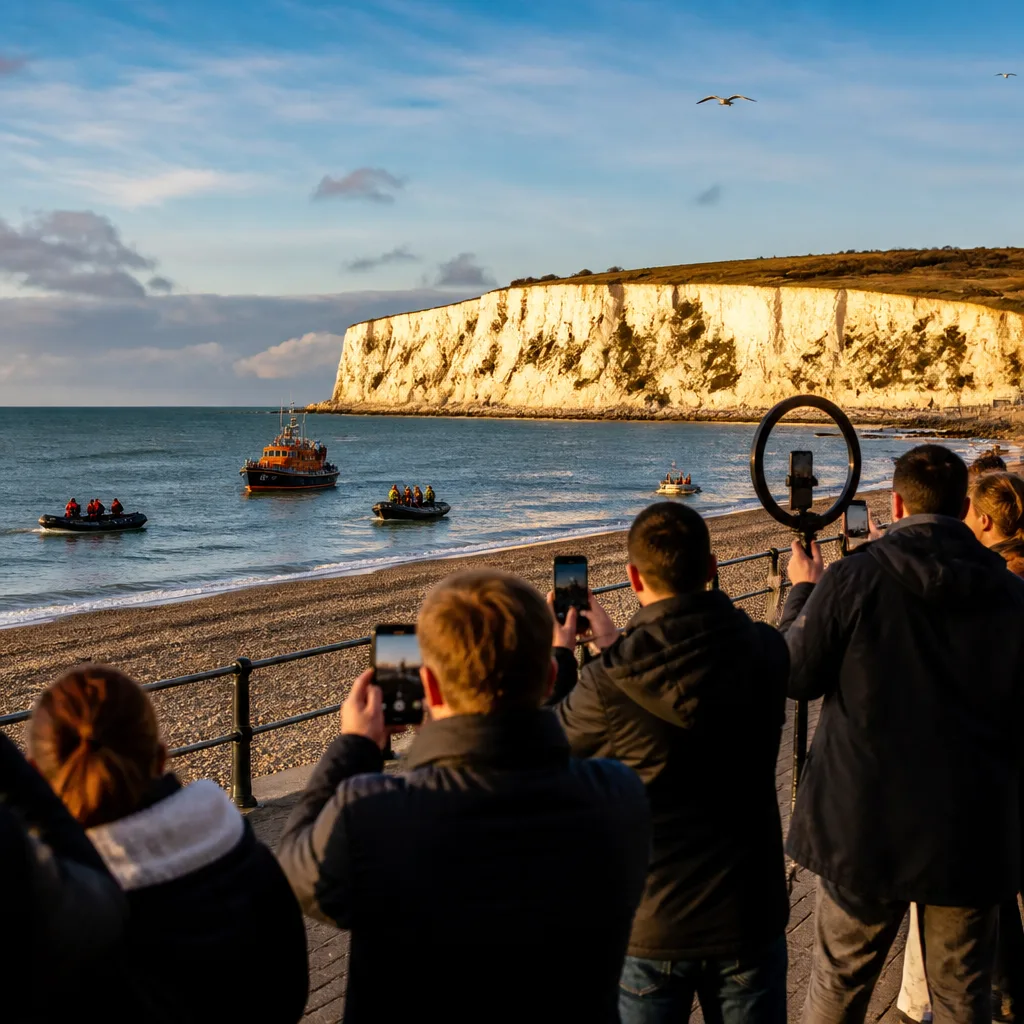
Dover has become a recurring backdrop for provocative online coverage about small boats crossings, but residents and local charities say the reality on the ground is far less dramatic than the footage suggests.
Stunts, claims and local reaction
For audiences online, rightwing influencers and a handful of politicians have repeatedly presented the Kent coast as the frontline of a crisis. One recent episode involved the shadow home secretary, Chris Philp, whose presence in a fishing boat was framed in some videos as an encounter with hostile French forces. French authorities have since said he passed a routine training exercise that included live firing; there is no indication of deliberate provocation.
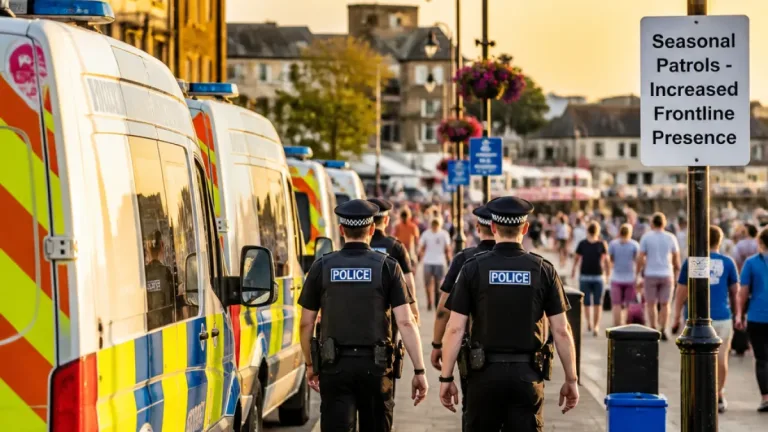
Locals describe a seaside town with its sloping pebble beach, sunbathers and dog-walkers — not a war zone. Some people who live in the area see the attention as disproportionate and sometimes exploited for political or commercial gain.
“They’re using Dover a bit,” said one resident, Alison Drake. “People making all these videos and that is not really doing much, is it?”
Charities working with refugees and asylum-seekers in the area also expressed concern. Razia Shariff of the Kent Refugee Action Network (Kran) said the stunts appear aimed at stoking fear rather than helping to solve the underlying issues. Yet others argued that the constant focus at least keeps the crossings in the public eye and pressures authorities to act.
Voices from the coast
- Some residents feel their town is being exploited by content creators seeking attention.
- Local charities warn that alarmist coverage increases tensions and harms vulnerable people.
- Supporters of the coverage say it highlights a persistent problem and holds authorities to account.
| Person/Group | View |
|---|---|
| Alison Drake (resident) | Influencers are using Dover; videos have little constructive impact |
| Razia Shariff (Kran) | Stunts play on fear; not helpful for refugees |
| Tom Armstrong (resident) | Relentless focus keeps the problem visible |
Whatever the intent of the visitors who film at the quay, the persistent portrayal of Dover as a besieged frontier has palpable effects locally: it shapes public perception, influences national debate on migration and forces local services to manage the fallout from heightened tensions. For many residents the town remains a working seaside community, and for campaigners the urgent task is to ensure coverage does not drown out humanitarian and practical responses to an ongoing challenge.