Scientists at Heinrich Heine University Düsseldorf (HHU) and University Hospital Düsseldorf (UKD) have identified a biological pathway that could reduce the risk of strokes and other arterial clots without the bleeding risks tied to conventional blood thinners. The research, led by Dr Marcel Benkhoff, is published in Science Advances.
What the study found
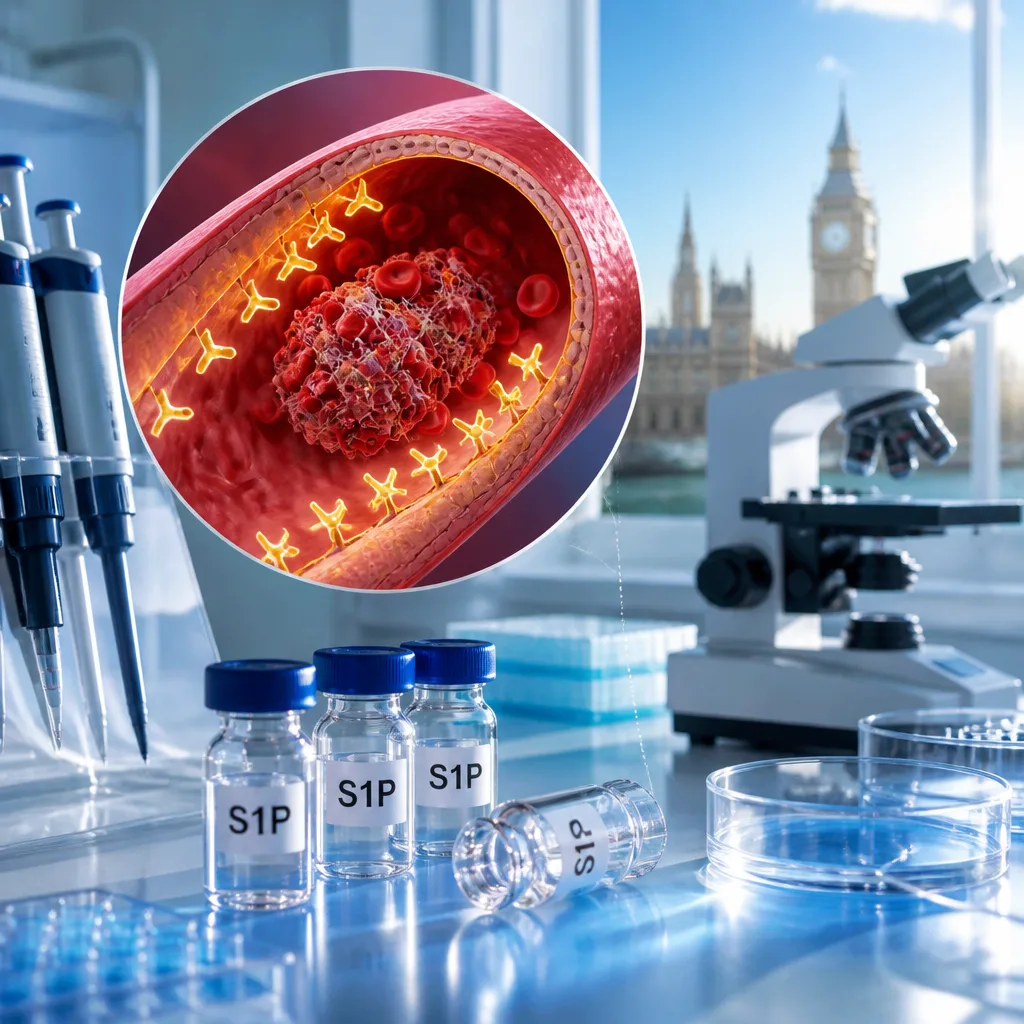
The team examined two naturally produced molecules: sphingosine‑1‑phosphate (S1P) and thrombomodulin (TM). In cell and mouse experiments they showed that S1P activates a signalling pathway in the inner lining of blood vessels that increases production of TM. The elevated TM then interferes with clot formation. In the mouse models this reduced development of arterial thromboses and vascular occlusions without increasing bleeding.
Why this matters
Current preventive treatments for strokes and heart attacks—platelet aggregation inhibitors and anticoagulants—work by impairing blood coagulation and therefore raise the risk of dangerous bleeding. The Düsseldorf team’s approach instead harnesses a native mechanism that strengthens the vessel wall’s antithrombotic capacity, representing a fundamentally different strategy that could avoid those side‑effects.
Evidence beyond the lab
Alongside the preclinical work, the researchers observed that higher S1P levels were associated with lower clotting activity in patients, supporting the translational relevance of the pathway. They also demonstrated that when S1P availability fell and TM production declined, the risk of clots and occlusions rose again—an effect that could be reversed in their models.
- Key molecules: S1P (messenger) and TM (anticoagulant surface protein)
- Models used: cell cultures and mouse arterial thrombosis models
- Main outcome: reduced arterial thrombosis without increased bleeding in mice; clinical association between higher S1P and lower clotting activity
Implications and next steps
The findings point to a potential therapeutic route that augments the body’s own antithrombotic shield rather than broadly suppressing haemostasis. That distinction is important: a therapy that raises TM through S1P signalling could reduce stroke and heart‑attack risk while lowering the hazard of haemorrhage, but translating this into safe drugs will require further work to confirm efficacy and safety in humans and to map precise dosing and target engagement.
The study does not yet offer a ready clinical treatment, but it provides a mechanistic blueprint for drug discovery teams hunting antithrombotic strategies with improved safety profiles. Given the heavy national burden of cardiovascular disease, such an advance would be significant if subsequent trials reproduce the preclinical promise.